

AI resistance is why most adoption initiatives fail, not technology limitations. Between 2023-2024, marketers and SDRs were hit hardest by AI-justified layoffs, creating deep-seated resistance to AI even among early adopters. Marketing expert Tamara Ceman, who built 600K users in three years through product-led growth, shares why teams resist AI and the proven strategies to overcome silent pushback, knowledge gaps, and adoption fatigue.
Key Takeaways:
- AI resistance in marketing teams stems from job security fears, not lack of understanding or technical skill
- 74% of AI adoption initiatives fail due to human resistance and poor leadership, not technical limitations
- Silent resistance is when employees appear to comply with AI mandates but never actually adopt the tools in their daily work
- Successful AI adoption requires closing knowledge gaps, solving real problems first, and avoiding the term "AI" entirely
- Non-generative AI tools offer productivity benefits without ethical concerns about replacing creative work
Why Marketing Teams Are Resistant to AI (The Real Story)
AI resistance in marketing teams stems primarily from job security fears, ethical concerns, and initiative fatigue. Between 2023-2024, marketers and SDRs experienced the highest rates of AI-justified layoffs, creating employee resistance even among professionals who understand the technology's value. This resistance isn't ignorance. It's a rational response to seeing colleagues lose jobs to technology they're now being told to embrace.
When ChatGPT rolled out, I was honestly super excited," says Tamara Ceman, former Director of Marketing at Markup Hero. "But what surprised me wasn't the chatbot. It was the reaction of the world. Every CEO in a 500-kilometer radius was telling marketers their jobs are going to cease to exist."
The resistance didn't come from ignorance. Many marketers had been using Copy.ai and Jasper for years. The problem was the hype and panic that followed ChatGPT's release.
The "Convenient Curtain" Problem
AI became a convenient excuse for poor business decisions. Companies that overspent during growth phases used "AI adoption" to justify mass layoffs.
Most companies that had massive layoffs were overspending and investing more in showcasing growth than actually becoming profitable," Ceman explains. "AI was a very convenient curtain to hide stupid decisions behind."
This created a toxic environment where marketers were told to adopt the very technology being used to justify eliminating their positions.
The Water Cooler Effect Kills Adoption
The most dangerous form of resistance isn't vocal opposition. It's silent cynicism. Teams nod in meetings, then complain at the water cooler. They share screenshots of AI-generated failures. They quietly refuse to use the tools.
The water cooler effect is when informal negative conversations about AI tools spread through teams faster than official training or positive messaging. One complaint becomes five within days.
You were afraid for your job, so you're not going to say that internal tool is terrible," Ceman notes. "You're going to think it and go to back channels and have these crazy conversations."
This silent resistance explains why companies build internal AI tools worth millions that nobody uses.
The Three Biggest Failures in AI Adoption
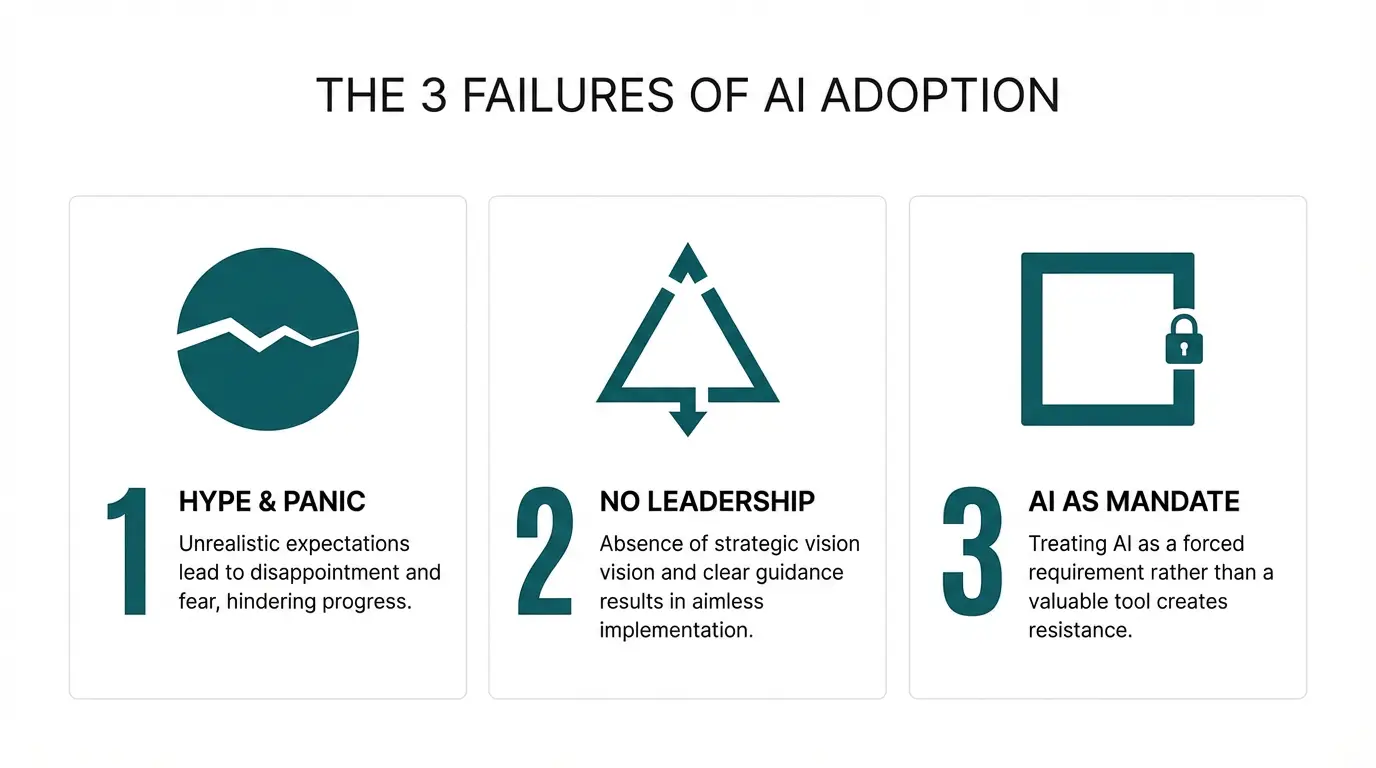
The three critical failures in AI adoption are: (1) hype and panic cycles that create fear instead of education, (2) failure to provide proper leadership and structured implementation, and (3) treating AI as a mandate rather than a tool that solves specific problems. These failures explain why 74% of companies struggle to achieve and scale AI value despite significant investments.
Failure #1: Hype and Panic
The ChatGPT moment created simultaneous hype and panic. Executives demanded immediate AI adoption. Media declared entire professions obsolete. Thought leaders proclaimed 99% of marketing would be automated by year's end.
A lot of people who know nothing about marketing had very strong opinions," Ceman observes. "Unfortunately, these strong opinions could actually affect somebody's work and life."
The hype-to-panic pipeline looked like this:
- ChatGPT releases, media frenzy follows
- Executives mandate "use AI or fall behind"
- Mass layoffs justified by "AI efficiency"
- Remaining employees fear being replaced
- Teams resist the tools they're mandated to use
Failure #2: No Leadership or Direction
Very few companies assigned ownership of AI implementation or provided structured guidance. Teams received company-wide mandates to "use AI" with zero direction on how, where, or why.
There was a very small group of companies that actually did it in a smart and structured way," Ceman explains. "They had somebody who owned and understood AI and who was grounded."
Companies without leadership fell into two camps:
The Overengineered Approach: Hired hype-driven consultants who built complex systems that took years to undo.
The No-Structure Approach: Left teams to their own devices, widening the gap between early adopters and those who didn't understand the basics.
Both approaches failed because nobody created safe environments for learning or experimentation.
Failure #3: Treating AI as a Mandate
When executives mandate AI adoption without solving real problems, teams resist. The focus becomes "use AI" instead of "solve this specific challenge."
You can be anti-hype and grounded and still be for something," Ceman notes. "Unfortunately, if you're not with them, you're against them. There is no gray zone."
This binary thinking led to:
- Smart people fired for questioning implementation approaches
- Teams labeled "anti-AI" for asking reasonable questions
- Internal conflict between engineering and marketing teams
- Toxic relationships that persist years later
What "AI Resistance" Actually Looks Like in Marketing Teams
AI resistance manifests in three forms: ethical pushback (concern about replacing creative work), legal/compliance concerns (valid data privacy worries), and silent resistance where team members nod in meetings but never actually adopt the tools. Silent resistance is the most dangerous because it creates an illusion of buy-in while actual usage remains near zero.
Silent resistance is the phenomenon where employees appear to comply with AI mandates in meetings but never actually adopt the tools in their daily work. It's passive non-adoption disguised as cooperation.
The Silent Killer: Passive Non-Adoption
The most common form of resistance isn't vocal opposition. It's passive non-adoption.
Teams attend training sessions. They give thumbs up in meetings. They never actually use the tools.
People just chose not to disagree because they were afraid of the aftermath," Ceman explains. "They went along for the ride and gave thumbs up to things they knew they weren't going to use."
This creates a dangerous illusion. Leadership believes adoption is happening. Usage data tells a different story.
The Water Cooler Effect
When one person complains about an AI tool, others join in. Within weeks, the tool has a reputation as "that thing nobody uses."
The water cooler talk is real," warns Iliya Valchanov, CEO of Juma. "The first day someone complains about something super small, then another person complains about something similar. Two weeks later, your champion tells you everyone hates your software."
Without strong leadership and initiative, water cooler negativity overpowers adoption efforts.
The "Anti-AI" Label
Teams that questioned implementation approaches were labeled "anti-AI" even when they supported the technology itself.
I'm pretty sure I was talked about as being anti-AI," Ceman says. "Me, who's been saving money to buy Asimo from 2004."
This labeling silenced reasonable questions about:
- Which problems AI should solve first
- Whether internal tools were actually useful
- How to measure ROI on AI investments
- What training teams actually needed
The result? Companies built tools worth millions that solved problems nobody had.
Understanding Employee Resistance to AI
Employee resistance to AI is a natural response to organizational change, especially when that change threatens job security. Research shows that resistance to change in the workplace follows predictable patterns: fear of the unknown, loss of control, and concern about competence with new tools.
The difference with AI resistance? It's amplified by media narratives about job replacement and real examples of AI-justified layoffs. Marketing teams aren't resisting technology. They're resisting fear.
Why AI Search Changes Everything for Marketers (Even Resistant Ones)
AI search tools like ChatGPT, Perplexity, and Google AI Overviews are fundamentally changing how people discover content, shifting from click-based SEO to citation-based visibility. Marketers must optimize for AI citations by creating structured, authoritative content even if they resist using AI themselves. The shift isn't optional. It's already happening with ChatGPT approaching 1 billion weekly active users.
The Shift from Google to ChatGPT
Every week we're going to a marketing funeral," Ceman jokes. "Now we're going to the SEO funeral. But our main growth channel is still SEO."
SEO isn't dead. It evolved.
Here's how AI search actually works:
Traditional Google Search:
- User enters query
- Google returns list of links
- User clicks multiple results
- User reads through irrelevant content
- User refines search and repeats
AI Search (ChatGPT, Perplexity, Claude):
- User asks question
- AI searches the web (Bing, Google, Reddit, forums)
- AI reads through results
- AI synthesizes compact answer
- User asks follow-up questions for refinement
It kills all the time you would spend searching for the relevant answer," Ceman explains. "It gives it to you, and then you don't have to reprompt again if it's not right."
How LLMs Actually Work
Understanding how large language models work helps marketers optimize for AI search.
LLMs have two types of memory:
Passive Memory: Everything the model learned during training (up to its knowledge cutoff date).
Active Memory: Real-time web searches when the model recognizes gaps in knowledge.
When ChatGPT doesn't have information, it searches the internet. Its primary partner is Bing. If it can't find information on Bing, it searches Google. It also pulls from crowdsourced information like Reddit and gated forums.
There's an army of people making sure the quality information LLMs give us is correct," Ceman notes. "It's not magical. It has a system."
What Marketers Should Do About AI Search
1. Optimize Technical SEO
Technical SEO matters more than ever. Structured data helps non-human searchers (including AI crawlers) understand your content.
People who are screaming SEO is dead typically think SEO equals blogs," Ceman explains. "But technical SEO is the part that gives non-human searchers information in a structured way."
2. Focus on Support Articles
Support articles are gold mines for AI search. They answer specific questions clearly and concisely, exactly what AI models look for.
In every company I worked with, support articles were one of the things people were finding organically," Ceman shares. "They're looking for specific solutions."
3. Define Your ICP Clearly
AI search queries are becoming more specific. People search: "What is the best tool for marketing teams between 5 and 25 people that are..."
Put your ICP directly on your website. AI models will cite you when searches match your exact target audience.
4. Diversify Your Presence
Directories matter. Third-party mentions matter. Getting cited across multiple platforms increases your chances of appearing in AI-generated answers.
Will that bring the next revival of PR? Maybe," Ceman suggests.
The Right Way to Introduce AI to Your Marketing Team
Successful AI adoption starts by avoiding the term "AI" entirely. Instead, introduce "systems" and "workflows" that solve specific pain points your team identifies. Close knowledge gaps in safe environments, start with unscalable solutions to one problem, then scale what works. This approach reduces resistance by focusing on outcomes rather than technology.
Stop Saying "AI"
The term "AI" carries baggage. It triggers fear, resistance, and fatigue.
When you say a word enough times, it loses meaning," Ceman observes. "That's exactly what's happening when we talk about AI."
Instead, talk about:
- Applications
- Workflows
- Systems
- Tools that make specific tasks easier
You're introducing applications, you're introducing workflows, and you're going to see that things change," she explains. "As soon as you change the semantics, the mood changes with it."
Close the Knowledge Gap First
Create safe environments where people can ask basic questions without judgment.
Don't assume somebody is aware of certain functionalities because that's how the gap widens," Ceman warns. "Make sure they have a safe space to ask."
Many people don't know the basics. There's no shame in that. AI was "poured on us like cold water" a couple of years ago.
Juma's AI Course provides this foundation. It assumes zero AI knowledge and builds from there, exactly what teams need before adopting tools.
Ask: "What Do You Hate About How Things Work Today?"
Don't start with tools. Start with problems.
Tell me one thing you absolutely hate about how things work today," Ceman suggests. "Let them identify the problem you could solve."
Common pain points marketers identify:
- Terrible task intake processes
- Poorly written content briefs
- Disorganized meeting notes
- Repetitive reporting tasks
- Inconsistent brand voice across content
Once your team identifies a problem, solve it together with or without AI.
Start Unscalable, Then Scale
Build the solution in the most unscalable way first. See if it works. Then scale.
Maybe create something that's not super scalable, see if it works, and then scale it," Ceman advises.
This approach:
- Reduces investment risk
- Involves the team in solution design
- Proves value before scaling
- Creates buy-in from actual users
Use Tools That Already Have AI Built In
The easiest adoption path? Tools your team already uses that added AI features.
You can start playing with tools that have now introduced AI functionalities," Ceman suggests.
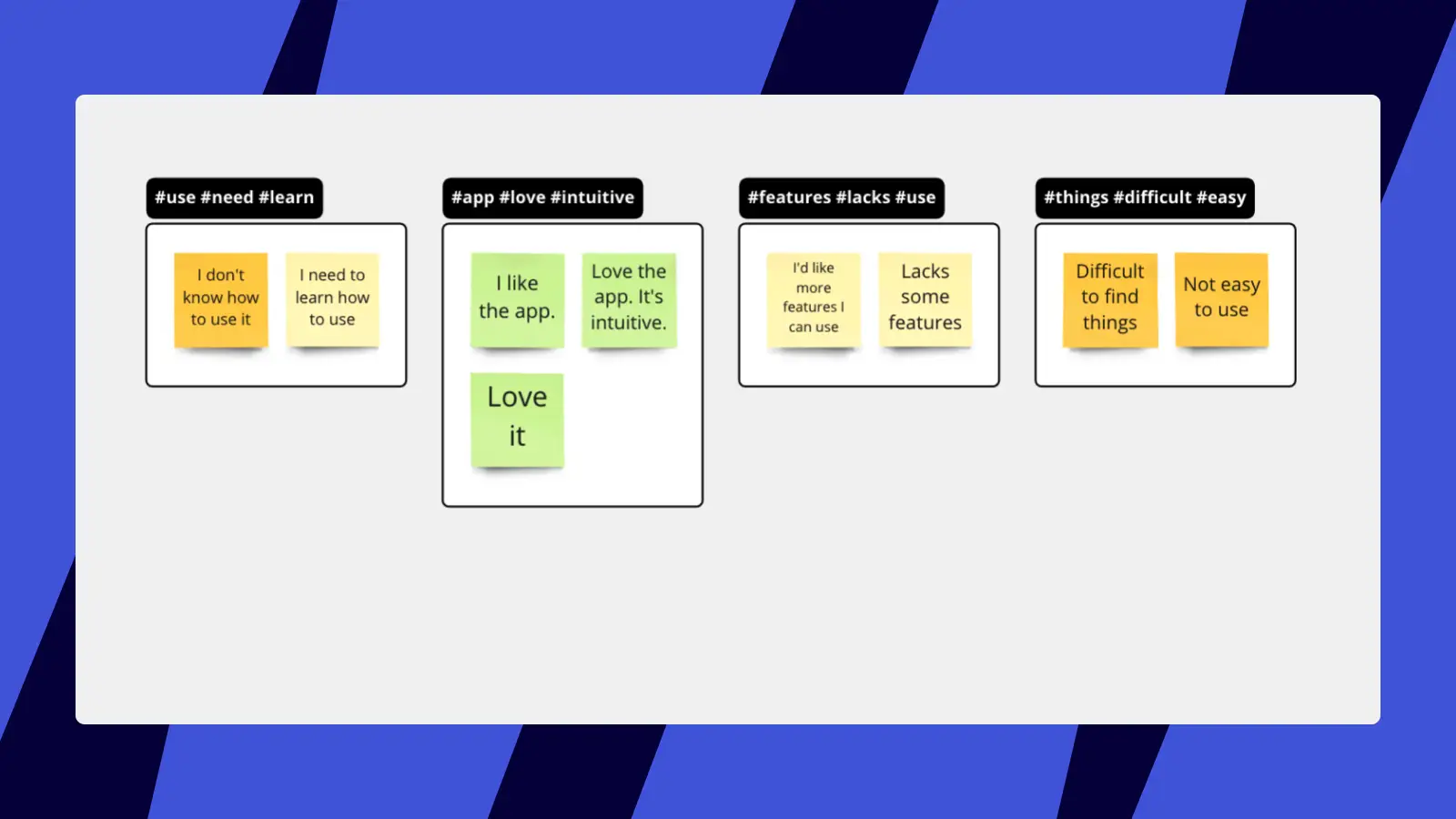
Example: Miro's AI Sorting
Ceman used Miro's AI sorting mechanism to organize 500 user research stickies. The AI grouped similar feedback, revealing patterns that would have taken hours to identify manually.
The team didn't think "we're using AI." They thought "this sorting feature is helpful."
That's successful adoption.
AI Tools Marketers Can Use Without Ethical Concerns
Marketers concerned about ethical AI use can adopt non-generative AI tools like Granola (meeting notes), Whisper Flow (voice-to-text), Miro's AI sorting features, and built-in AI functionalities in existing tools, avoiding content generation while still gaining productivity benefits. These tools process your existing work rather than creating new content from potentially problematic training data.
Many marketers resist generative AI because they don't want to replace creative work or use tools trained on potentially stolen content.
Valid concern. Here are alternatives.
Granola: Meeting Notes Without Recording
Granola joins your calls and takes notes, but it doesn't record the call itself.
Once it has the transcript, it's like the fastest typing assistant you ever had," Ceman explains.
You can:
- Ask questions about the meeting
- Create templates to organize notes
- Search across all meetings
No generative content. Just organized information.
Whisper Flow: Speech-to-Text
Whisper Flow lets you speak and type simultaneously on anything.
Quick notes, stuff that's important, and you want to get out of your head and into your notepad. This is the fastest way to do it," Ceman notes.
It doesn't write content for you. It transcribes your words.
Miro's AI Features
Miro added AI sorting and organizing features. These help you:
- Group similar sticky notes
- Identify patterns in research
- Organize brainstorming sessions
You're not generating content. You're organizing existing work more efficiently.
Build Small Internal Tools
You can build mini-tools for specific team needs using platforms like Lovable.
Ceman built an interactive version of her buyer messaging and objection matrix. It helps teams generate answers conversationally without being "super technical."
Think about it. How can I introduce non-gen AI to the teams first?" she suggests.
How Juma Helps Marketing Teams Overcome AI Resistance
Juma addresses AI resistance by providing a collaborative workspace where marketing teams work together with shared context. Projects enable teams to organize knowledge by campaign, client, or use case, creating structured environments where AI becomes a natural extension of their workflow rather than another tool to learn. Unlike solo AI tools that create isolation, Juma makes AI adoption a team sport.
Collaborative Workspace, Not Solo Struggle
The biggest barrier to AI adoption isn't the technology. It's isolation. When individuals struggle alone with AI tools, resistance builds.
Juma creates a collaborative environment where teams work together. Marketing managers can share successful prompts. Junior team members can learn from senior strategists' approaches. Everyone benefits from collective knowledge.
If you have an option to go to a place where you're going to get both team expertise and a playground, go for it," Ceman advises.
Projects: Organized Context for Specific Work
Projects help teams organize their work by campaign, client, or use case. Instead of scattered chats and lost context, everything related to a specific initiative lives in one place.
A content marketing Project might include:
- Brand guidelines and tone of voice
- Content calendar and strategy docs
- Competitor analysis
- SEO keyword research
- Previous successful content examples
Teams build this context once. Everyone who joins the Project has immediate access to everything they need.
Model-Agnostic Approach Reduces Friction
Different tasks need different AI models. Some team members prefer Claude for writing. Others prefer GPT-4 for analysis. Some want to experiment with new models as they release.
Juma lets teams choose the right model for each task without switching tools or managing multiple subscriptions.
This flexibility reduces resistance. Teams aren't forced into a single AI approach. They can adopt at their own pace with models that fit their comfort level.
Safe Environment for Experimentation
Teams need safe spaces to experiment without fear of judgment or mistakes affecting real work.
Projects provide this environment. Teams can:
- Test different approaches to common tasks
- Share what works (and what doesn't)
- Learn from each other's experiments
- Build confidence before applying AI to critical work
No Data Retention Addresses Privacy Concerns
Many marketers resist AI due to valid privacy concerns. They worry about client data, proprietary strategies, and confidential information.
Juma uses API connections only. Zero data retention. Your conversations and data never train AI models.
Enterprise-Grade Security & Compliance:
- SOC 2 Type 2 certified
- ISO 27001 certified
- GDPR compliant
- HIPAA compliant
This addresses one of the biggest ethical concerns holding teams back from adoption.
Trusted by Leading Marketing Teams
Juma is trusted by 250+ marketing teams including Salesforce, Costa Coffee, Johns Hopkins University, and Maersk.
For a comprehensive framework on AI adoption, read our guide: AI Agents Are Here: The Adoption Methodology.
From Resistance to Embracing AI
AI resistance doesn't have to be permanent. When teams understand the "why" behind AI adoption and see direct benefits to their work, resistance transforms into curiosity.
The path from resisting AI to embracing AI follows a predictable pattern:
- Fear to Understanding: Close knowledge gaps in safe environments
- Skepticism to Curiosity: Solve one specific problem they hate
- Passive to Active: Let them see quick wins
- Individual to Team: Share successes across the organization
- Resistance to Advocacy: Early adopters become champions
It really can be a friend," Ceman concludes. "It doesn't have to be an enemy."
Most importantly: provide leadership. Assign ownership. Create structure.
The biggest failure wasn't the hype. It was the failure to provide proper leadership and direction," Ceman emphasizes.
Marketing teams don't resist AI. They resist fear, uncertainty, and poorly implemented mandates.
Give them clarity, safety, and real solutions. Adoption follows naturally.
Frequently Asked Questions
What is AI resistance and why does it happen?
AI resistance is the phenomenon where employees avoid, oppose, or passively refuse to adopt AI tools despite organizational mandates. It happens because of job security fears (especially after 2023-2024 layoffs), ethical concerns about AI-generated content, lack of training, and fear of appearing incompetent with new technology. Unlike general resistance to change, AI resistance is amplified by existential concerns about career viability.
How long does it take to overcome AI resistance in marketing teams?
With proper leadership and the right framework, most teams show meaningful adoption within 8-12 weeks. The key is closing knowledge gaps first (weeks 1-4), then introducing tools that solve specific problems (weeks 5-8), then scaling what works (weeks 9-12). Organizations with dedicated AI Champions see 2.5x faster adoption rates compared to those without clear ownership.
What's the #1 reason marketing teams resist AI?
Job security fears stemming from 2023-2024 mass layoffs that used "AI efficiency" as justification. Even marketers who understand AI's value resist when they fear being replaced by the tools they're told to adopt. This resistance is rational, not ignorant. It requires addressing the underlying fear through education and demonstrating that AI augments rather than replaces their work.
Should we force our team to use AI?
No. Mandates without education and safe experimentation environments create silent resistance. Instead, demonstrate value with one specific use case, let early adopters share wins, and let adoption spread organically. Ask your team "What do you hate about how things work today?" and solve that problem first. Adoption follows naturally when people see direct benefits to their work.
How do we measure AI adoption success?
Track three metrics: (1) Usage rate (percentage of team using AI weekly), (2) Time saved (hours per week per person), and (3) Output quality (measured through your existing quality standards). AI Champions should review these monthly and adjust the adoption strategy accordingly. Successful adoption shows 60% faster workflows and 50+ hours saved monthly per team.
What if team members have ethical concerns about AI?
Start with non-generative AI tools that organize and process existing work rather than creating new content. Tools like Granola (meeting notes), Whisper Flow (speech-to-text), and Miro's AI sorting features provide productivity benefits without ethical concerns about training data or replacing creative work. This builds comfort and trust before introducing generative AI capabilities.
Ready to overcome AI resistance in your marketing team? Start with our free AI Fundamentals course to close knowledge gaps before adopting tools.
About the Expert
Tamara Ceman is a marketing leader with 17+ years of experience specializing in product-led growth. She scaled Markup Hero to 600,000 users in three years and led successful positioning efforts at Uscreen during the pandemic. She's a recognized expert in PLG motions and AI adoption strategies. Connect with Tamara on LinkedIn.
Related Reading
LinkedIn Carousels

Competitor Analysis

GEO Optimized Articles

Google Analytics Reports


%20(1).webp)



Private cloud deployment - AWS, Azure, GCP
SSO / SAML + platform administration
Security review support + DPA
Custom contract & SLA
Dedicated account manager & priority onboarding
Invoicing + custom billing terms