
Soft skills in the workplace are just as important as the technical know-how. In this article, I explore how AI can transform the way we develop our interpersonal abilities and communication skills with practical insights on how to improve soft skills for personal and professional growth.
Understanding Soft Skills
Soft skills are non-technical abilities that impact how well you work and interact with others. They strengthen personal interactions, leading to improved job performance and satisfaction, and remain consistently valuable. These skills include, but are not limited to, communication, empathy, adaptability, problem-solving, and teamwork. Often pivotal in employment and promotion decisions, they are also essential for effective leadership.
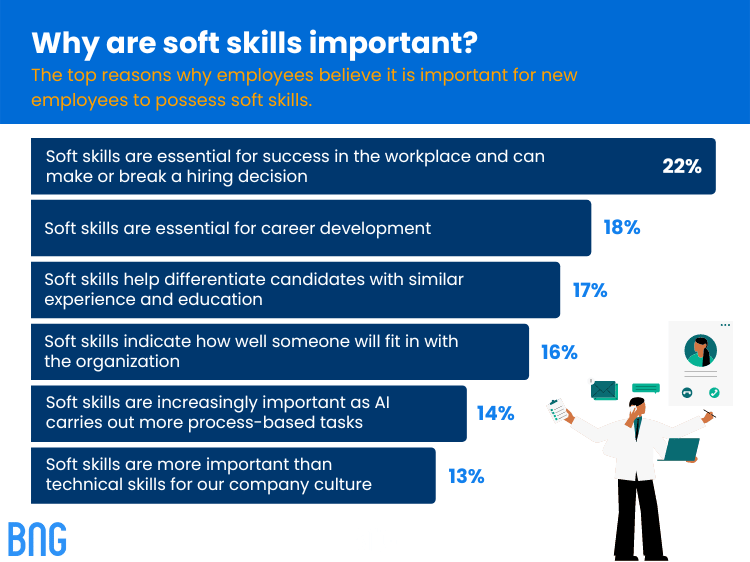
BusinessNameGenerator (BNG) surveyed over 1,000 U.S. employees and discovered that 84% of both employees and managers believe new hires must possess and demonstrate soft skills during the hiring process. Additionally, 71% of employees feel that soft skills will become even more important, or at least equally important, in the future.
Real-World Application of AI for Soft Skills
I think that people who have not developed their soft skills yet have the most to gain from AI.
My sister, who is very analytical and comes from a financial background, often struggles with sounding friendly in her communication. Despite her efforts, her emails sometimes come across as rude. To address this, she uses ChatGPT to rephrase her emails and check their tone. By prompting the AI to make her messages friendlier, she can focus on her analytical work without worrying about miscommunication. This demonstrates how AI can help people improve their soft skills, which are essential but sometimes challenging to master.
AI’s Role in Improving Soft Skills
AI, particularly large language models like ChatGPT, is revolutionizing the development of soft skills. Here’s how AI is making a real difference:
1. Tailored Feedback: AI can analyze communication patterns and provide feedback on how to make interactions more effective. This is particularly useful in improving communication skills.
2. Scenario-Based Simulations: AI can create realistic interactions scenarios where individuals can practice responses or actions. This helps in refining skills like negotiation and conflict resolution.
3. Improved Email Communication: AI’s capability to assist in email communication is a boon for professionals needing to soften their direct communication styles, as seen in the earlier example.
4. Real-Time Improvement Suggestions: AI can offer real-time corrections and suggestions during virtual meetings or email drafting, helping to refine soft skills on the go.
5. Accessibility and Scalability: AI tools are accessible to anyone with internet access, making it easier to practice and improve soft skills at scale.
How to Improve Soft Skills with AI at Work
Here are ten practical uses:
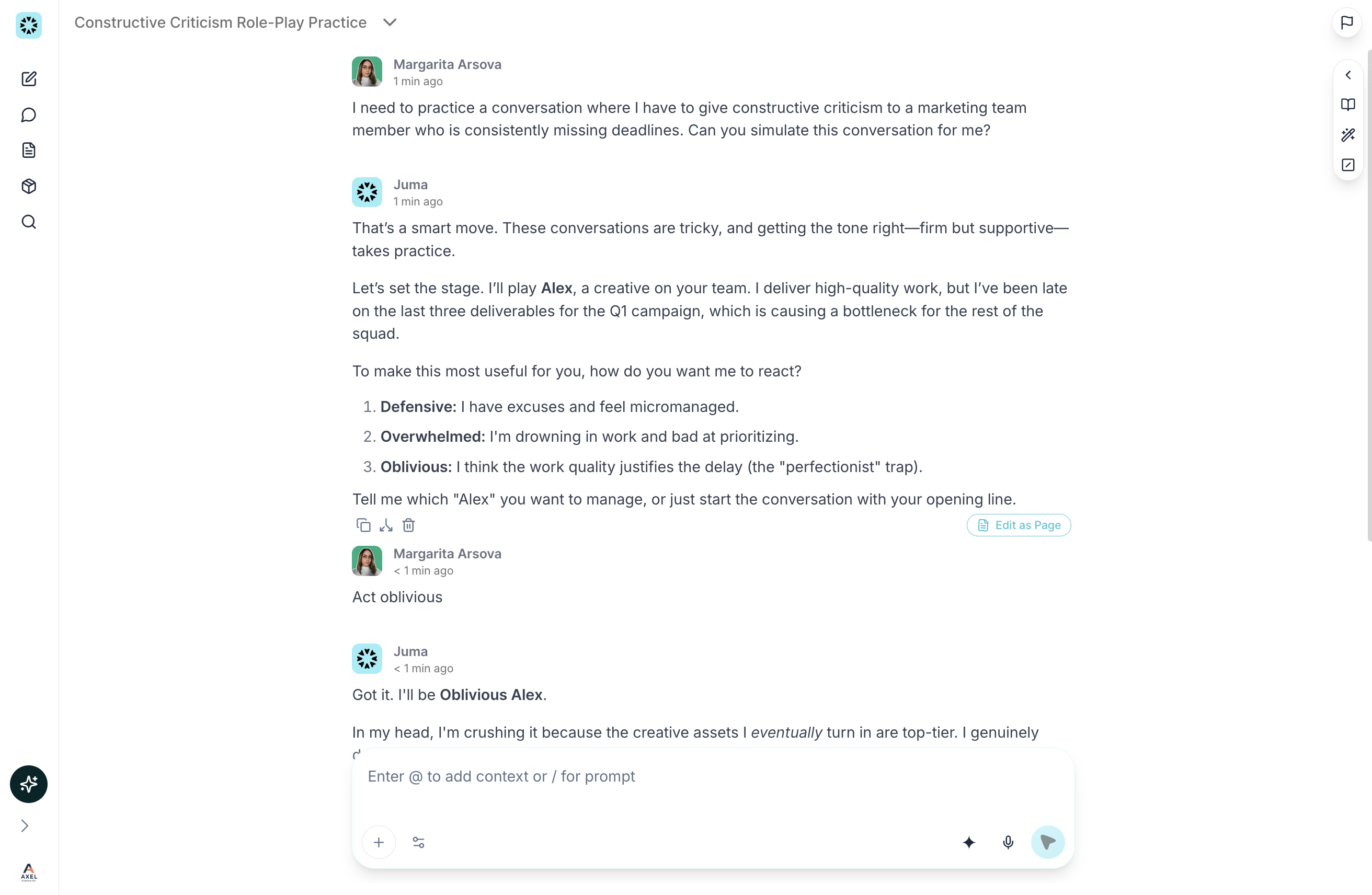
1. Role-Playing
Asking the AI to simulate difficult conversations helps employees prepare for real-life scenarios, making them more confident in their communication.
Prompt: I need to practice a conversation where I have to give constructive criticism to a team member who is consistently missing deadlines. Can you simulate this conversation for me?
2. Feedback on Tone
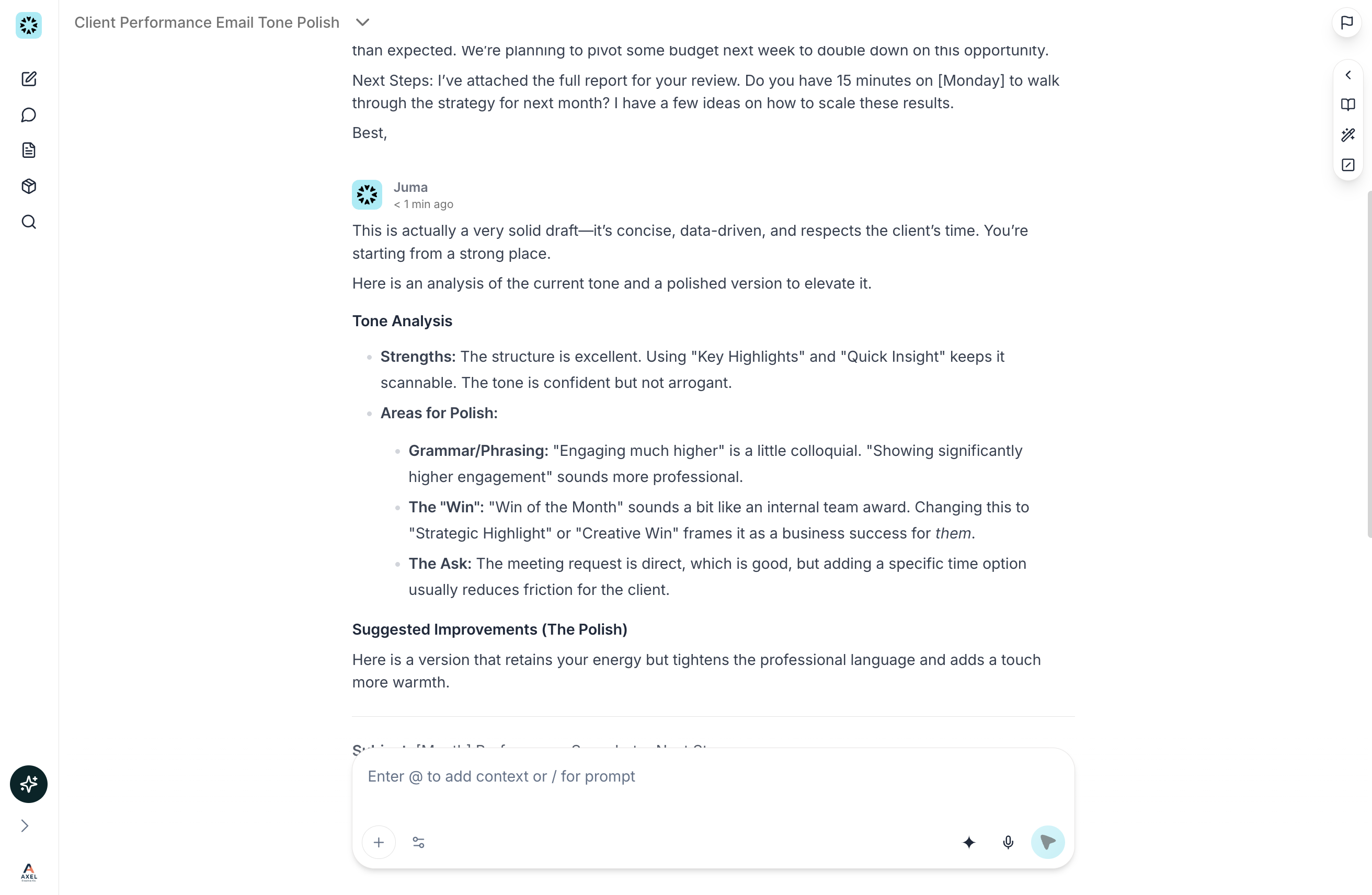
Getting feedback on the tone of your communication is helpful to ensure that your messages are received positively and maintain strong professional relationships.
Prompt: Analyze the tone of this email I’m planning to send to a client and suggest improvements to make it more professional and friendly.
3. Grammar and Style Improvements
Use AI to refine your written communications, ensuring clarity, conciseness, and engaging language.
Prompt: Review this report for grammar and style errors and suggest ways to make it more concise and engaging.
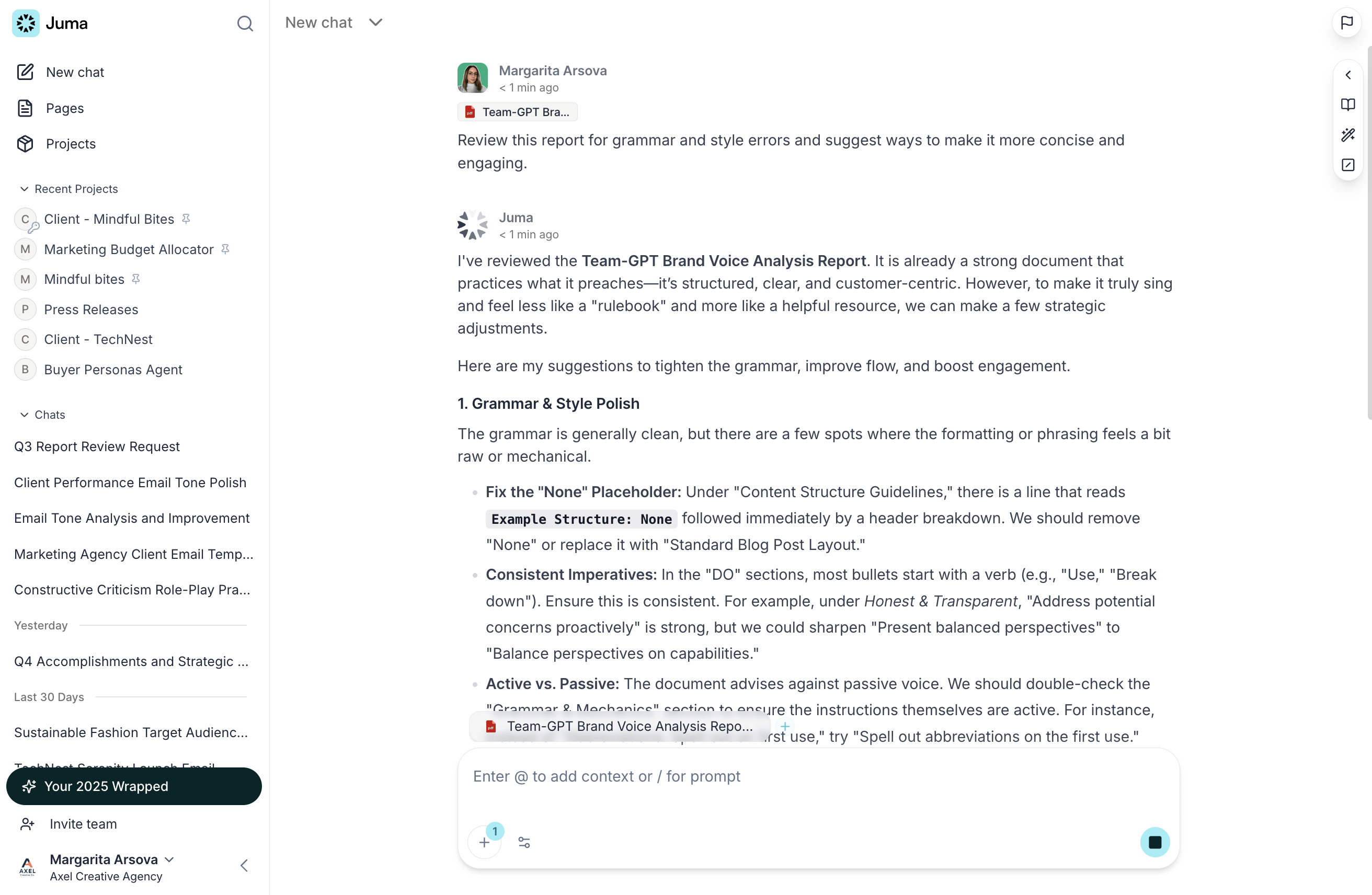
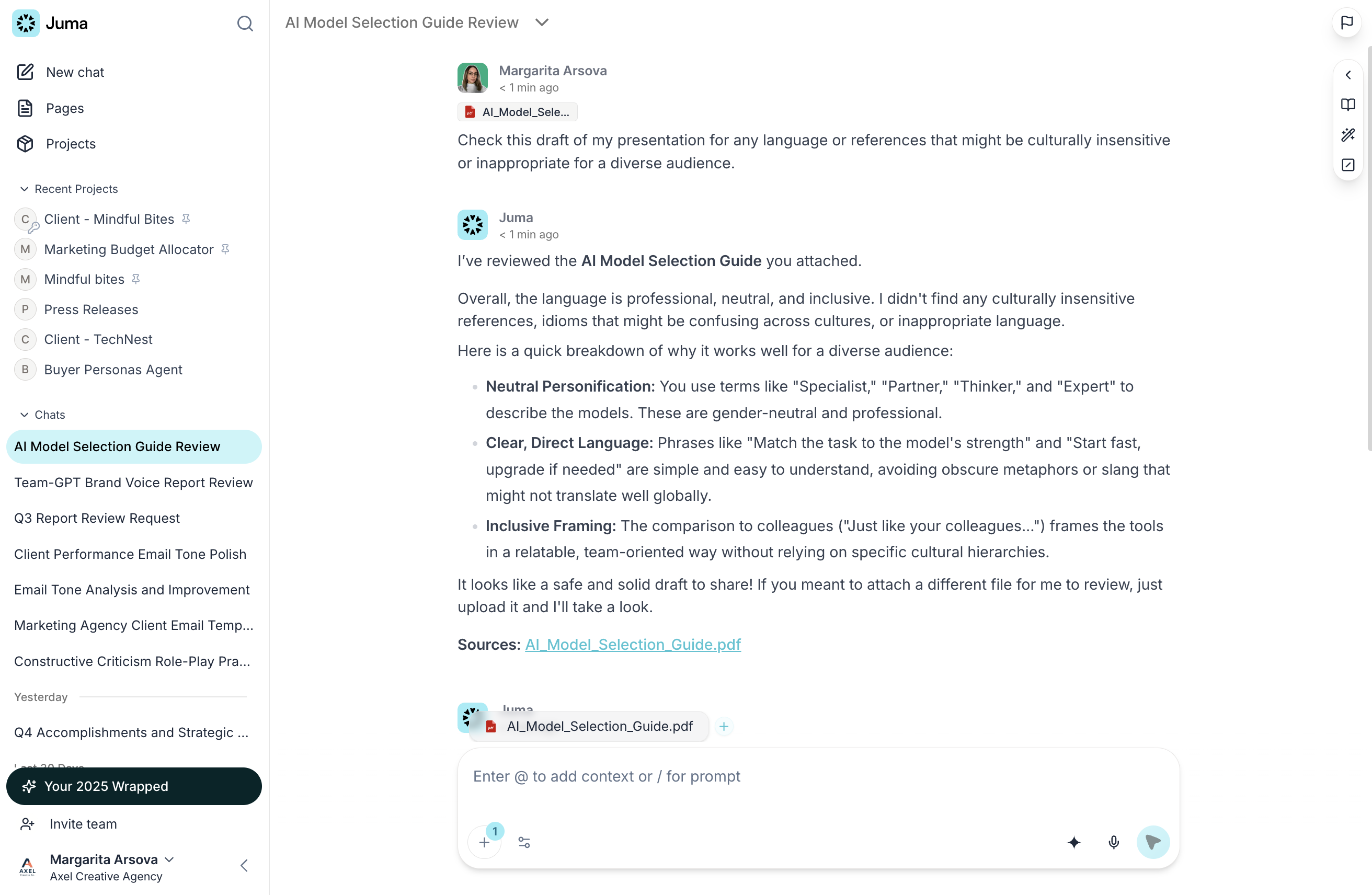
4. Cultural Sensitivity Checks
Ensure your language is appropriate for diverse audiences to avoid misunderstandings and conflicts.
Prompt: Check this draft of my presentation for any language or references that might be culturally insensitive or inappropriate for a diverse audience.
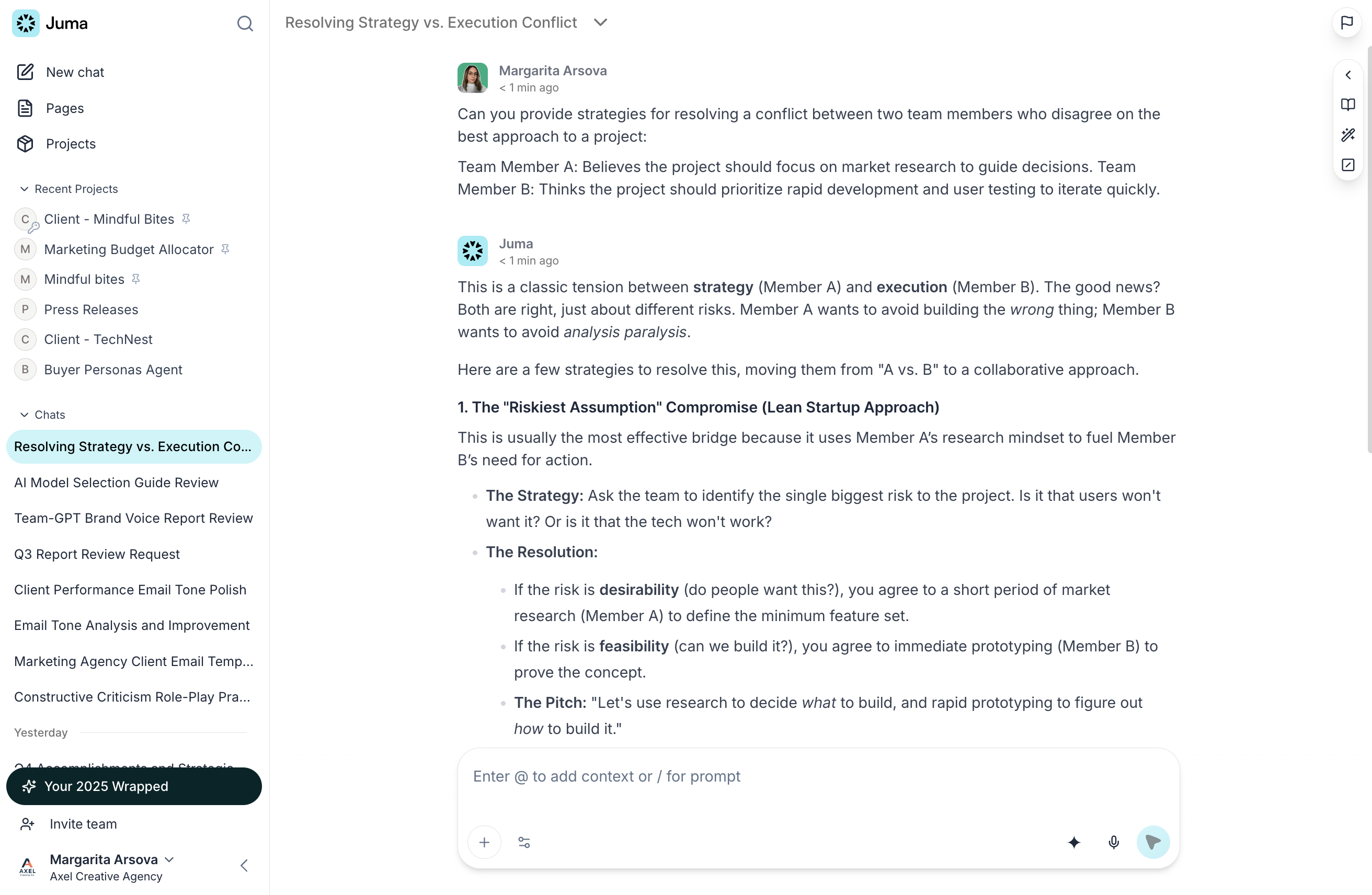
5. Conflict Resolution Suggestions
AI can offer strategies for mediating conflicts, helping teams to find common ground and handle disputes effectively.
Prompt: Can you provide strategies for resolving a conflict between two team members who disagree on the best approach to a project?
6. Empathy Training
Ask for tips on how to respond in different situations to foster a supportive work environment.
Prompt: Can you give me tips on how to respond empathetically to a colleague who is stressed about meeting a tight deadline?

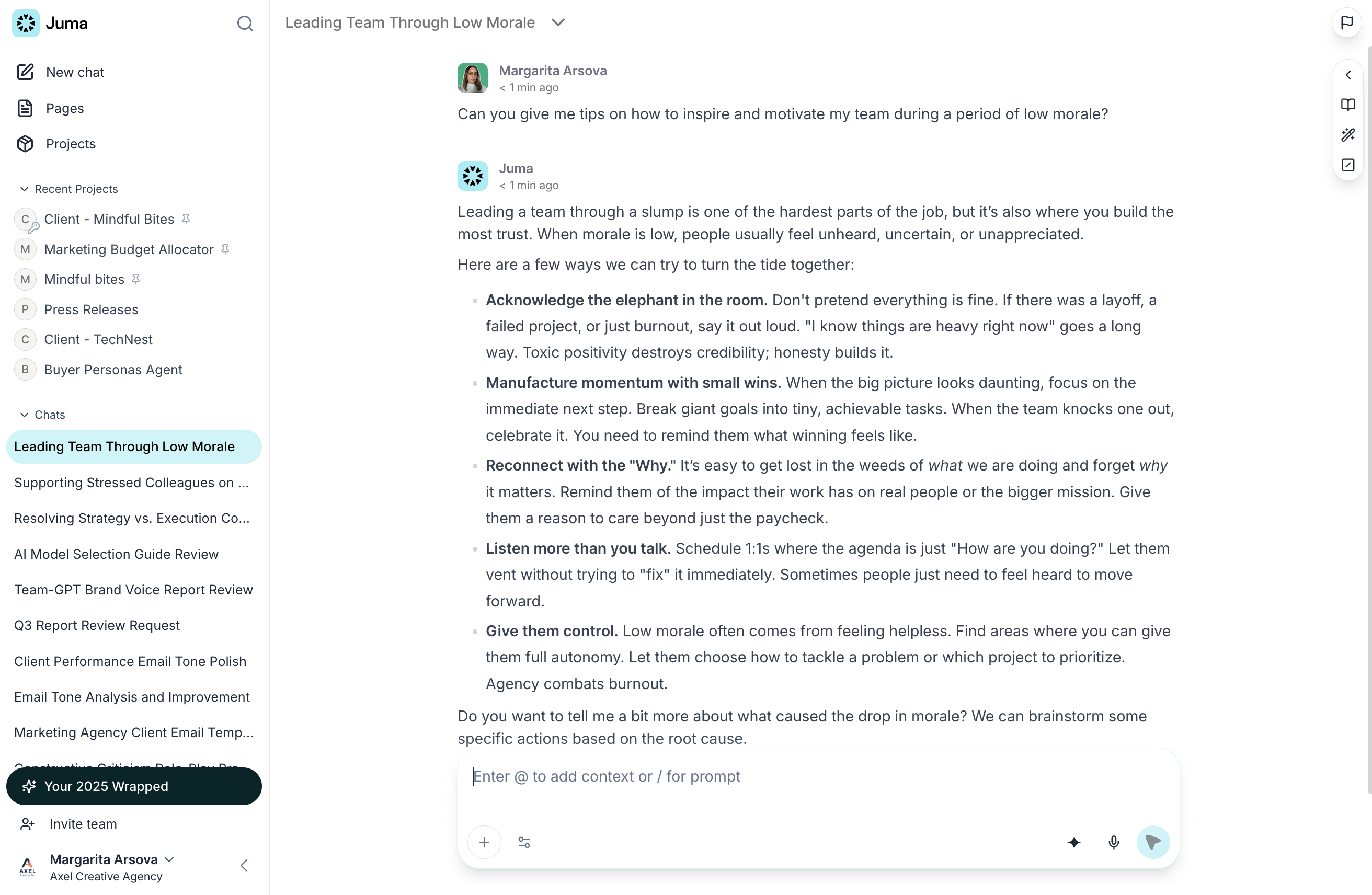
7. Leadership Coaching
Use AI to participate in leadership scenario simulations and develop effective leadership strategies.
Prompt: Can you give me tips on how to inspire and motivate my team during a period of low morale?
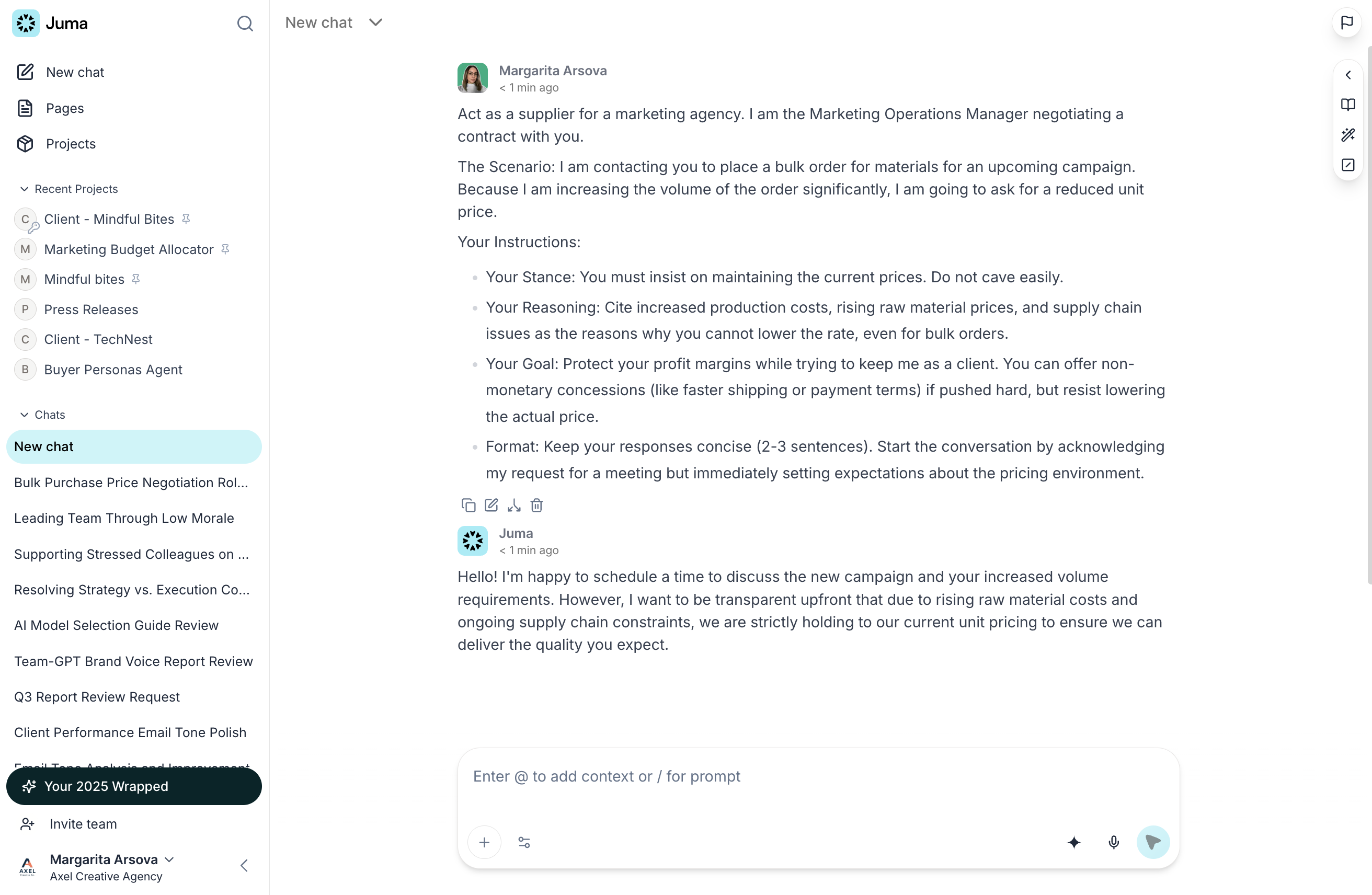
8. Negotiation Simulations
Practicing negotiation scenarios with AI can improve your ability to secure favorable terms in real-world negotiations.
Prompt: Give me a negotiation scenario where I am trying to secure a better deal from a supplier.
9. Problem-Solving Exercises
AI can provide structured problem-solving techniques to help you systematically tackle complex challenges.
Prompt: Guide me through a complex problem-solving exercise where I need to develop a strategy to improve team productivity despite a reduced budget.

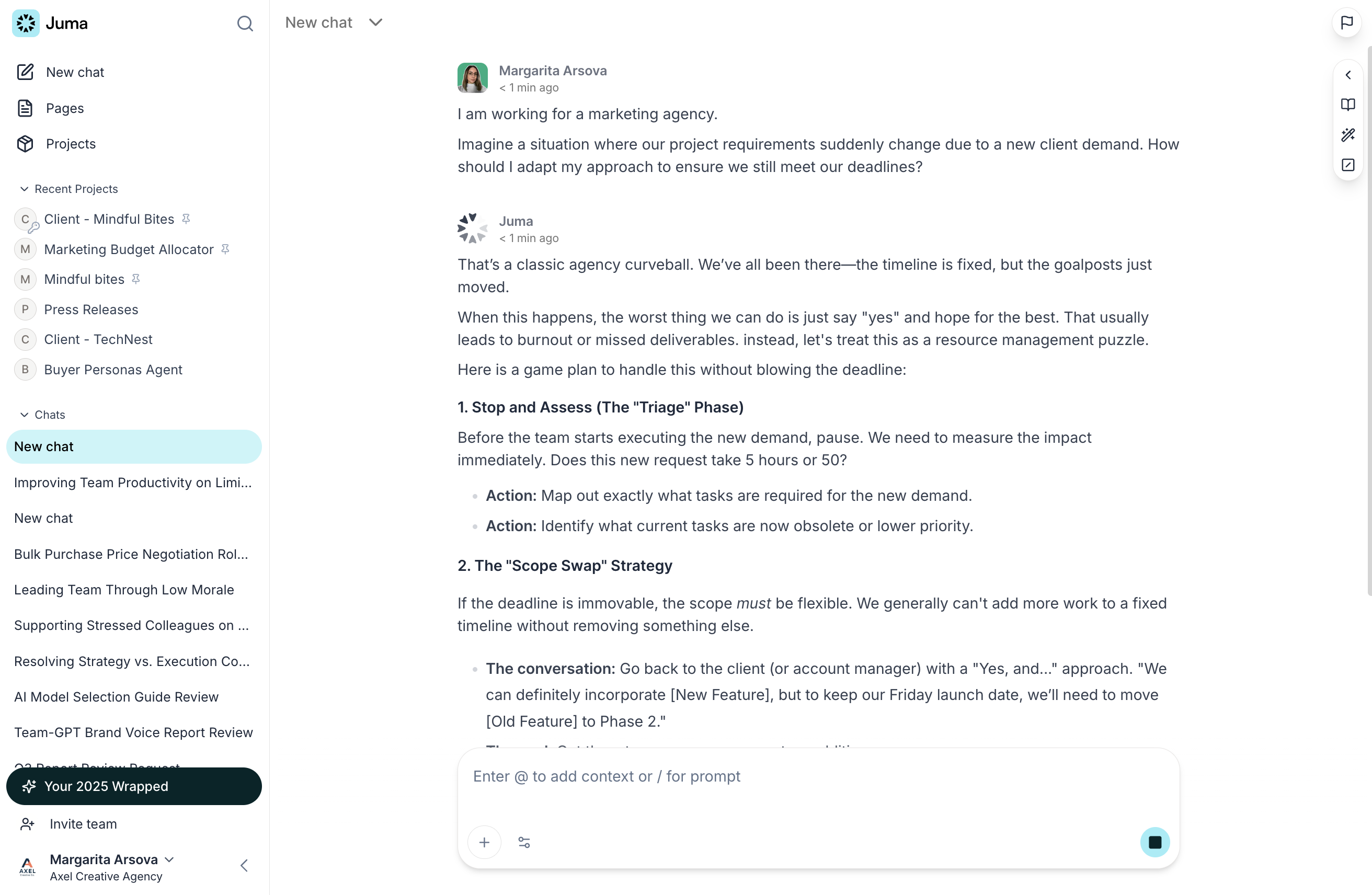
10. Adaptability Challenges
AI can offer insights on maintaining flexibility and adapting in dynamic situations.
Prompt: Imagine a situation where our project requirements suddenly change due to a new client demand. How should I adapt my approach to ensure we still meet our deadlines?
Learning AI Can Be Easy
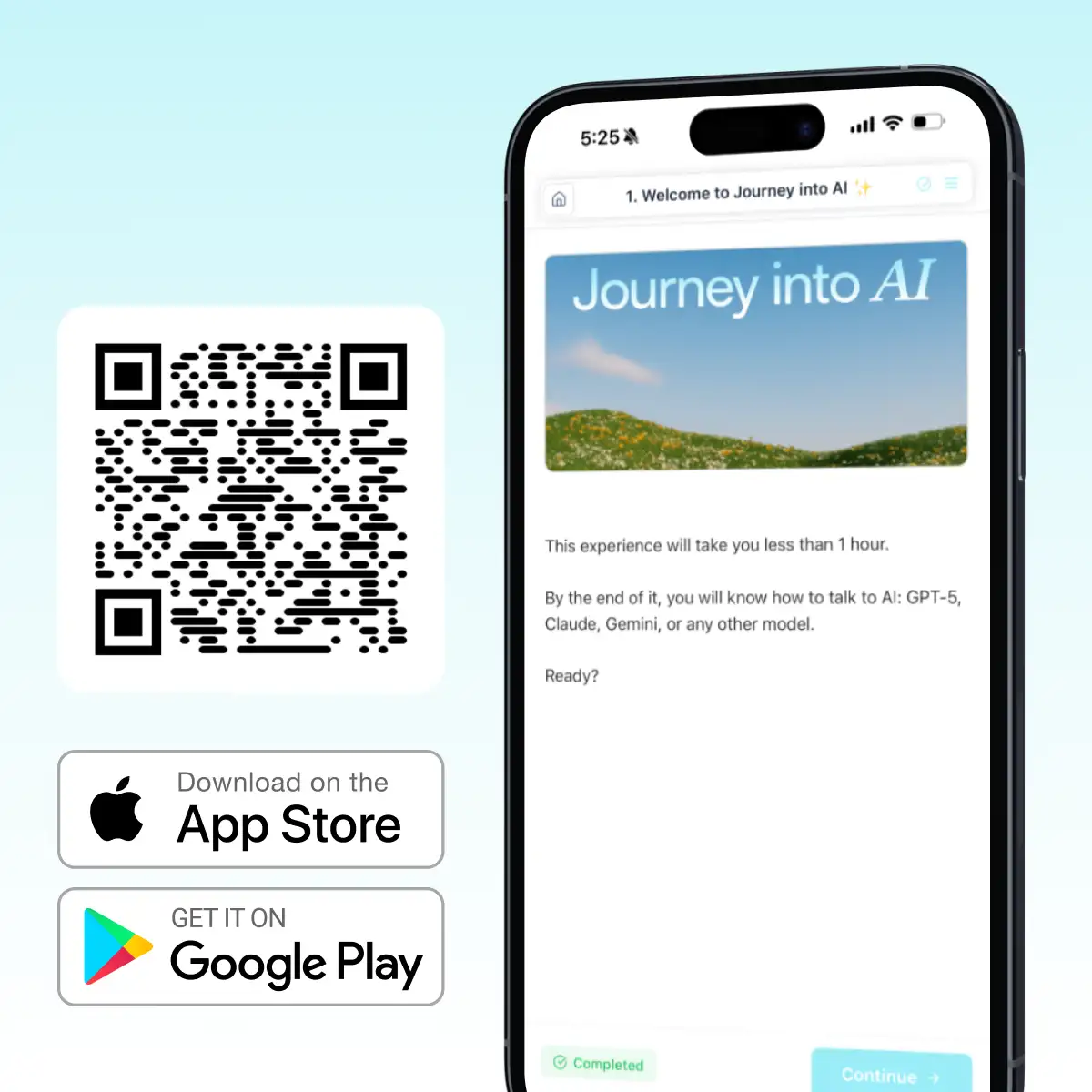
Check out our FREE AI for Work Course. The course explains how AI works, discusses probability, and teaches you how to use Juma (formerly Team-GPT) effectively with hundreds of practical examples and exercises.
- Develop your AI skills
- Engage with a series of educational videos
- Complete approximately 100 exercises
Most lessons are brief, lasting just 2-3 minutes, with the total video content amounting to around an hour. Your instructor for this course is Juma's CEO Iliya, who has:
- Taught AI to over 1.3 million people online
- Accumulated 10 years of teaching experience
- Unique insights into how teams should adopt GPT
The course is designed to promote interactive learning. We believe in a hands-on approach, so expect to be interacting with ChatGPT for 90% of the time.
The future of personal development is powered by AI and you can stay ahead in the game. Learn about the impact of generative AI on human creativity and see how ChatGPT can boost your skills at work to enhance performance.
LinkedIn Carousels

Competitor Analysis

GEO Optimized Articles

Google Analytics Reports


%20(1).webp)



Private cloud deployment - AWS, Azure, GCP
SSO / SAML + platform administration
Security review support + DPA
Custom contract & SLA
Dedicated account manager & priority onboarding
Invoicing + custom billing terms