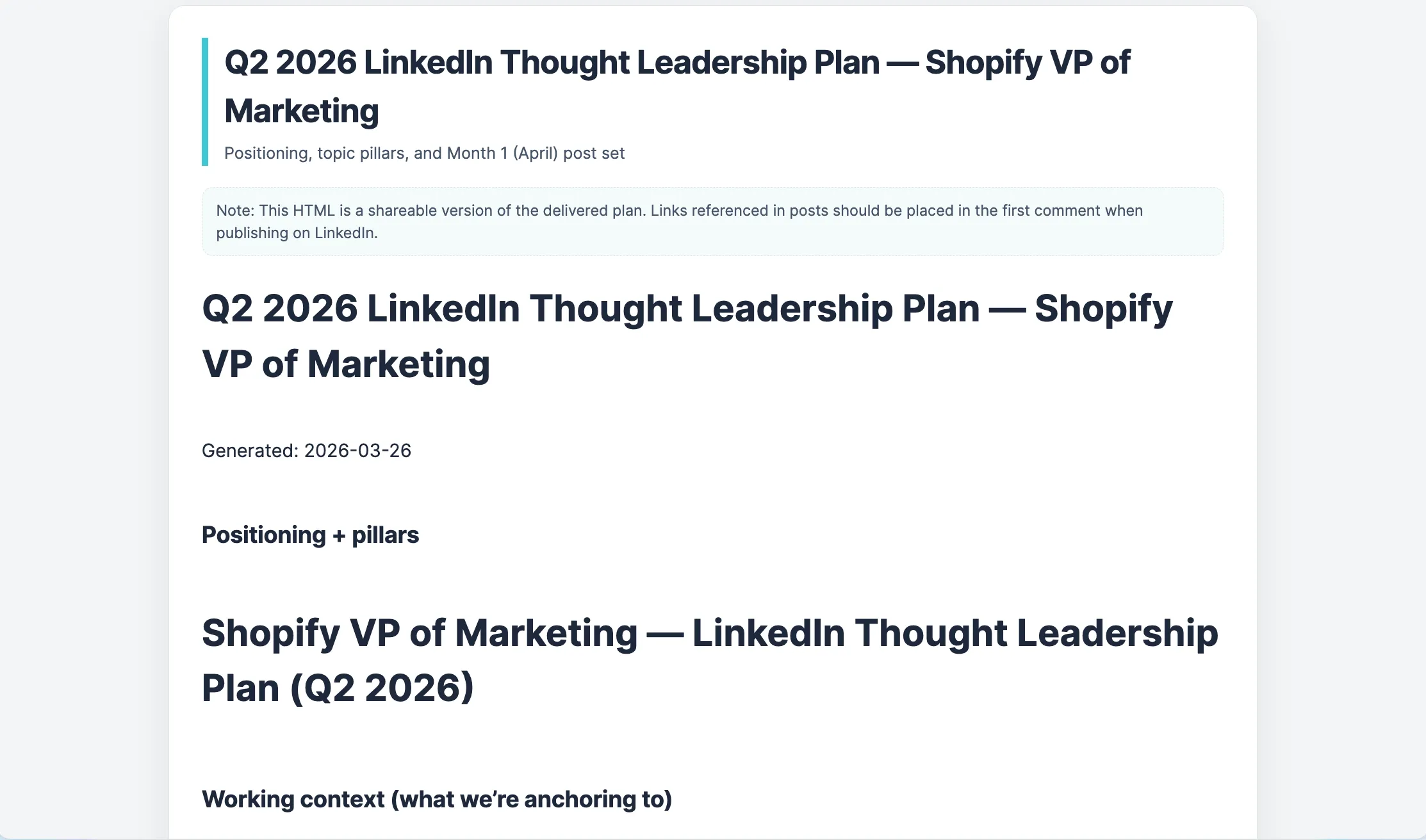
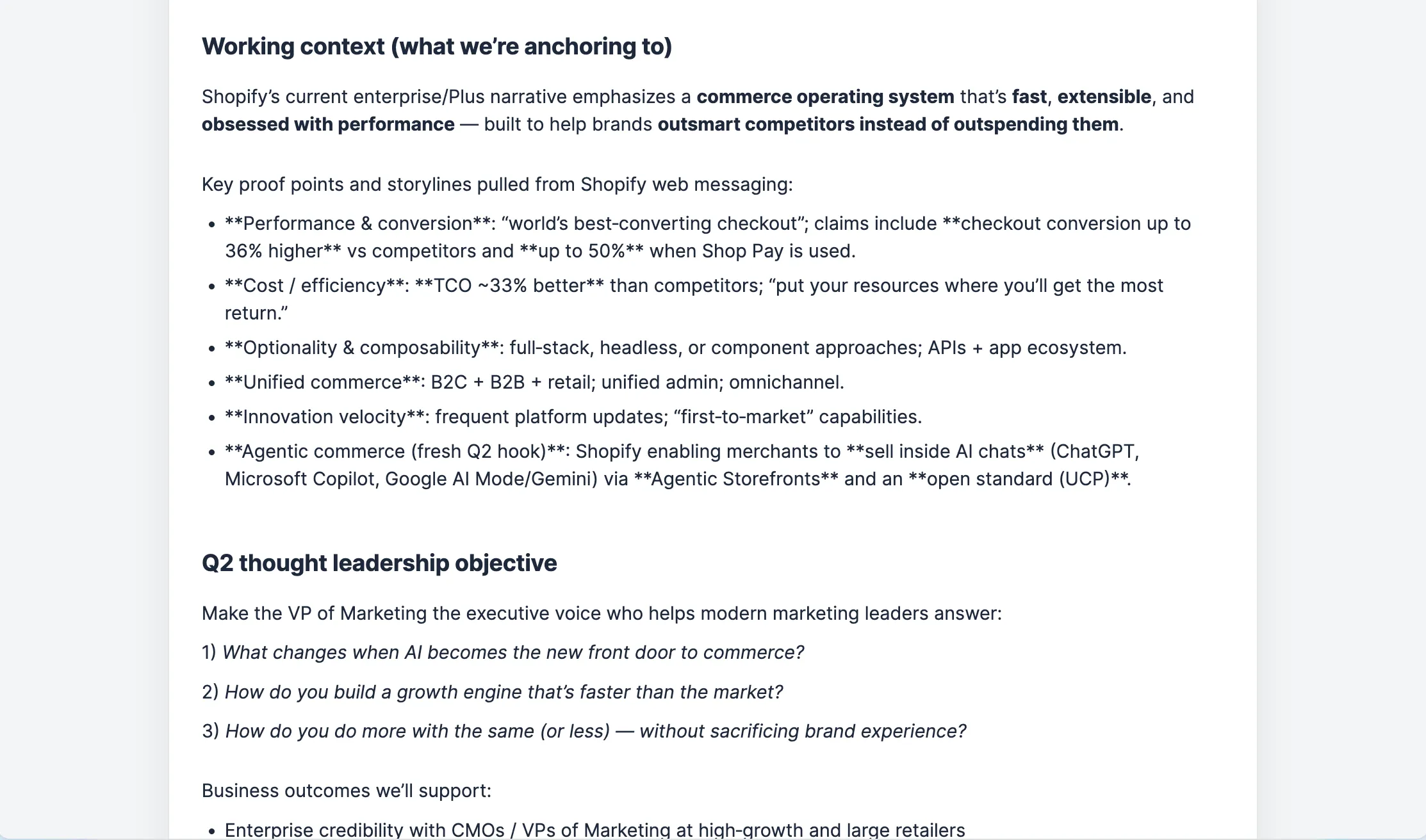
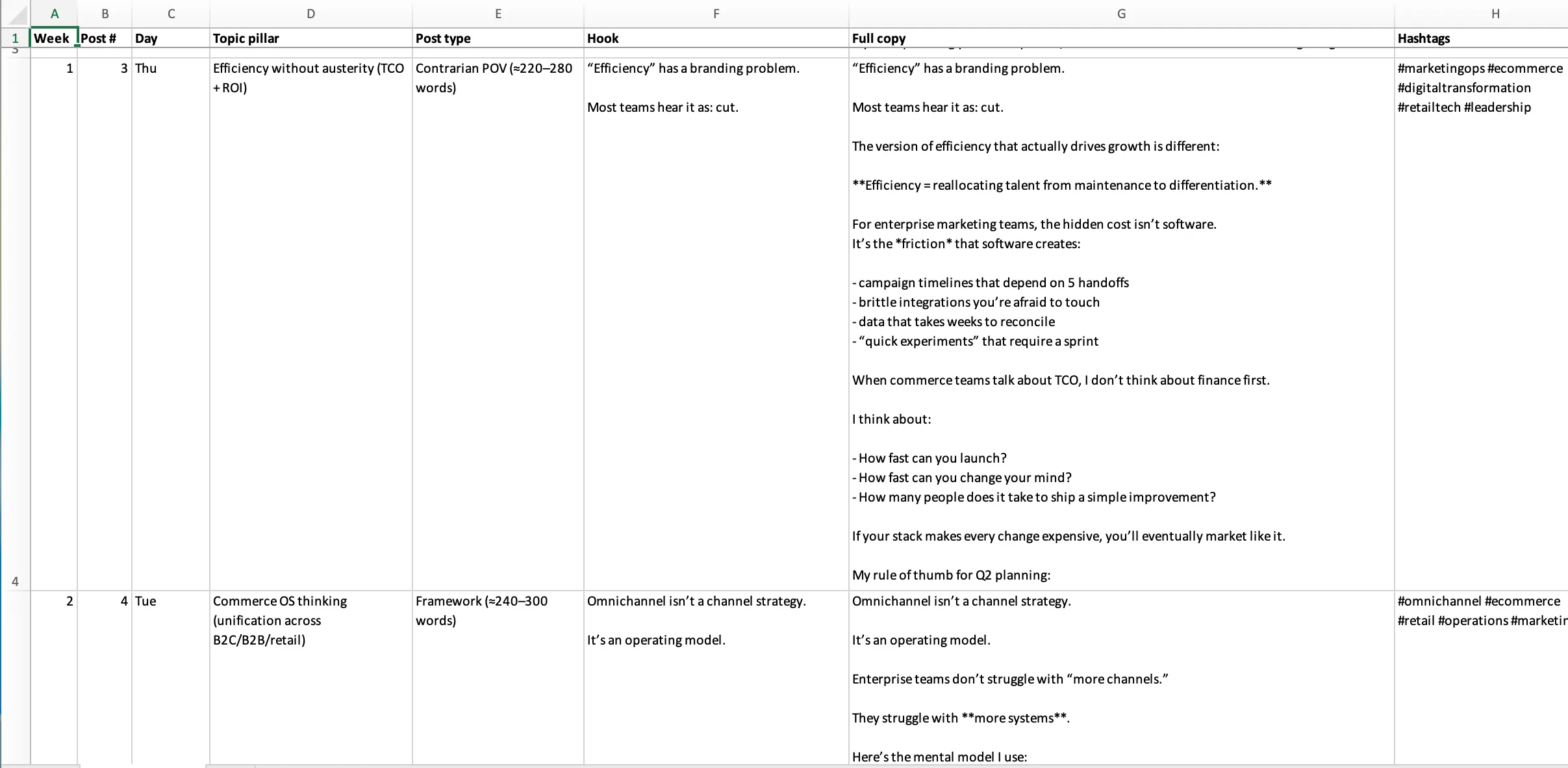
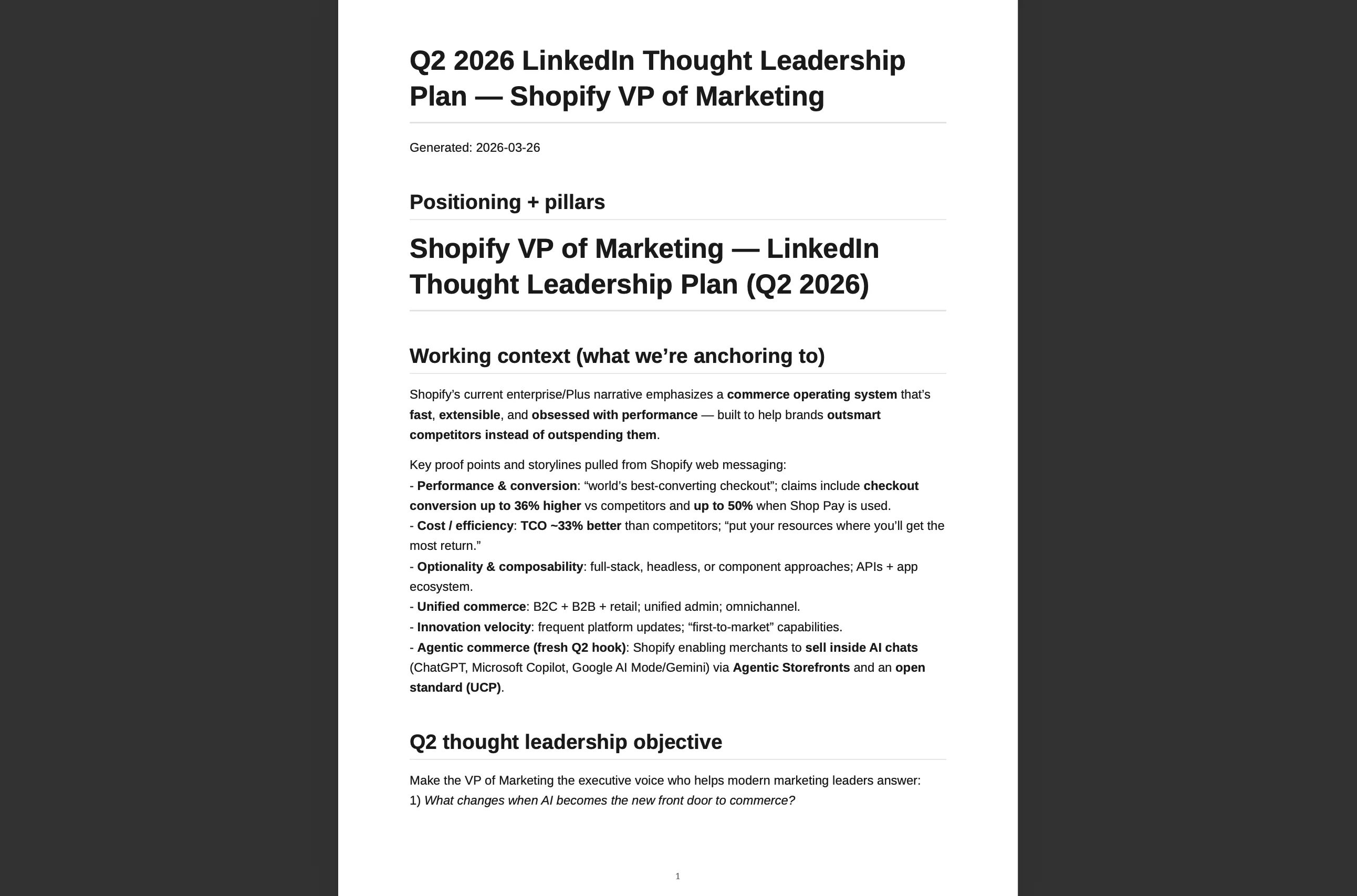
Set up your client project: voice profile, positioning, and topic pillars
Teams build one Juma Project per client and add context over time. Every flow the team runs for that client pulls from the same project. If a project already exists, adding the executive's voice and positioning means each new quarter's thought leadership plan builds on what came before.
What to add
Voice Profile
How the executive sounds on LinkedIn: tone, vocabulary, hook style, paragraph structure, what to avoid. Add this and every post matches their voice from the first draft, whether the original writer or a new team member creates it.
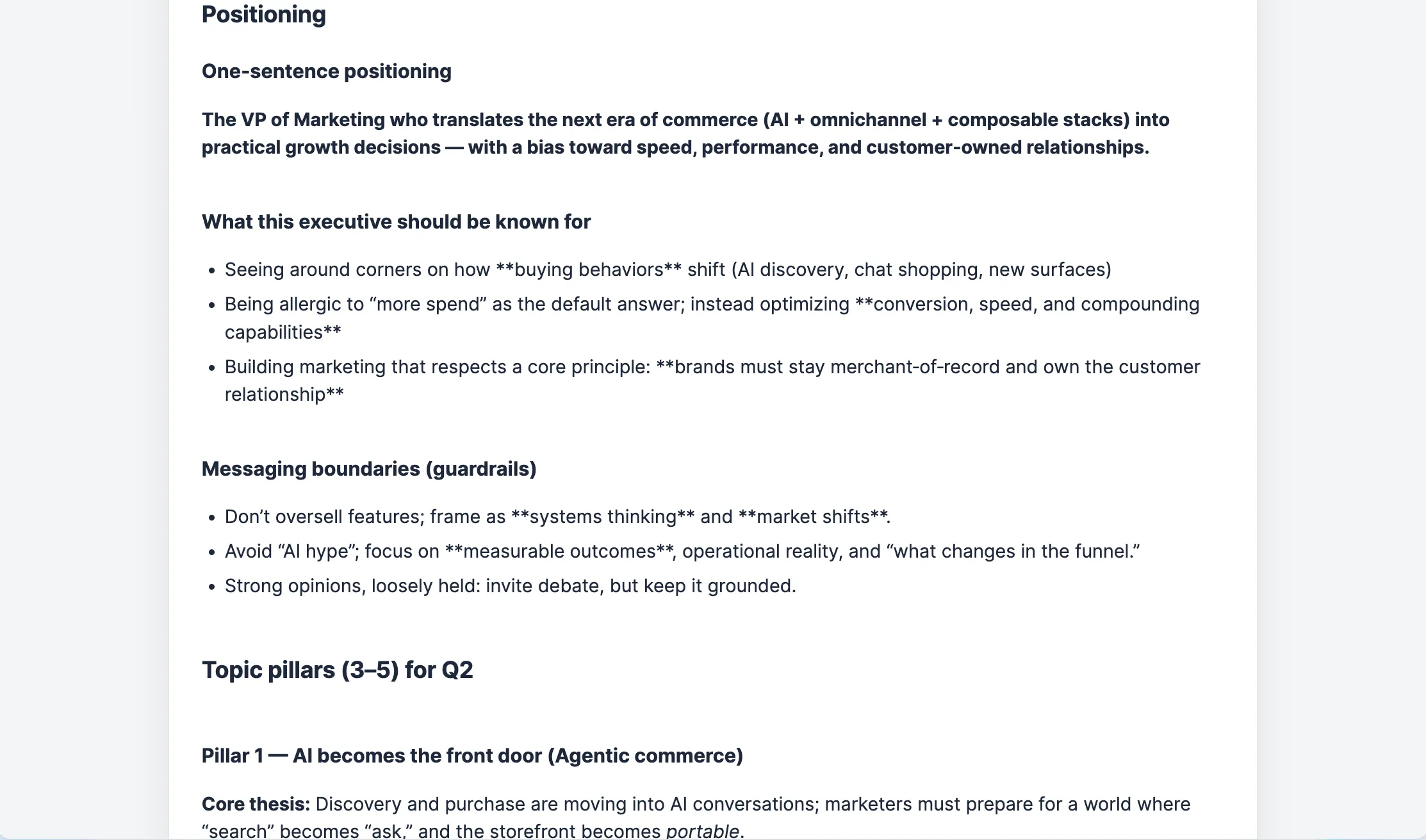
Positioning Document
The executive's LinkedIn territory: what they're known for, their unique angle, how they differ from other voices in the space. This anchors every topic decision to the strategy instead of letting content drift.
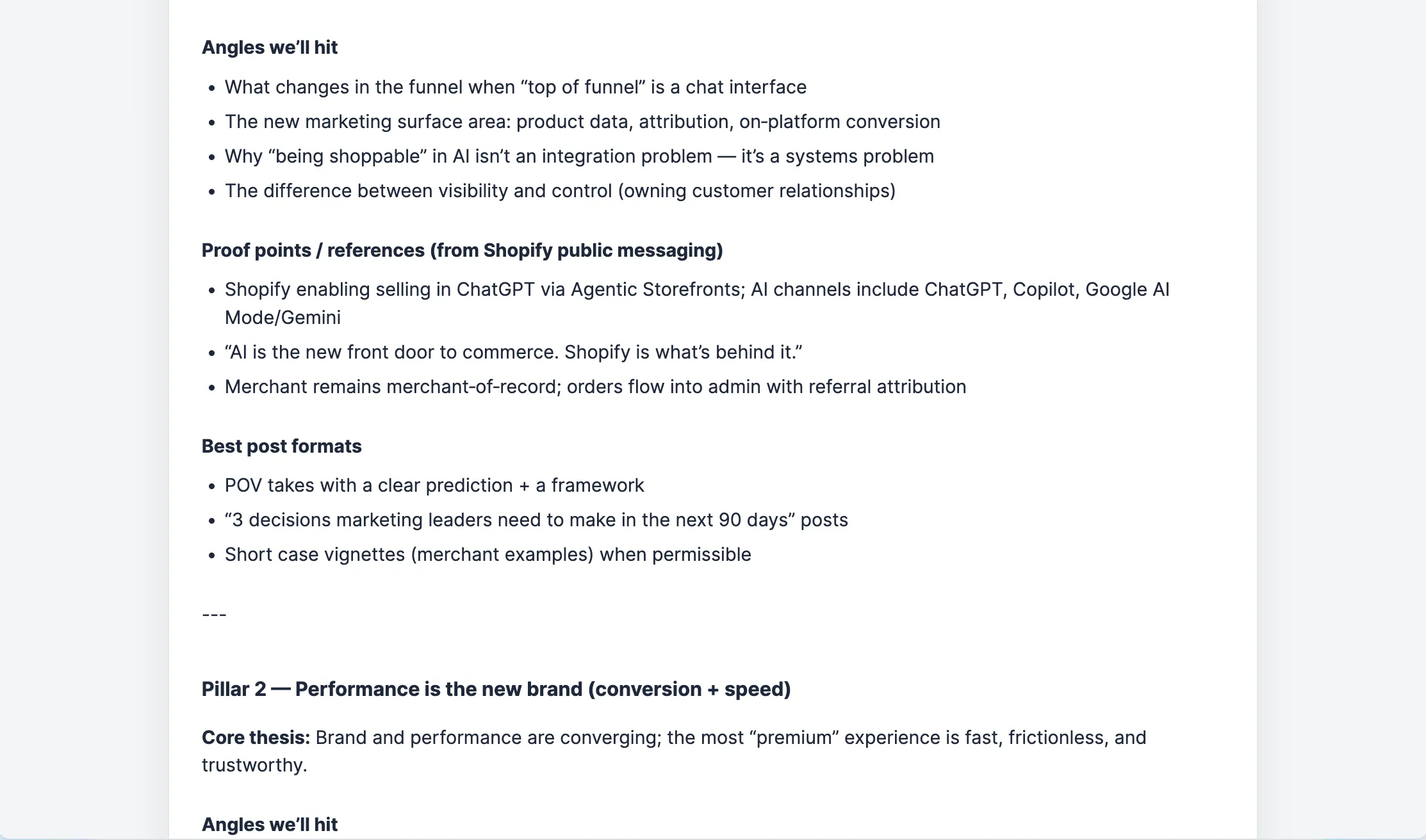
Topic Pillars and Content Themes
The 3-5 recurring themes with target distribution ratios and specific sub-topics. Add this and the team pulls from established territory instead of brainstorming angles each batch.
LinkedIn Post Examples
The executive's best-performing posts with engagement data and notes on what worked. The AI matches these patterns when creating new content.
Guide Juma with project info
Add a short description to each knowledge item in the project's info field so Juma knows what each file contains and when to use it. For example:
- Voice Profile: "How our CMO writes on LinkedIn. Follow this voice for all thought leadership posts."
- Positioning Document: "The CMO's LinkedIn positioning: territory, unique angle, differentiation. Use this to guide topic selection."
- Topic Pillars: "5 recurring themes with distribution targets. Rotate posts across these pillars."
Build a thought leadership plan your executive will stick to
Frequently Asked Questions
How much time does this Flow save compared to building a LinkedIn thought leadership plan manually?
This Flow replaces several days of manual work with a single run. Building a thought leadership plan manually spans competitive research, positioning strategy, pillar development, post writing, and cadence planning - each a separate work session. Juma compresses all of it into one output, so a team can go from brief to a publish-ready first month in under an hour.
For agencies managing multiple executive programs, the time saving multiplies. Each quarter's refresh takes a fraction of the original time because the voice reference and positioning document already exist in the client project. New batches start from an established foundation rather than repeating discovery work from scratch. The team reviews and schedules rather than writing from a blank brief - a fundamentally different workflow that compounds value as the program matures.
What does the positioning strategy include?
The positioning strategy identifies the specific territory the executive claims on LinkedIn, based on their experience, gaps in the current industry conversation, and what other visible voices are not covering. The output names what the executive posts about, what they avoid, and how they differ from the two or three adjacent voices in the same space.
That distinction matters because generic positioning produces generic content, and generic content earns low engagement over time. The strategy also identifies what not to claim: topics that already carry identical takes from every other VP in the space weaken a program's distinctiveness. Knowing what to avoid is as useful as knowing what to own. The positioning document travels with the plan so every topic decision in future quarters connects back to a defined strategic foundation rather than drifting based on what feels topical that week.
Can this Flow work for executives who have never posted on LinkedIn?
Yes. The positioning strategy and topic pillars work the same way regardless of the executive's posting history. The research that shapes those outputs comes from the industry landscape, the competitive conversation, and the business objectives the team provides - not from the executive's own LinkedIn activity.
The voice reference document takes a different approach when no existing posts are available. Juma builds it from the role description, communication style notes, and any examples the team provides in the prompt. Adding writing samples such as internal memos, recorded presentations, or interview transcripts gives the Flow enough material to define a consistent voice. The team can also name two or three thought leaders the executive admires to calibrate format choices, post length, and tone without requiring original content from the executive. The result is a voice reference that gives writers a clear direction from day one.
.webp)