Set up your client project: target keywords, competitor URLs, and past audits
A Juma Project is a shared space where the team stores everything Juma needs to know about a client. Create one project per client, add context as you go, and Juma will use what's relevant every time the team runs a flow. If the project already exists from other work, just add the SEO-specific items below.
What to add
Target Keywords
The keywords the client cares about most: branded terms, product terms, category terms. With this in the project, every audit compares performance against the keywords that matter to the business, not just whatever has the most impressions.
Competitor URLs
The 3-5 domains the client competes with in search. Juma uses these to pull competitive keyword data and benchmark the client's content against the right landscape instead of generic industry averages.
Past Audit Results
The most recent SEO audit, content inventory, or performance report. When running a follow-up audit, Juma compares against the previous baseline and flags what improved, what declined, and what is new since the last review.
Business Goals
What the client is trying to achieve with organic search: lead generation, product signups, brand awareness, e-commerce revenue. This shapes how Juma prioritizes recommendations. A page driving demo requests matters differently than a page driving blog reads.
Guide Juma with project info
Add a short description in the project's info field that tells Juma what each file contains and when to use it. For example: "Target Keywords: priority keyword list from Q1 2026 planning. Competitor URLs: top 5 organic competitors identified during onboarding. Past Audit: March 2026 full content audit, use as baseline for comparison." This helps Juma pick the right files for the right task without guessing.
Find out which pages are worth fixing first
Frequently Asked Questions
How much time does this Flow save compared to a manual content audit?
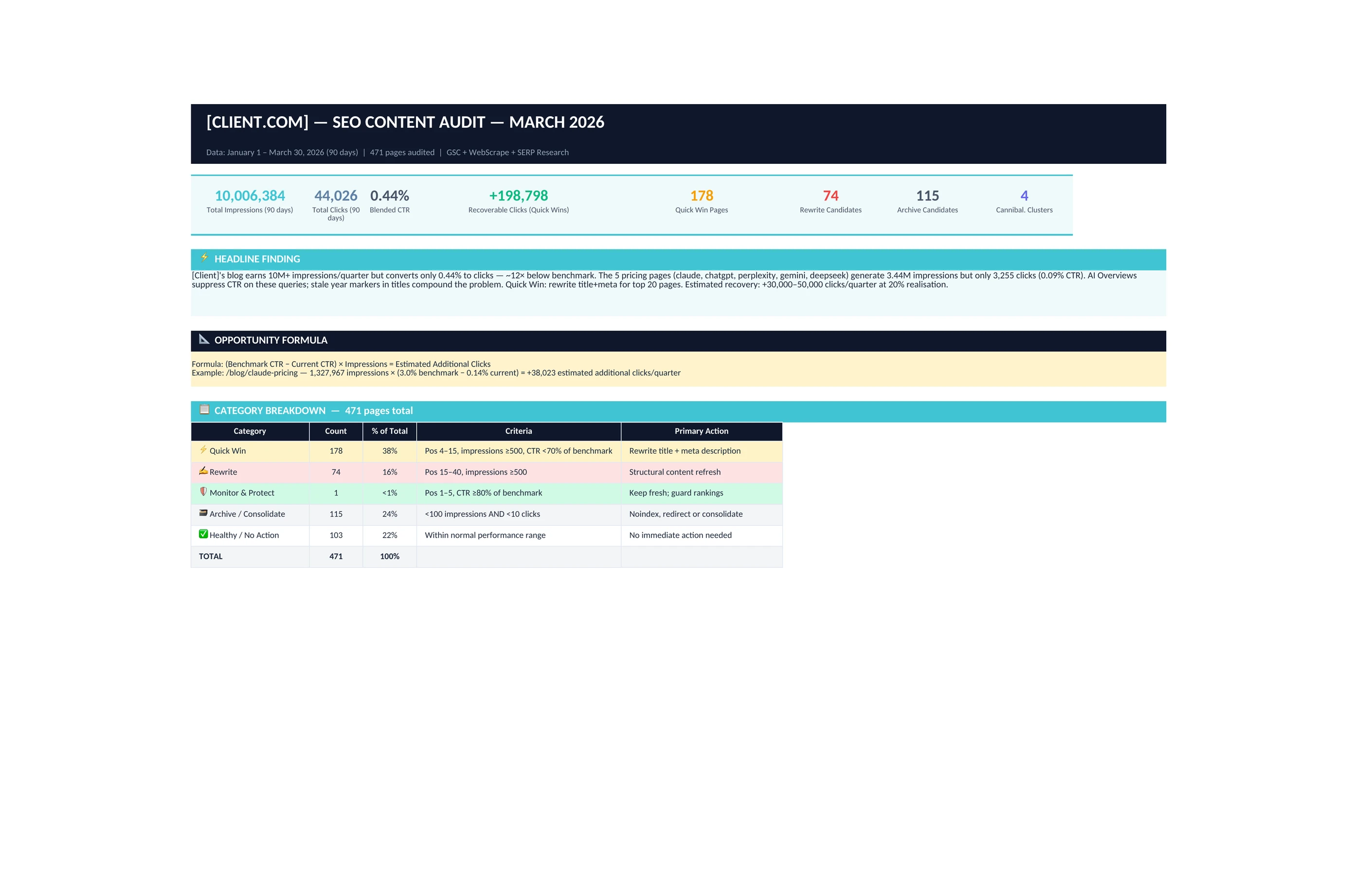
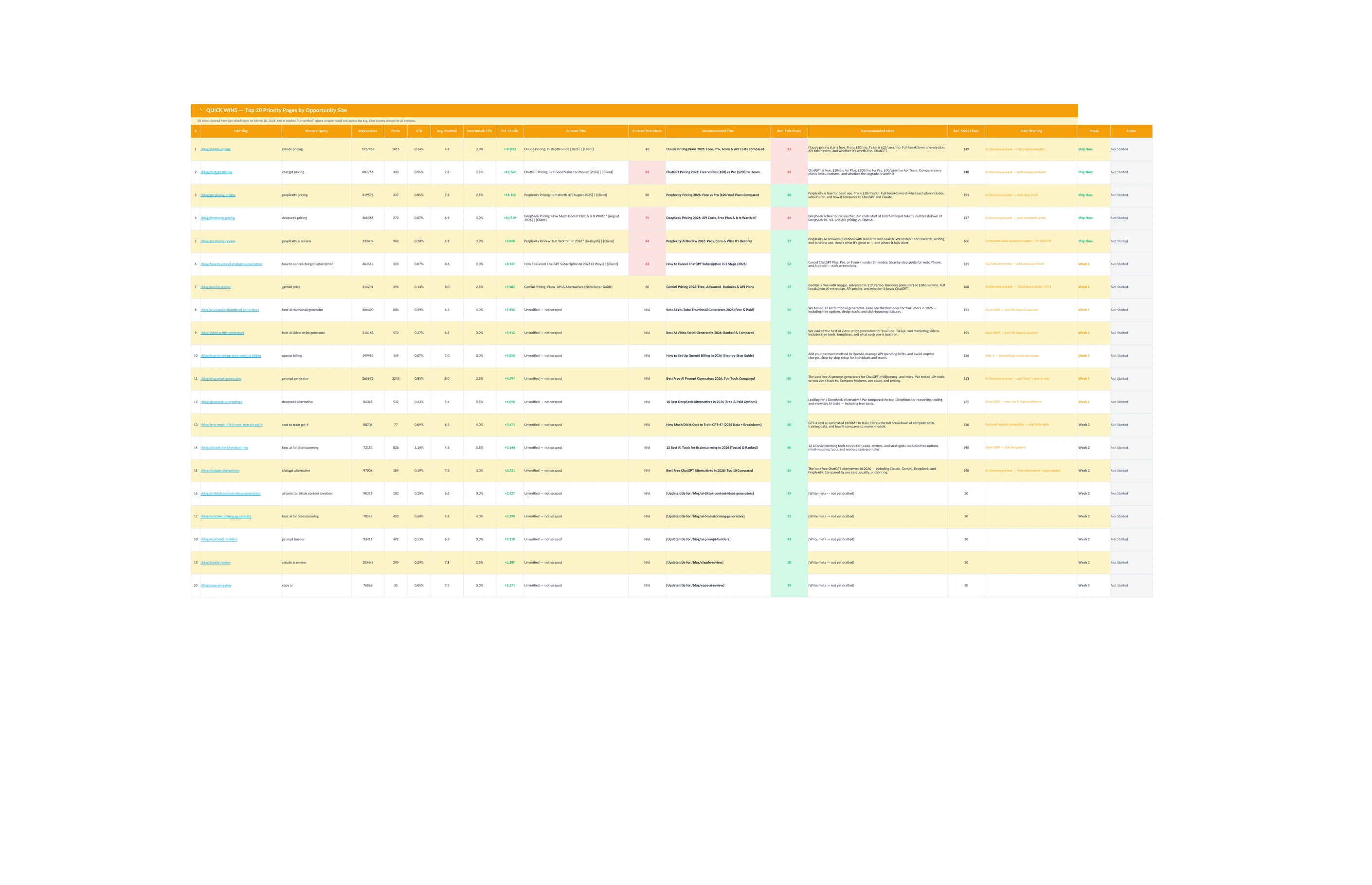
This Flow completes a website content audit across 50–100 pages in minutes, not the 8–15 hours a manual process requires. Juma applies a consistent scoring model to every page, runs a cannibalization check, and produces a PDF strategic overview and a scored Excel tracker without any manual data-pulling or spreadsheet setup.
The bigger advantage over manual audits is consistency. Different analysts weight signals differently, and there is no shared model to standardize what "needs fixing" means across a team. Juma applies the same scoring logic to every page every time, so recommendations are comparable across clients and audit cycles.
The scale difference compounds quickly. On a 200-page content library, a manual website content audit becomes a multi-week project. This Flow turns it into a single working session — and produces a more rigorous output than most manual reviews deliver.
What does the page scoring measure?
Each page is scored using Search Console performance signals: impressions, clicks, click-through rate relative to average position, and ranking trajectory over 90 days. Juma combines this with an on-page check covering title accuracy, content depth relative to competitors, and duplicate headings — producing one composite score and a specific action recommendation per page.
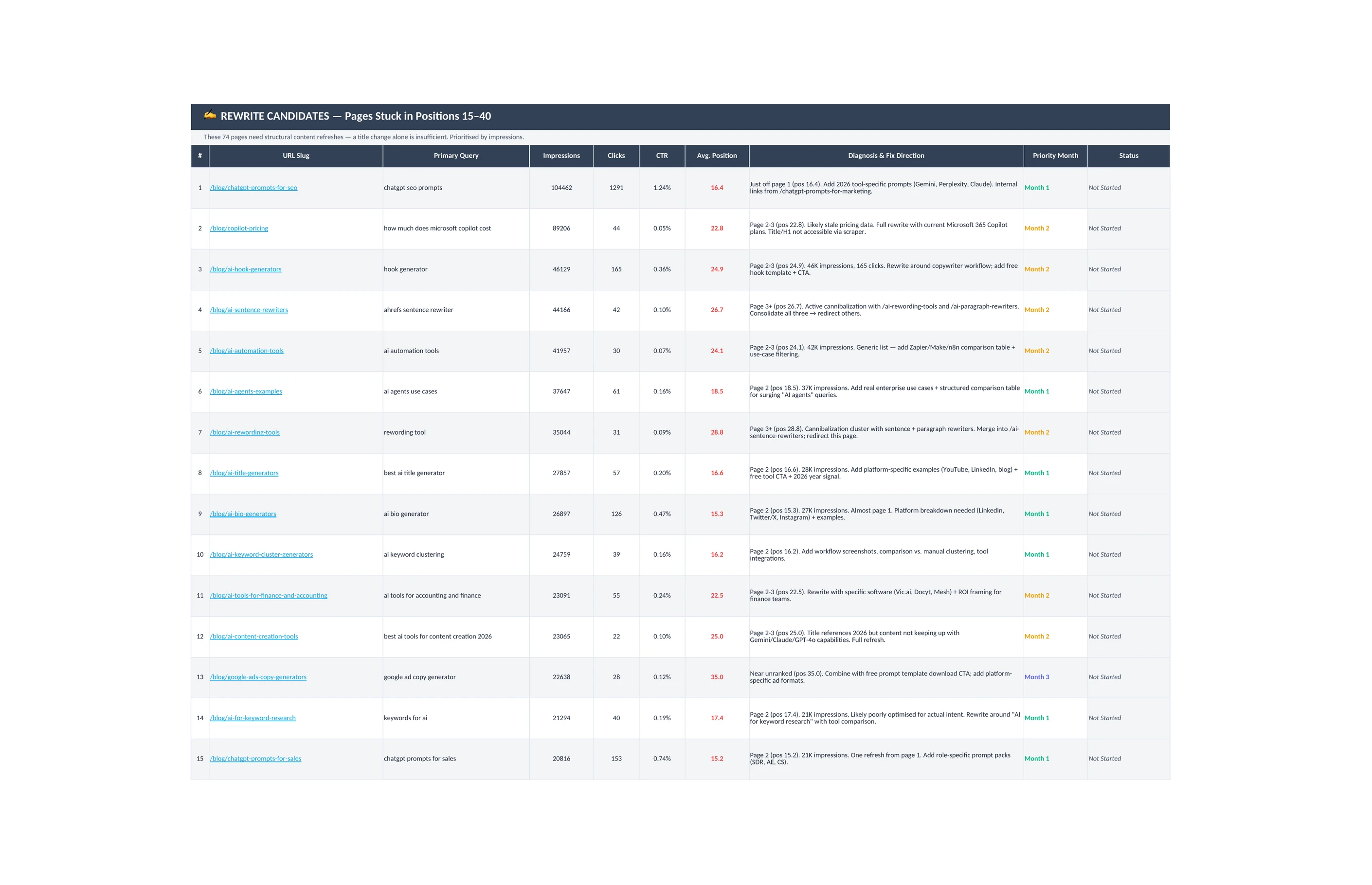
The composite score maps to four outcomes: fix it, consolidate it with a stronger page, update it to recover declining rankings, or cut it from the index. Each recommendation reflects the page's specific signal profile, not a generic best practice applied across the board.
The scoring also distinguishes between problem types. A page at position 3 with below-average CTR gets flagged for a title and meta rewrite. A page at position 15 with strong click intent gets flagged for content improvement. Same score tier, different fix — and the output makes that distinction explicit.
Can this Flow be used for a follow-up audit?
Yes. Add previous audit results to the client project and Juma compares the current state against that baseline, flagging what improved, what declined, and what is new since the last review. This turns a one-time snapshot into a quarterly process with documented, measurable progress attached to every cycle.
The comparison flags three categories. Improvements show pages that climbed in ranking, CTR, or click volume. Declines flag pages that lost ground and need investigation. New gaps surface topics that competitors started ranking for since the last cycle — these typically become highest-priority additions to the next content plan.
For agencies, the quarterly cadence repositions the service from project to retainer. The client builds a documented growth history across cycles, the team develops real expertise in the client's content landscape, and every subsequent audit runs faster and produces more targeted recommendations than the one before.
.webp)