Set up your client project: audience data, brand voice, and past persona work
A Juma Project is a shared space where the team stores everything Juma needs to know about a client. Create one project per client, add context as you go, and Juma will use what's relevant every time the team runs a flow. The more the team adds over time, the sharper every output gets.
What to add
Brand Voice Guide
How the client sounds across channels: tone, vocabulary, phrases to avoid. With this in the project, the "Key Message" section in every persona will come out on-brand from the first draft.
Audience Profile
What the team already knows about their customers: existing segments, demographic data, behavioral patterns, and any past research. This gives Juma a starting point so it builds on real knowledge rather than researching from scratch.
Past Persona Documents
The most recent version of the team's buyer personas. When updating, Juma will compare new research against the previous version and call out what shifted: new segments, changing demographics, evolving pain points, or competitive alternatives that were not relevant before.
Persona Template
If the team's personas need to follow a specific structure or format, upload a template or a past persona document as a reference. Juma will match the structure instead of using its default layout.
Guide Juma with project info
Add a short description to each knowledge item in the project's info field so Juma knows what each file contains and when to use it. For example:
- Brand Voice Guide: "Tone and vocabulary rules for all client-facing copy. Follow for Key Message sections."
- Audience Profile: "Existing segments from Q4 2025 research. Use as starting point for any persona work."
- Past Personas: "Current persona set. Compare against when doing a refresh."
Build personas your team will actually reference
Frequently Asked Questions
How much time does this Flow save compared to building buyer personas manually?
This Flow reduces buyer persona research from several days to under one hour. Manual persona work, including demographic research, competitor analysis, and behavioral synthesis, typically takes three to five days per market segment. This Flow returns a complete, documented profile set in a single session.
The research runs automatically in the background while the team answers a short set of targeted questions about scope and use case. There is no need to brief a researcher, schedule interviews, or source demographic data separately. Most teams complete their first full persona set in under 90 minutes from the moment they submit the initial brief.
Each profile includes demographics with cited sources, pain points, competitive alternatives, and a prioritization framework ready for immediate use. The team can move directly from the Flow output to campaign targeting or messaging work without a separate research brief.
What does each buyer persona profile include?
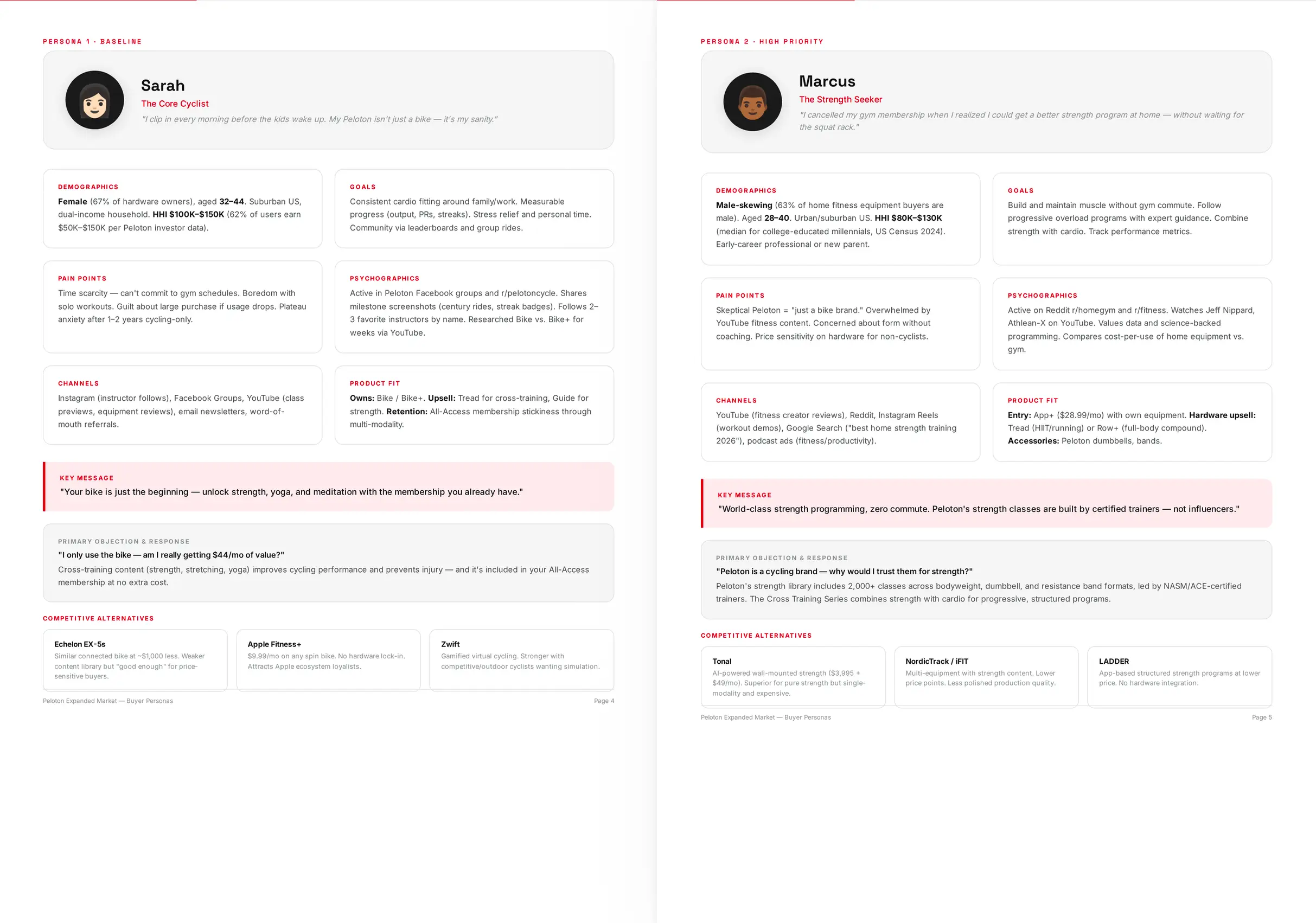
A buyer persona profile built by this Flow includes demographics with cited data sources, goals and motivations, pain points, psychographic patterns grounded in observed behavior, preferred channels, a key message, and the primary objection with a specific response. It also includes the two or three competitive alternatives this persona would consider instead of your brand.
Demographics are not just age and income ranges. Juma sources regional breakdowns, purchasing power data, and behavioral context so the team knows not only who this person is but where to find them and how they make decisions.
The psychographic section focuses on observed behavior, not guesswork. It describes where this person spends time, how they research purchases, and what signals indicate they are close to a buying decision. Competitive alternatives are included for every persona because positioning without competitive context produces generic key messages that differentiate against nothing specific.
Does this Flow work for b2b buyer persona research as well as B2C?
Yes. This Flow adapts to both B2C consumer markets and b2b buyer persona research for complex sales environments. For B2B, Juma shifts from consumer demographics to buying committee research, adjusting pain points, channel preferences, and competitive alternatives to reflect how organizations make purchase decisions rather than individual buyers.
For B2B markets, the pain point section shifts from personal frustrations to organizational blockers: budget approval cycles, integration requirements, and procurement timelines. The preferred channels section reflects professional discovery patterns, including LinkedIn, industry publications, and peer networks, rather than social media or direct advertising.
The key message and objection sections are also different in a B2B context. B2B buyers typically need to justify a purchase to multiple stakeholders, so the key message needs to address both personal motivations and organizational ROI. Juma structures the objection handler to give the sales team a response they can use in a direct conversation, not just a marketing line.
What is the best way to brief this Flow if I am not sure how to build a buyer persona from scratch?
Start with your brand's website URL and a one-sentence description of the target market. Juma researches the category, competitors, and customer behavior automatically, then asks targeted questions to fill the gaps. You do not need prior research, an existing framework, or customer data to get a complete, structured buyer persona output.
The most useful additional context is a rough description of your best existing customers. Even a short note like "our top customers are mid-size agencies who found us through referral" gives Juma a real anchor point for the research. Without this, Juma builds from category-level data, which is still useful but less precise.
If the team has any existing customer data, CRM exports, or survey results, attaching them to the chat improves output quality significantly. Juma uses this information to validate demographic assumptions against real patterns rather than industry averages. A well-briefed session consistently produces more specific and actionable profiles than one started without context.
Can this Flow support ongoing buyer persona development for the same client?
Yes. This Flow supports ongoing buyer persona development by comparing new research against previous persona documents uploaded to the chat or stored in a Juma Project. It flags what shifted between versions, including new segments, changing demographics, and competitive alternatives that are now more or less relevant. Each refresh builds on prior work rather than starting from scratch.
For agencies managing multiple clients, the most efficient setup is a dedicated Juma Project per client. Adding the most recent persona document to that project means Juma starts from the current version every time the team runs the Flow, preserving a version history as the project accumulates files.
Quarterly refreshes are the most common cadence for teams using this Flow regularly. Market conditions, competitive positioning, and customer behavior shift fast enough that a year-old persona set can quietly become inaccurate. Running a refresh every quarter with updated inputs takes far less time than the original build and keeps the team's targeting and messaging grounded in current data.