Set up your client project: Executive Profile Brief, Voice & Tone Guide, Target Audience Profile, Competitor Reference List
LinkedIn personal branding is repeat work. Agencies build positioning strategies, rewrite profiles, and develop topic pillars for the same executive across multiple rounds as their role, company, and aspirations evolve. Without a shared foundation, each new round means re-briefing Juma on who the executive is, how they sound, who they want to reach, and which voices they're positioning against. A Juma Project stores that context once. Set it up for a client and every positioning session, profile update, and content strategy the team builds after that starts from what's already established.
What to add
Executive Profile Brief
The executive's career history, current role, key achievements, and positioning aspiration. This is the foundation Juma builds the strategy from. Include the LinkedIn URL and a plain-language statement of what the executive wants to be known for.
Voice & Tone Guide
How the executive sounds in writing: formality level, vocabulary preferences, and phrases to avoid. This keeps the headline, About section, and post copy in the executive's voice from the first draft without rounds of corrections.
Target Audience Profile
Who the executive wants to reach on LinkedIn: job titles, seniority levels, industries, and what that audience cares about. This shapes which topic pillars resonate and which post angles the strategy should prioritize.
Competitor & Peer Reference List
Named LinkedIn voices the executive admires or competes with for audience attention. This context powers the white space analysis — without specific reference points, the gap mapping defaults to broad industry patterns rather than the exact conversation the executive is entering.
Guide Juma with project info
Add a short description to each knowledge item in the project's info field so Juma knows what each file contains and when to use it. For example:
- Executive Profile Brief: "Career history, current role, key achievements, and positioning aspiration. Use as the foundation for all strategy and profile copy."
- Voice & Tone Guide: "How the executive sounds: formality, vocabulary, phrases to avoid. Follow for all headlines, About section copy, and post drafts."
- Target Audience Profile: "Who the executive targets on LinkedIn: titles, seniority, industry, and what they care about. Use to shape pillar selection and post angles."
- Competitor & Peer Reference List: "Named LinkedIn voices for white space analysis and pillar differentiation. Use when mapping owned, contested, and open territories."
Build an executive LinkedIn brand that owns its lane
Frequently Asked Questions
How much time does this Flow save compared to building a LinkedIn personal branding strategy manually?
This Flow reduces a 4–8 hour strategy task to minutes. A positioning document typically requires a 60–90 minute discovery call plus several hours of research and writing. Juma pulls career history directly from the LinkedIn profile and returns a full document in one pass, so teams skip the discovery phase entirely and move straight to refinement.
Most agencies running personal brand work for multiple clients report completing initial positioning documents for 5–8 executives in the time it previously took to complete one. The document still requires a human review pass with the executive, but the research and drafting work is done. For teams managing high-volume executive brand programs, this is the step that makes the workload manageable without reducing the quality of the strategic output.
What does the positioning document actually include?
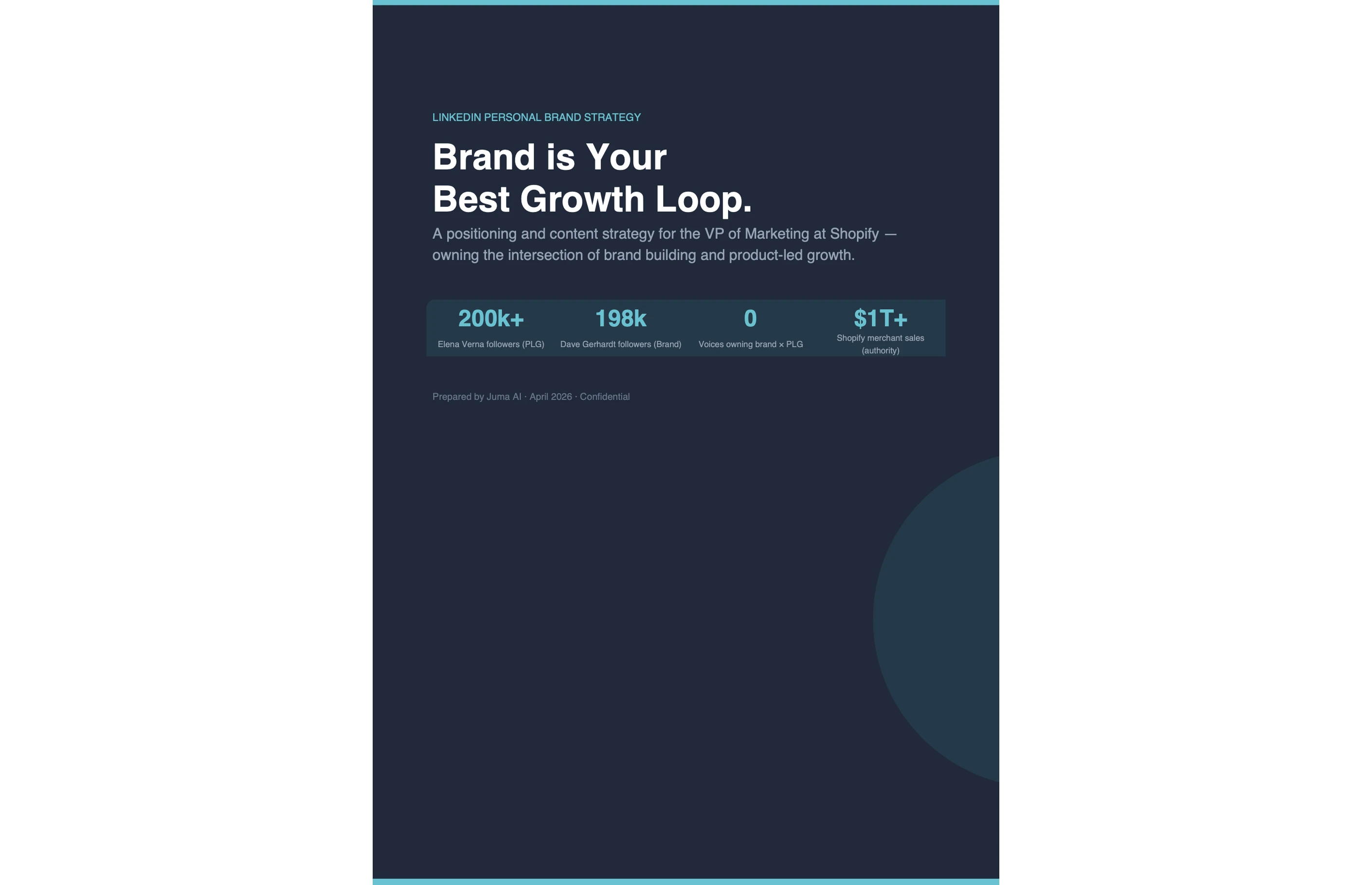
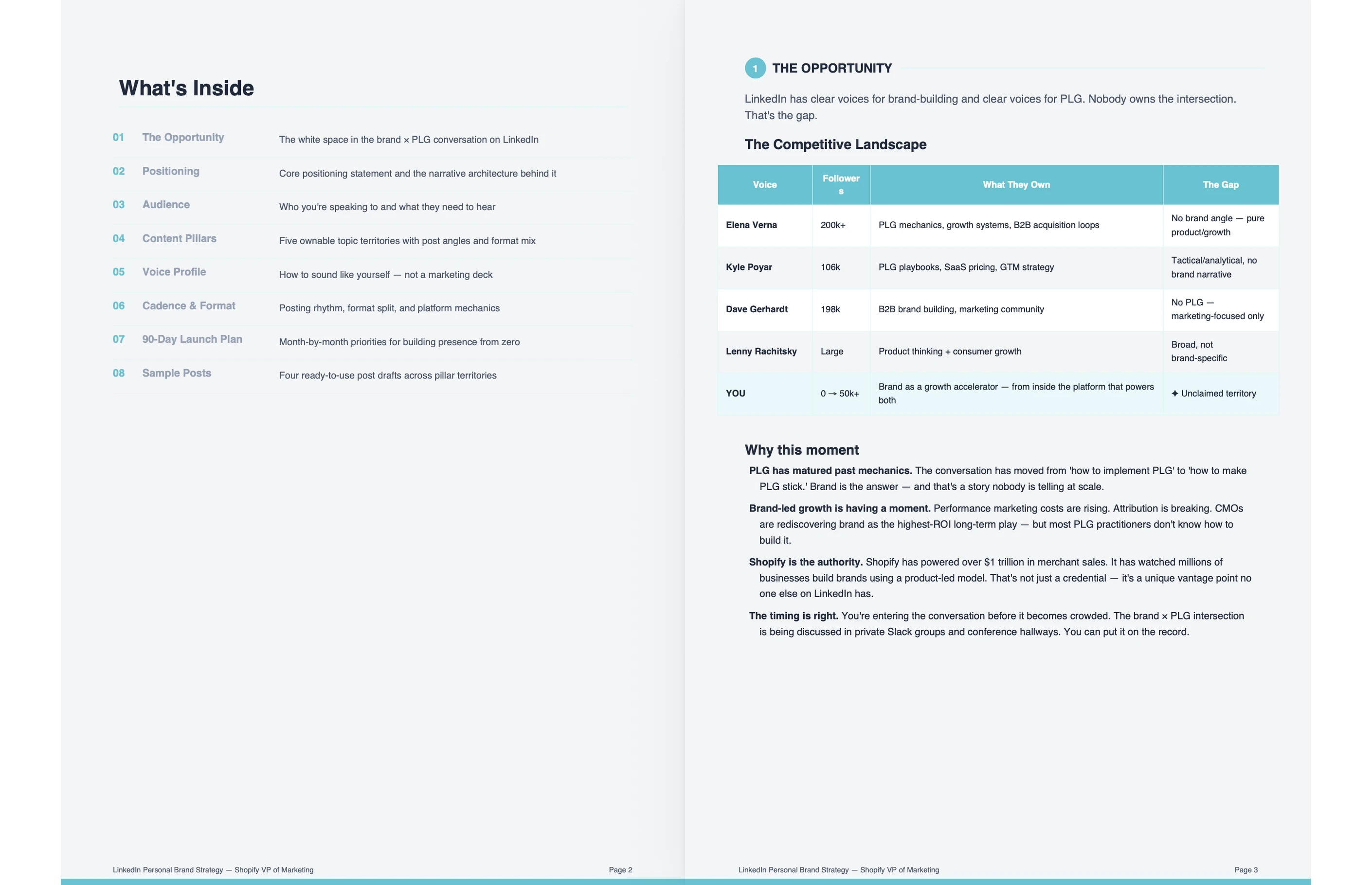
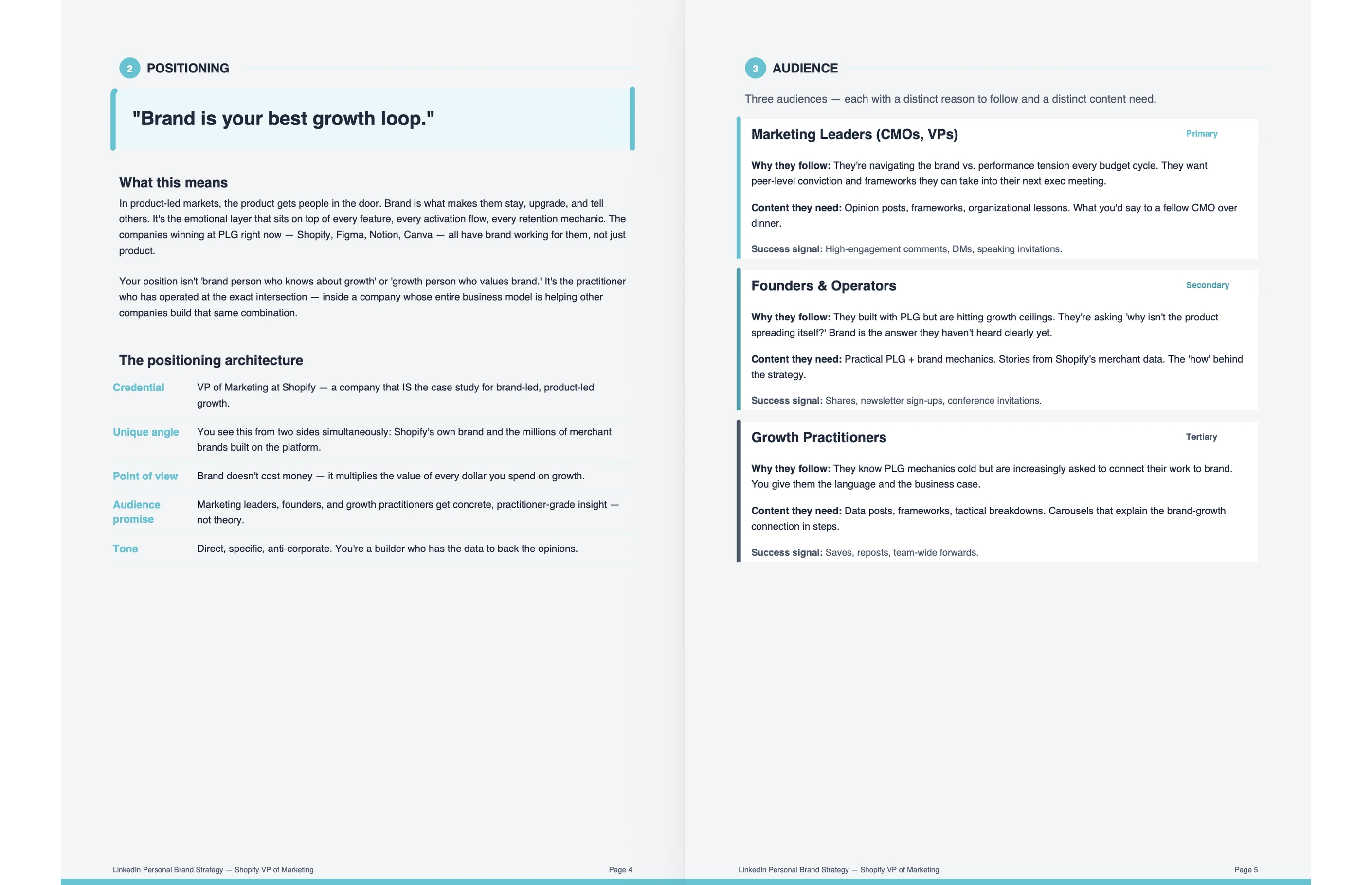
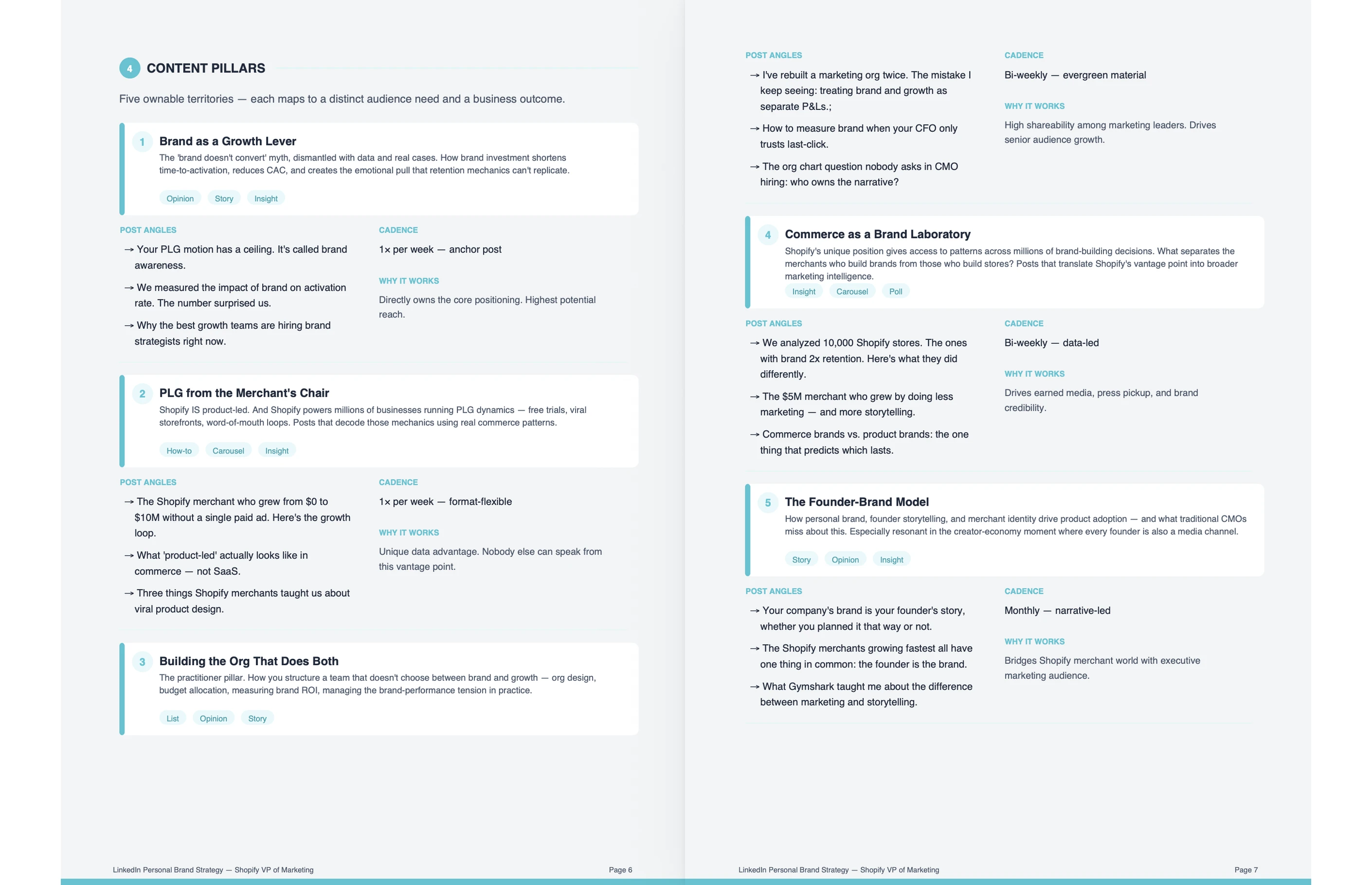
A LinkedIn personal branding positioning document includes: a through-line narrative connecting the executive's career arc, a one-sentence positioning statement, an audience definition, 3–5 topic pillars tied to specific career experience, and a rewritten LinkedIn headline and About section. Every section includes a rationale explaining the recommendation.
The through-line is the strategic foundation. Without it, the pillars and profile copy lack a unifying logic. Juma builds it from the executive's actual work history rather than asking them to self-describe. The topic pillars are specific enough to guide post decisions — each one is tied to a part of the career that gives the executive genuine credibility. The positioning statement is one sentence the executive can use to introduce themselves, pitch a speaking slot, or anchor their bio. The About section rewrite is ready to paste into LinkedIn.
Does this Flow work for personal branding for executives across any industry?
Yes. Personal branding for executives works across all industries because the Flow builds strategy from the LinkedIn profile itself, not from a template. Whether the executive works in B2B SaaS, finance, healthcare, or manufacturing, the output reflects their specific career history rather than a generic framework applied to their job title.
The area where input quality matters most is the aspiration statement. The more specific the executive is about what they want to be known for, the more differentiated the topic pillars will be. A broad aspiration like "thought leader in marketing" produces broad pillars. A specific aspiration like "the intersection of brand building and product-led growth" produces pillars with clear lanes the executive can own. Industry is rarely the limiting factor. Specificity of direction is.
What input produces the best results?
The best input is a LinkedIn URL plus a specific aspiration in plain language. "Known for the intersection of brand and product-led growth" gives Juma enough to build a differentiated strategy. "Thought leader in marketing" is too broad to produce meaningful pillars. Specificity in the aspiration directly improves specificity in the output.
If the executive struggles to articulate their aspiration, use this prompt: ask them which two people they most admire on LinkedIn and what they wish they could be known for in that same space. That answer almost always contains enough specificity to work with. Optionally, naming 2–3 LinkedIn profiles the executive admires gives Juma reference points for the competitive analysis, which sharpens the white space mapping and makes the pillar recommendations more targeted to what is actually underserved in the industry.
How does Juma handle the gap between what an executive has done and what they want to talk about?
Juma identifies both the career history and the aspiration, then finds the intersection where credibility meets direction. The positioning statement and pillars are grounded in real experience, but the framing orients around where the executive is heading. If the gap between history and aspiration is wide, the document flags it explicitly.
In most cases, the career history and the aspiration overlap more than the executive expects. The through-line exercise often reveals connections between past roles and future goals that were not obvious before. Where a genuine gap exists, the document recommends building credibility in a specific pillar before claiming ownership of it publicly — and explains what that would look like in practice. This is more useful than either ignoring the gap or pretending it does not exist.
Can this Flow feed into a linkedin thought leadership content plan?
Yes. The topic pillars from this Flow map directly into a linkedin thought leadership content plan. Each pillar is tied to a specific part of the executive's career, which makes it straightforward to assign post ideas, speaking angles, interview topics, and newsletter themes to each one without second-guessing whether a topic fits.
The pillar framework also lets ghostwriters and content teams work without constant input from the executive, because the boundaries are defined. Teams typically run this Flow once to establish the strategy, then return quarterly to refresh pillars or test the positioning against how the industry conversation has shifted. After a job change or major company milestone, running the full Flow again from scratch produces a more accurate output than trying to update the old document, because the career evidence has changed.

.webp)