Set up your client project: brand voice, top-performing videos, and product details
A Juma Project is a shared space where the team keeps everything Juma needs to know about a client. Build one project per client, add context as you go, and every script the team writes pulls from the same voice and the same proven formats, whether it's run by the social lead or a freelancer covering a shift. The more the team adds over time, the more each script sounds like the brand from the first draft.
What to add
Brand Voice Guide
How the brand talks on short-form video: tone, catchphrases, emoji, pacing, and what to avoid. With this in the project, every script comes out in the right voice instead of a generic one that has to be rewritten line by line.
Top-Performing Videos
Links or transcripts of the videos that already worked, with a note on why each one landed. Juma studies the hooks, formats, and recurring bits that resonate with this audience and matches those patterns instead of guessing.
Product & Offer Details
What the CTA points to: the product, the current promo, the link, and any claims that need to stay accurate. This keeps the closing beat truthful and specific instead of a vague "check us out."
Content Pillars & Series Formats
The recurring show formats the brand runs, from a weekly explainer to a running joke series. Add these and a week of scripts stays on-format instead of five unrelated ideas that don't build a channel.
Guide Juma with project info
Add a short description to each knowledge item in the project's info field so Juma knows what each file is and when to use it. For example:
- Brand Voice Guide: "How we sound on TikTok and Reels. Apply to every script, caption, and on-screen text cue."
- Top-Performing Videos: "Our best short-form posts and why they worked. Match these hooks and formats."
- Product & Offer Details: "Current product, promo, and link. Use for the CTA so it stays accurate."
- Content Pillars & Series Formats: "The recurring formats we run. Use when scripting a series or a week of content."
Get a ready-to-shoot script in the brand's voice
Frequently Asked Questions
How much time does this Flow save compared to scripting a TikTok manually?
Writing a short-form script by hand means studying the brand voice, drafting a hook, blocking out the beats, and adding text cues and a caption, which takes 45 to 90 minutes per video. Juma returns the full script in a couple of minutes, so the team spends its time choosing and shooting instead of staring at a blank page.
The savings compound when the brand voice and top-performing formats live in a Juma Project, because the next script starts from proven patterns rather than a cold start. Strategy, taste, and judgment stay human: the team reviews and edits every script before it goes to a shoot, and the strongest hooks still come from someone who knows the audience. Juma removes the blank-page tax, not the creative call.
What's in the script Juma delivers?
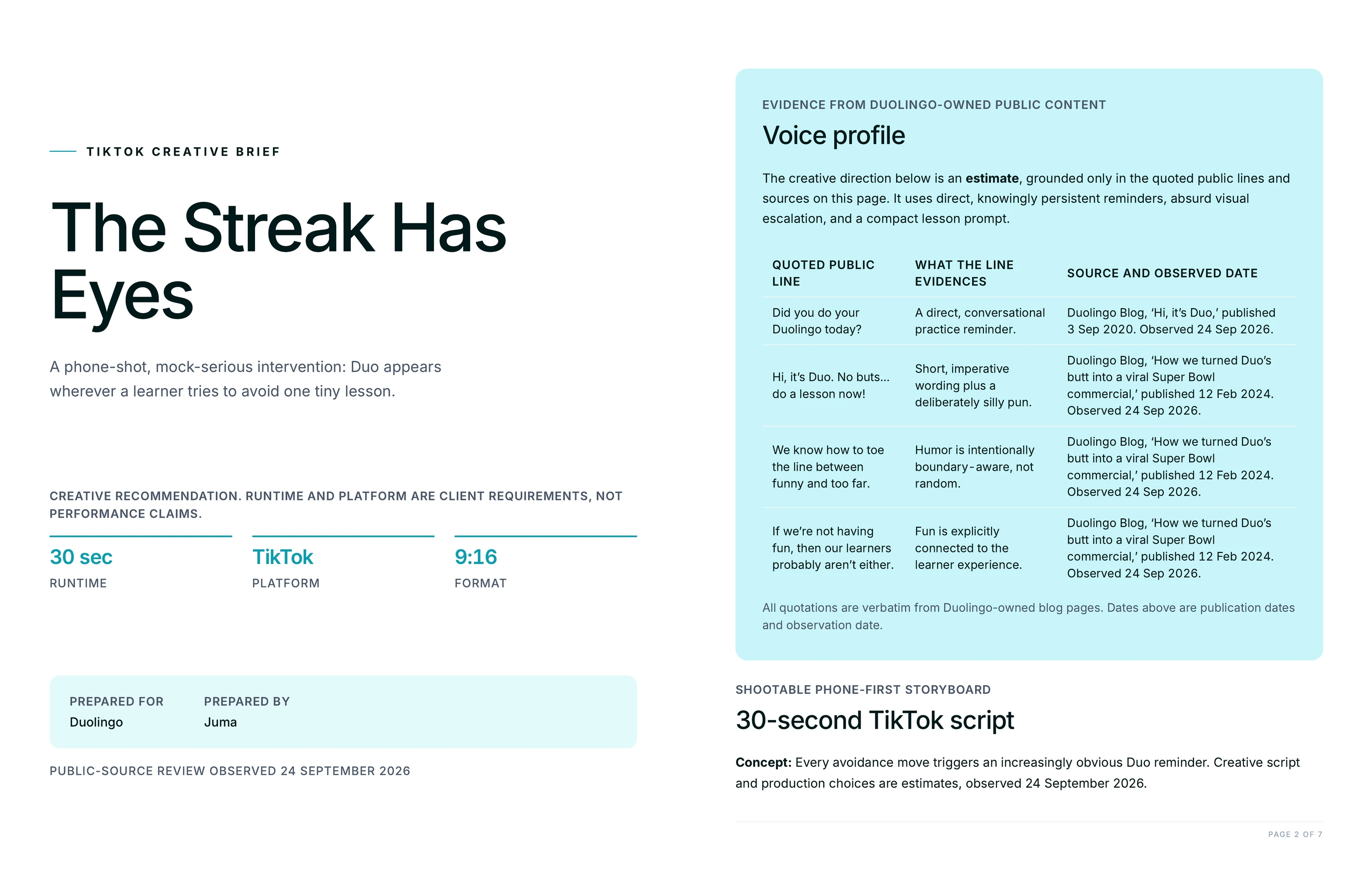
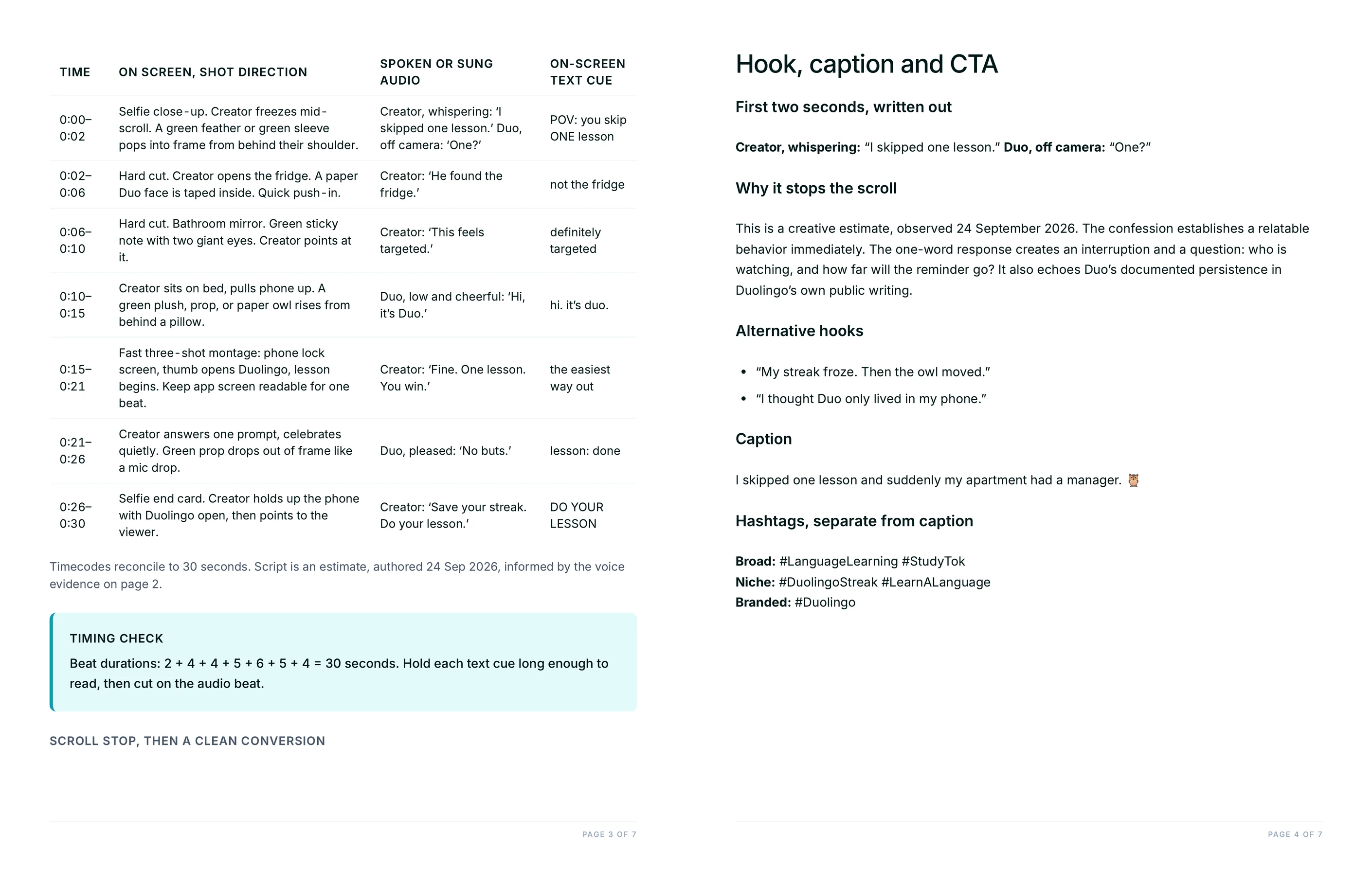
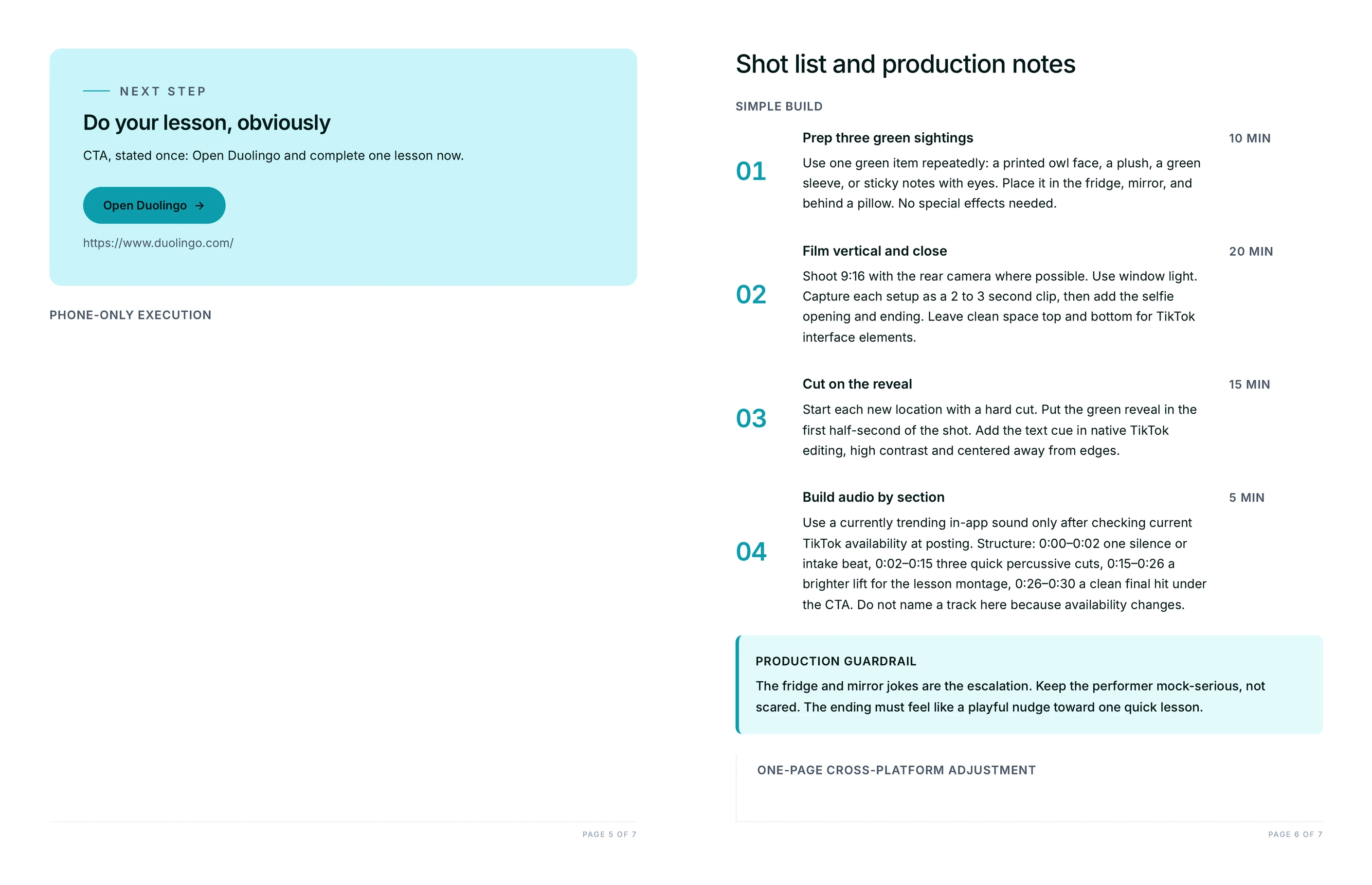
The deliverable is a beat-by-beat script with timecodes for each moment: the hook, the setup, the payoff, a social-proof beat, and the CTA. Alongside the spoken lines it includes an on-screen text-cue column, voiceover notes, a ready-to-post caption with a hashtag set, and short production notes covering shots, pacing, and where the trending sound lands.
Because the script is structured as a shot-ready document rather than a paragraph of ideas, the person holding the phone can follow it start to finish. Every beat names what happens on screen and what the text overlay says at that second, so the edit matches the plan instead of getting rebuilt after the shoot.
How does Juma match the brand's voice?
Juma studies how the brand actually talks before writing. Give it the website or the TikTok handle and it reads real posts, tone, and recurring bits; add a Brand Voice Guide to the project and it works from the team's own definition of the voice, including catchphrases, emoji habits, and what to avoid.
This is why a Duolingo script comes back playful and a little unhinged while a bank's script comes back warm and plain-spoken from the same Flow. The voice is read from the brand's own material, not applied from a template. For agencies, one Project per client means Juma remembers each brand's voice without a re-brief every time, and unlimited seats mean the whole team writes from the same foundation.
Does this work for Reels and YouTube Shorts, not just TikTok?
Yes. The core script is platform-agnostic, and Juma adapts it to Instagram Reels and YouTube Shorts on request. Each version adjusts pacing, on-screen text placement for the app's safe zones, caption length, hashtag conventions, and the CTA, so the team shoots once and ships a native-feeling cut for each platform.
The conventions genuinely differ: Reels captions and hashtags behave differently from Shorts, and text placed for TikTok's UI can sit under a Shorts progress bar. Adapting the script to each platform means the same idea performs on its own terms rather than being copy-pasted across three apps with the reach that costs.
Can Juma script a whole content series, not just one video?
Yes. Ask Juma to turn one concept into a series and it returns five scripts on the same theme, each with a fresh hook, a different angle, and its own CTA, plus a suggested posting order. This keeps a channel fed without running a separate brainstorm for every post.
For a content or growth team, this is the difference between one good video and a week of them. The series stays on-format because it draws from the same content pillars and brand voice in the project, and the team still reviews every script before it ships. Human review sits on every output, so a series scales the drafting without handing over the editorial call.


.webp)