Set up your client project: event fact sheet, sponsor targets, and rate card
A Juma Project is a shared space where the team keeps everything Juma needs to pitch a property. Build one project per event or client, add these items once, and every proposal comes out grounded in real numbers and in the right voice without re-briefing. The more the team adds over time, the less each new pitch needs explained from scratch.
What to add
Event Fact Sheet
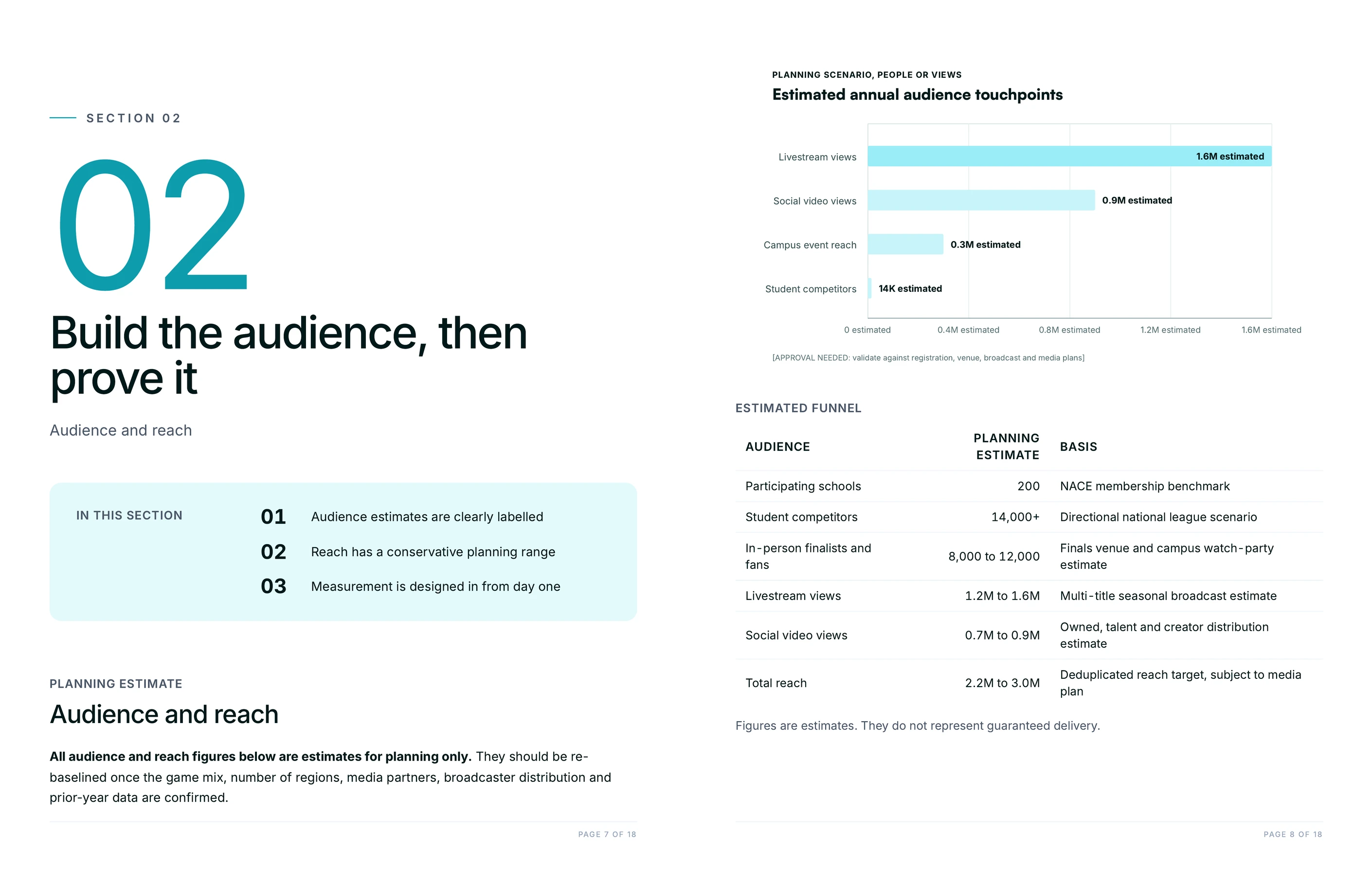
The property's real numbers: attendance, stream and broadcast reach, audience demographics, past results, and estimated media value. This is the file that grounds the audience and reach tables in real data, so the proposal shows what the sponsor is actually buying instead of a round-number guess.
Sponsor Target List
The brands the team is pitching and why each one fits: their category, budget range, and what they have sponsored before. With this in the project, Juma tailors the opportunity and the activations to each sponsor instead of sending everyone the same letter.
Sponsorship Rate Card
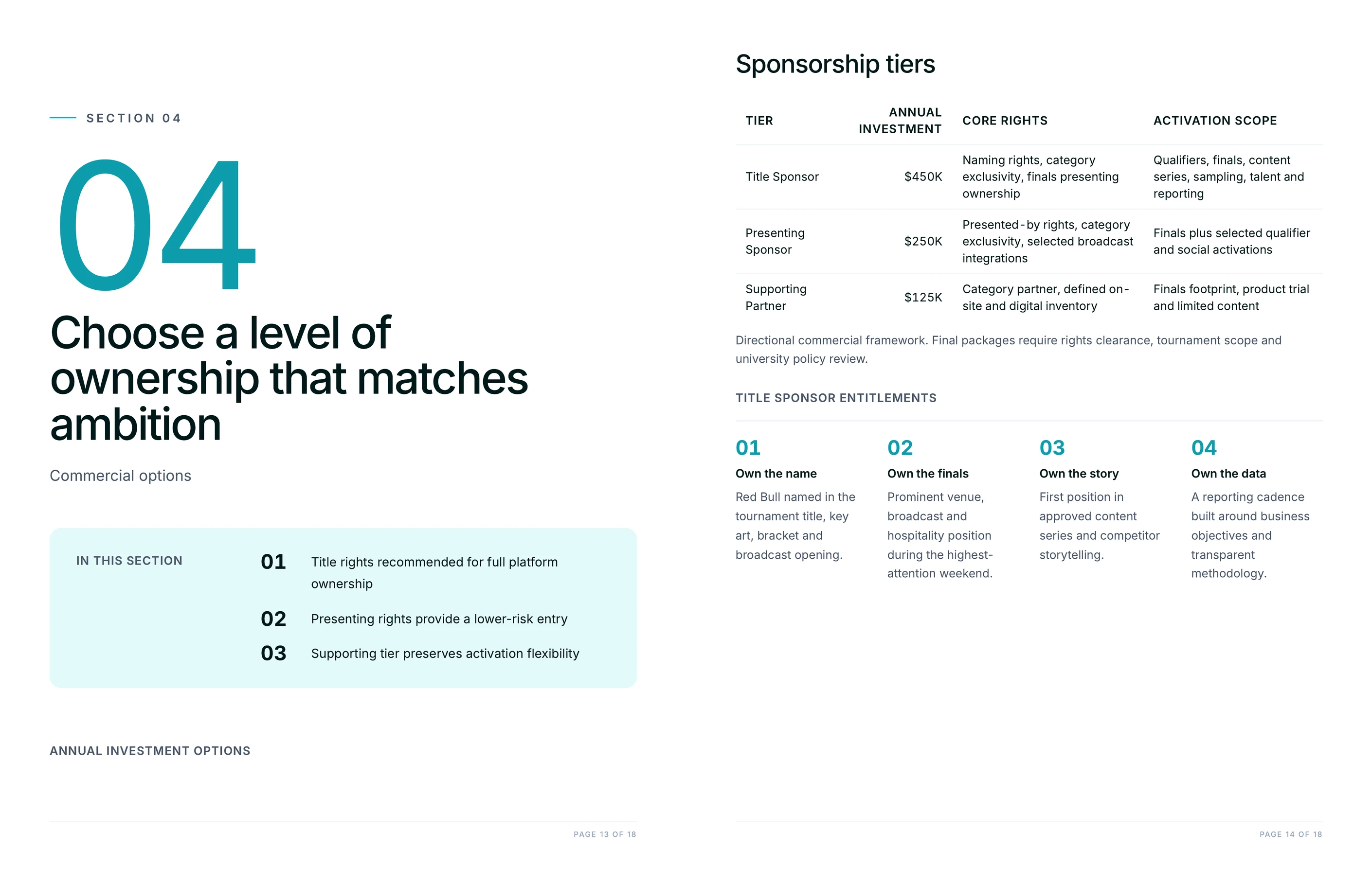
The team's real tiers, assets, and prices. Juma builds the packages from the actual inventory the property can sell, so the title, presenting, and official partner tiers match what the team can deliver rather than inventing assets that don't exist.
Brand Voice Guide
How the property or the agency sounds: tone, vocabulary, and the words to avoid. Every proposal, from the executive summary to the activation write-ups, comes out in the right voice from the first pass.
Guide Juma with project info
Add a short description to each knowledge item in the project's info field so Juma knows what each file is and when to use it. For example:
- Event Fact Sheet: "Attendance, reach, and demographics for the property. Use to build the audience and reach tables; don't estimate past these."
- Sponsor Target List: "The brands we're pitching and why each fits. Reference when tailoring the opportunity and the activations."
- Sponsorship Rate Card: "Our real tiers, assets, and prices. Build the packages from this inventory, not a default set."
- Brand Voice Guide: "How we write for this property. Apply to the whole proposal and the pitch deck."
Turn a target sponsor into a signed partner
Frequently Asked Questions
How much time does this Flow save compared to writing a sponsorship proposal manually?
A tailored sponsorship proposal usually takes a marketer a full day or two across researching the sponsor, structuring the tiers, and writing the activations. Juma returns a full first draft in a few minutes: the opportunity, audience and reach tables, three tiers, brand-native activations, and the investment ask, ready for the team to review.
The saving compounds because the structure stays identical from one pitch to the next, so a proposal that used to sit half-written actually goes out. Strategy, taste, and judgment stay human: the team sets the tier prices, confirms the numbers, and decides which activations the property can deliver before anything reaches the sponsor. Juma handles the blank page and the formatting, not the final call.
What's in the sponsorship proposal Juma writes?
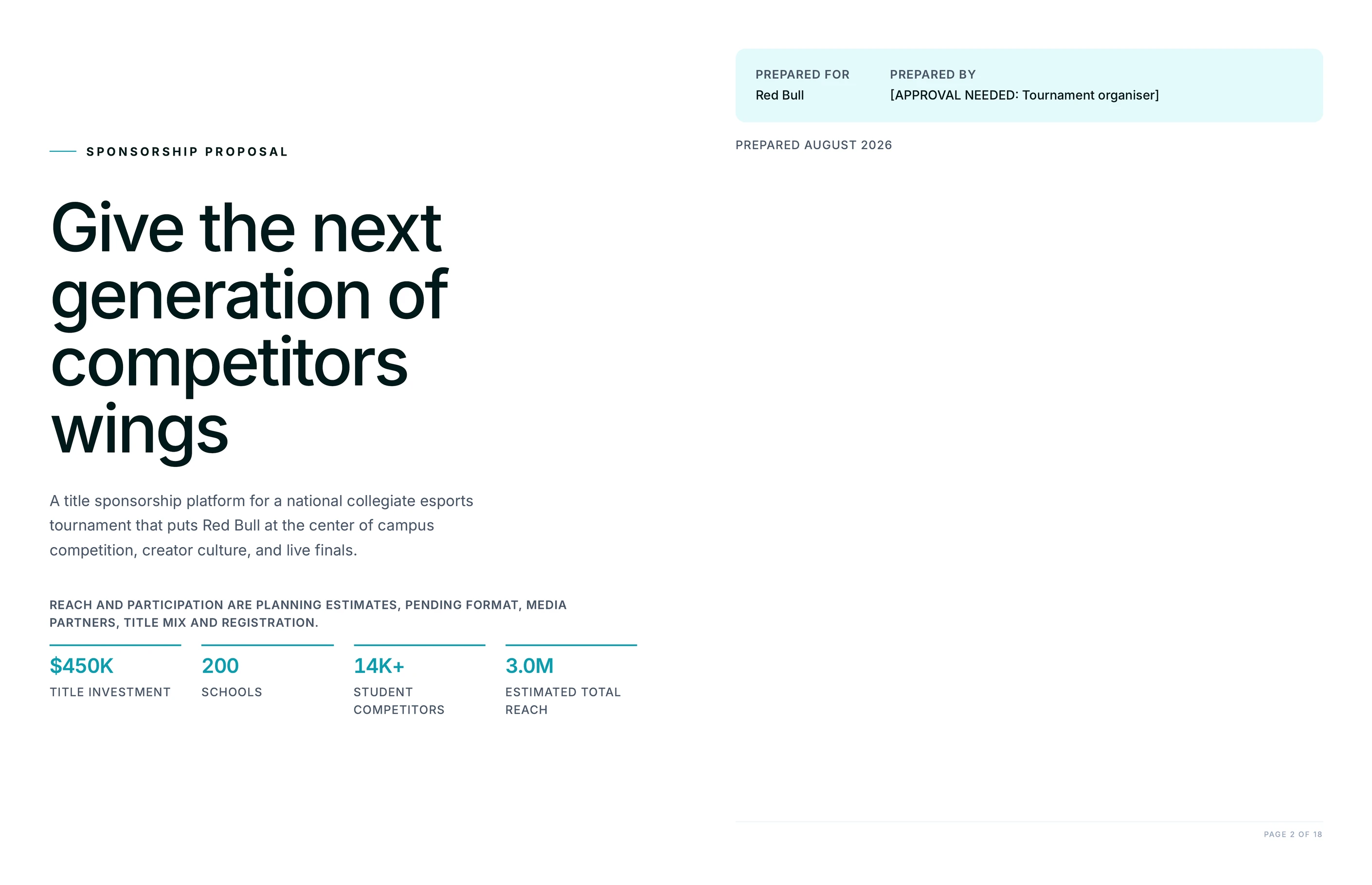
The proposal includes an executive summary, the opportunity and why now, audience and reach broken into tables, three sponsorship tiers each with its own asset list, brand-native activation ideas, and an investment ask with multi-year incentives, a timeline, and next steps. It comes back as a branded document, ready to send.
Every number in the reach tables is tied to what the team provides, and each tier names the assets the sponsor gets at that level rather than describing the package in the abstract. The activations are built around what the sponsor actually sells, so they read as ideas that brand could run, not a generic list. When a figure is still an estimate, Juma labels it so nothing in the pitch reads as more precise than the data supports.
How does Juma tailor the proposal to a specific sponsor?
Point Juma at the sponsor's website and it researches their category, recent campaigns, and audience, then reframes the opportunity, the reach emphasis, and the activation ideas around what that brand is trying to win. The same property reads differently for an energy-drink brand than for a hardware brand.
This is the difference between a proposal a sponsor forwards internally and one they skim and set aside. A generic deck describes the event; a tailored proposal shows the sponsor their audience, their activation, and their return. The team can run the same Flow across a whole target list, so each brand on the shortlist gets a pitch that reads bespoke while the underlying reach and tiers stay consistent.
Can the proposal match our own rate card and brand?
Yes. Add the team's sponsorship rate card and brand voice guide to the project, and every proposal builds the tiers from the real inventory and comes out in the right voice instead of a default layout. Upload a past proposal as a reference and Juma matches its structure and level of detail.
This matters most for agencies pitching many properties or many sponsors, where a consistent format is part of the deliverable. One Project per client keeps each property's fact sheet, rate card, and voice separate, and unlimited seats on every plan mean the whole team can run the Flow without a per-user charge. Pricing is credit-based, so the team only pays for the proposals it actually produces.
How is this different from writing the proposal myself?
Juma handles the research, the structure, and the first draft; the team owns the deal. It researches the sponsor, builds the reach tables, drafts the tiers, and designs the activations, then hands the team a document to shape. Strategy, taste, and judgment stay human, and human review sits on every proposal before it reaches a sponsor.
The difference is where the hours go. Instead of spending them on the blank page and the formatting, the team spends them on the parts that need judgment: which tier to lead with, what the property can realistically deliver, and what number the sponsor will say yes to. Juma delivers a finished asset, not a chat response, so the starting point is a proposal to refine rather than an outline to fill in.