Set up your client project: show style guide, past episode notes, link and CTA conventions
Agencies run one Project per client, and a podcast client is the clearest case for it. A show has house rules that never change between episodes: how chapters get titled, whether guests get a bio paragraph or a byline, which CTA closes every set of notes. Put those in the project once and every episode after it comes out in the show's shape without a re-brief.
What to add
Show style guide
How this show writes: chapter title casing, how long the summary runs, whether takeaways are numbered, what never appears in the notes. With this in the project, the first draft already matches the last 40 episodes.
Past episode notes
Three or four sets of published notes the team was happy with. These do more than a style guide can describe, because they show the house voice rather than explaining it.
Link and CTA conventions
Which links always appear, in what order, and how the show handles sponsors, affiliate links and the newsletter signup. This is the part that gets forgotten at 6pm on a publish day.
Guide Juma with project info
Each knowledge item takes a one-line description telling Juma what it is for. These lines are short and they decide how the item gets used.
- Show style guide: "The house rules for episode notes: chapter titles, summary length, takeaway format, and what we never publish."
- Past episode notes: "Published notes the team approved. Match this voice and structure."
- Link and CTA conventions: "The standing link block and closing CTA for every episode, including how sponsors are handled."
Ship the episode with its notes already written
Frequently Asked Questions
What does the podcast show notes kit include?
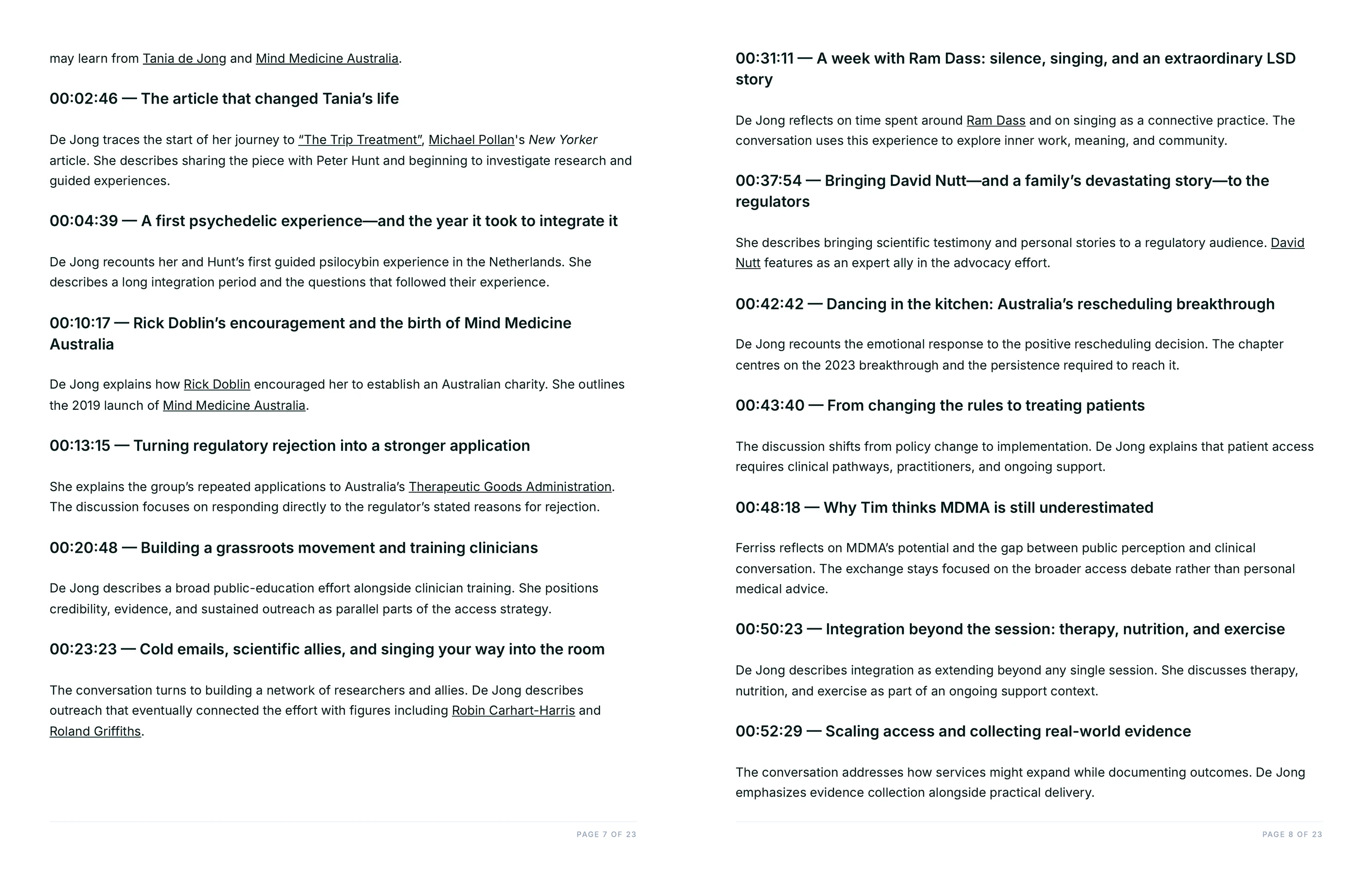
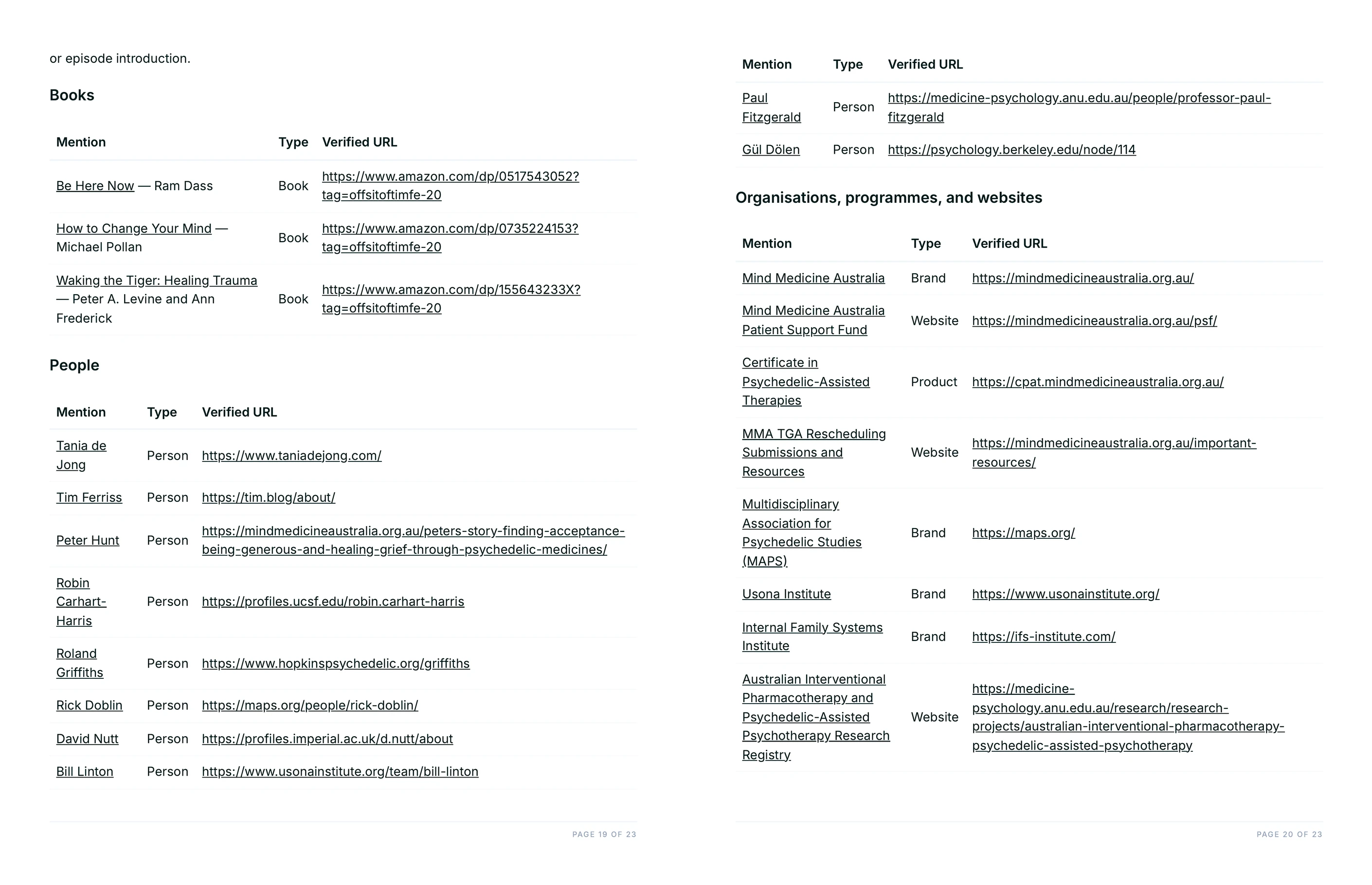
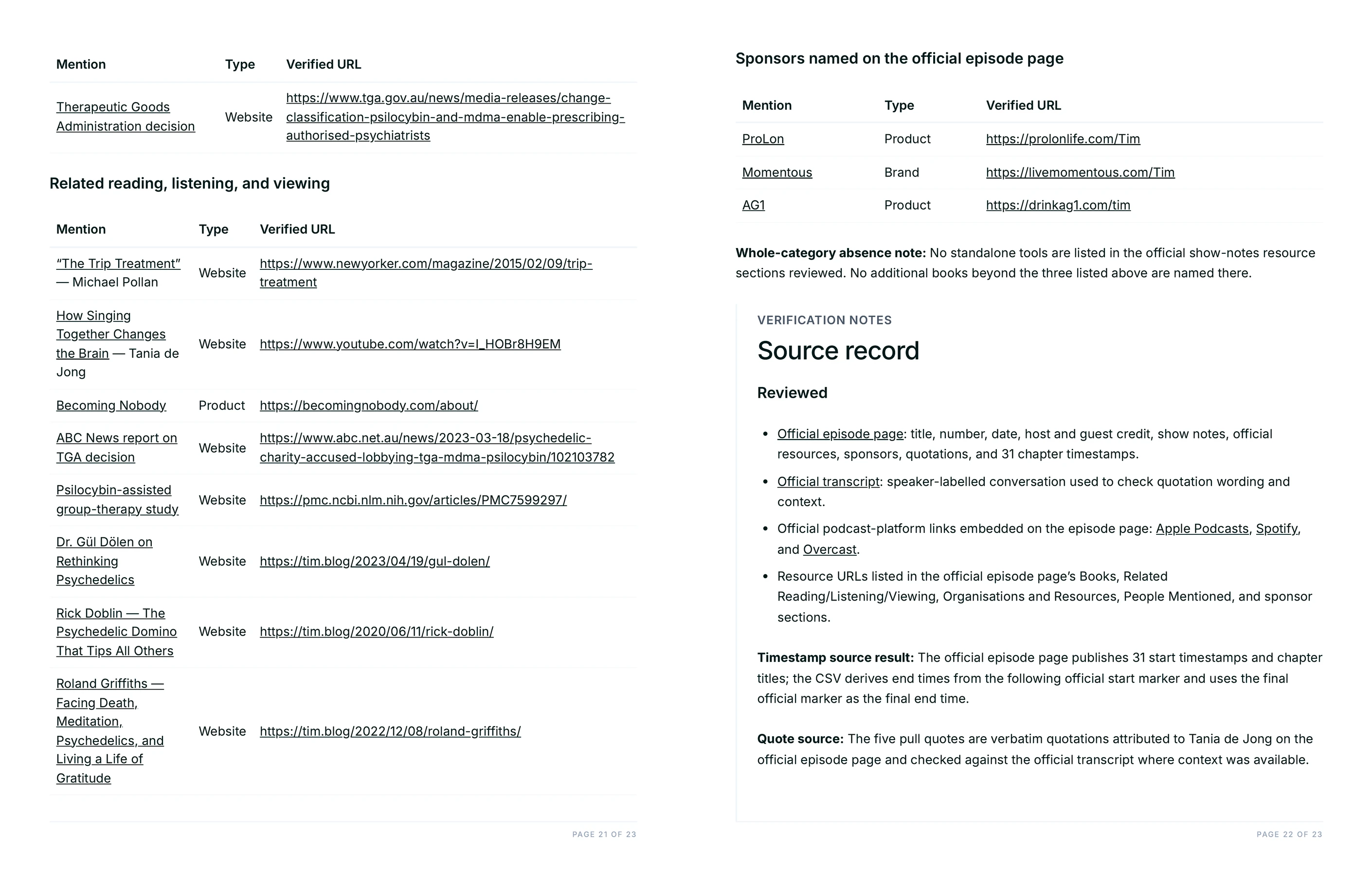
Seven pieces: chaptered show notes, three episode descriptions sized for Apple Podcasts, Spotify and the episode web page, a resources list with a verified URL per mention, a guest bio with credentials, five pull quotes with exact attribution, and three title options naming the search phrase each targets. It arrives as a branded PDF plus an editable CSV of the chapter markers.
The two files split by who uses them. The PDF is what the producer reads and edits. The CSV is what the person doing the upload pastes into the hosting platform, which is often a different person on a different day.
Does this work without uploading a transcript?
Yes. Give the episode URL and the episode page and any published transcript get read from the web, so nothing needs uploading to start. A pasted transcript makes the result better where a show publishes none, because quotes and resource mentions can then be pulled from the full conversation rather than from the episode summary alone.
Shows that publish complete transcripts get the strongest version of this. That is where a single episode can yield a resources list running to dozens of verified links, because every passing mention in 90 minutes of conversation is available to be caught.
Will the timestamps be accurate?
Timestamps are taken only from the episode's own published source, never estimated. If the show publishes chapter times, those times come through. If it does not, the chapters arrive as ordered sections with empty time fields and a plain note saying the source carries no timestamps.
This is deliberate. A plausible-looking timestamp that is 90 seconds out is worse than no timestamp, because it gets pasted into a host and nobody checks it until a listener complains.
Can we keep our own show notes template?
Yes. Put the show style guide and three or four sets of approved past notes in the client Project, and the kit comes out in that structure instead of a generic one. Chapter title casing, summary length, takeaway format and the standing link block all carry across episodes without a re-brief.
Agencies running several podcast clients keep one Project per show, so each client's house rules stay separate. Unlimited seats on every plan means the producer, the editor and the account lead all work in the same project without a per-seat charge.
How is this different from asking a chatbot to summarise the episode?
A summary gives back a paragraph. This gives back the assets a publish day actually needs: chapters in an uploadable file, descriptions already sized per platform, quotes verified word for word, and every mention resolved to a link a listener can follow. Finished files, not a chat response.
The resources list is the clearest difference. Resolving each name in a conversation to a real, checked URL is research work, and it is the part a producer would otherwise do by hand with the transcript open in one tab and a search box in the other.
Juma augments the team, it does not replace it. The host still decides what the episode was about and which title goes out. Human review on every output.





.webp)

.webp)