Set up your client project: cleared claims, research, and the facts the newsroom owns
A Juma Project is a shared space where the team keeps everything Juma needs to know about a client. Create one project per client and every run starts from the same evidence base. For claims work the payoff is direct: the register reuses wording the client's compliance owner already cleared, cites the research the client actually published, and stops proposing language that was rejected last quarter.
What to add
Legal-cleared claims and required qualifiers
The claims the client's legal or compliance owner has signed off, with the qualifier each one has to carry. The register then uses cleared wording verbatim instead of writing fresh language that has to go back through review before anything can be published.
Research, studies and methodology notes
Efficacy studies, benchmark reports and any internal research the client has published, with the method summary. This is what lets a result keep its cohort and its limits when it gets turned into a sentence, which is the difference between a defensible claim and a generalisation.
Investor and press facts with their periods
Results releases, the press kit, the company boilerplate and the facts page, each with the period it covers. Financial and scale claims keep their reporting period attached, so a figure from February does not quietly become a statement about today.
Brand voice and claim ownership
How the brand writes, and who owns which category of claim. Answer blocks come back sounding like the client rather than like a compliance memo, and every row in the register names a role that can actually approve it.
Guide Juma with project info
Add a short description to each knowledge item in the project's info field so Juma knows what the file holds and when to reach for it. For example:
- Cleared claims sheet: "Legal-approved claims and required qualifiers. Use verbatim. Nothing outside this list is treated as approved."
- Research library: "Published studies with methodology. Keep cohort, period and measured skills attached to any result."
- Investor and press facts: "Results releases and the facts page. Always carry the reporting period with the number."
- Claim ownership map: "Which role owns which claim category. Use to assign owner and approver on every row."
Turn what your client can prove into what AI quotes
Frequently Asked Questions
What is a citable brand claim?
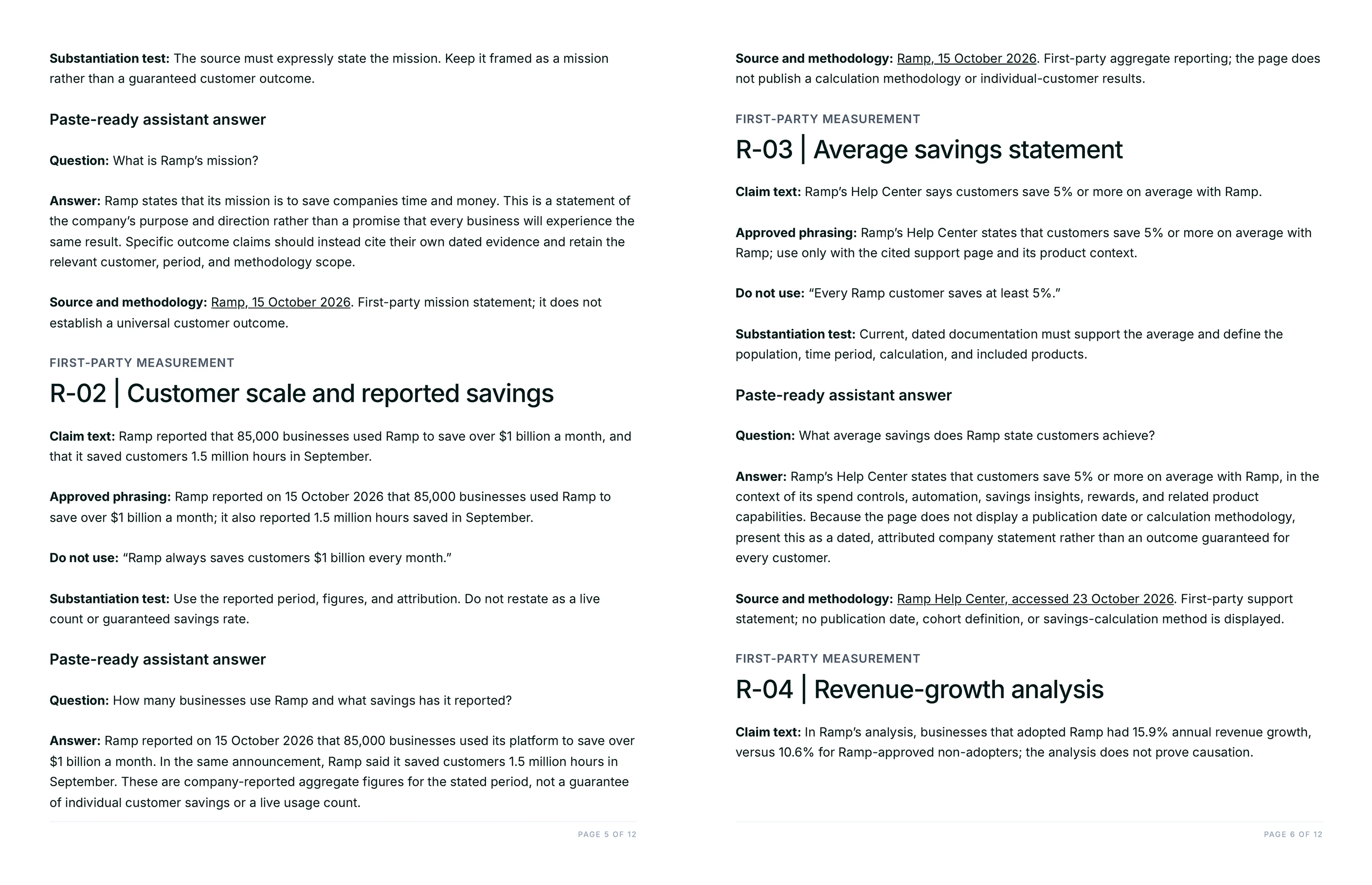
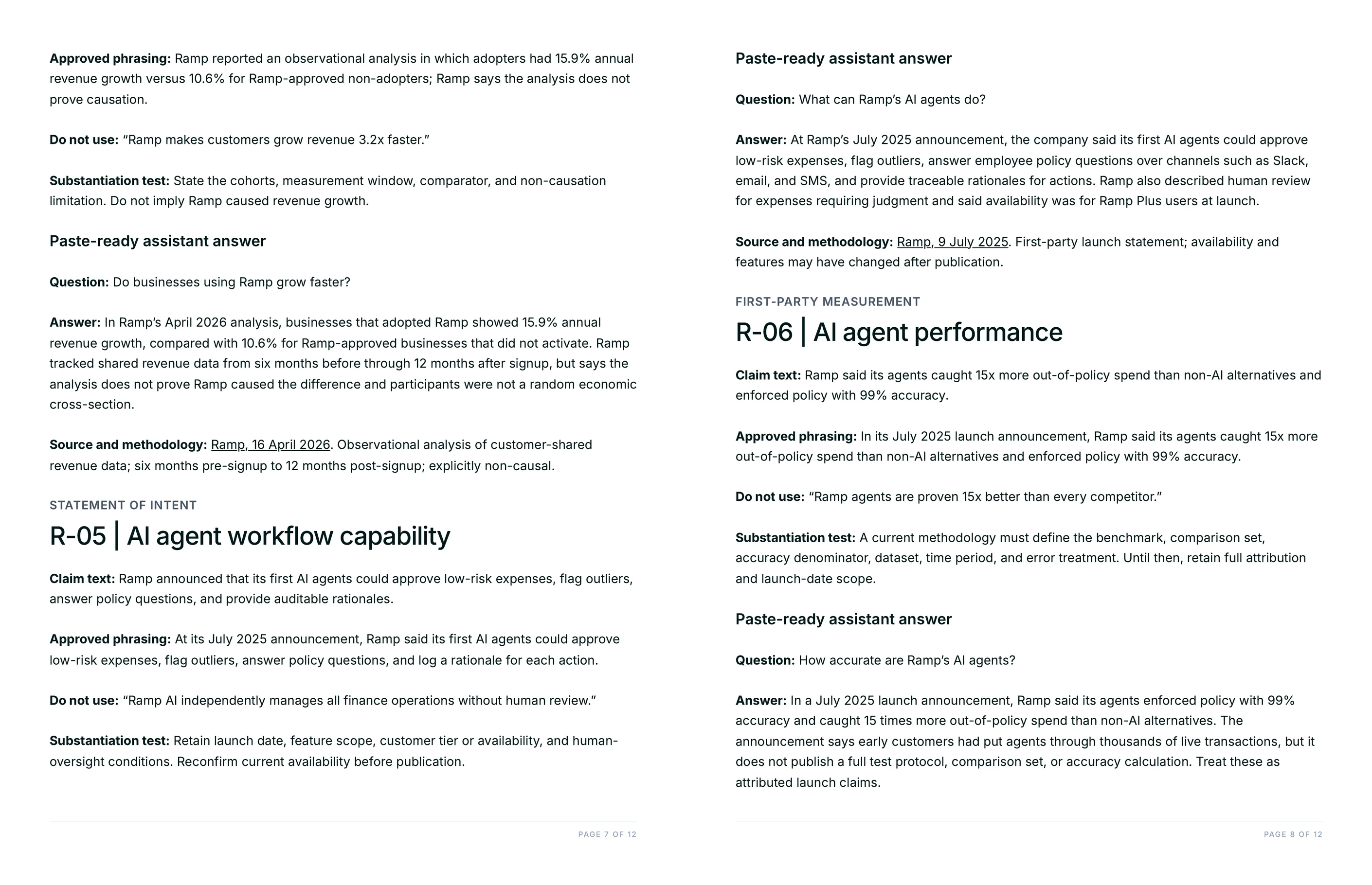
A citable brand claim is a statement the brand can defend, written in a form an answer engine can lift and attribute. It carries four things: the sentence itself, the public source that backs it, the date that source was published, and the scope the evidence covers. A claim with no source is marketing language. A claim with a source but no date goes stale without anyone noticing, and a claim with no scope gets generalised past what the evidence supports the first time someone shortens it.
The practical test is whether a stranger could check it. If an assistant quotes the claim and a reader follows the citation, they should land on a page published by the brand that says the same thing, in the same period, about the same group. That is the standard the register is built to.
What does this Flow deliver?
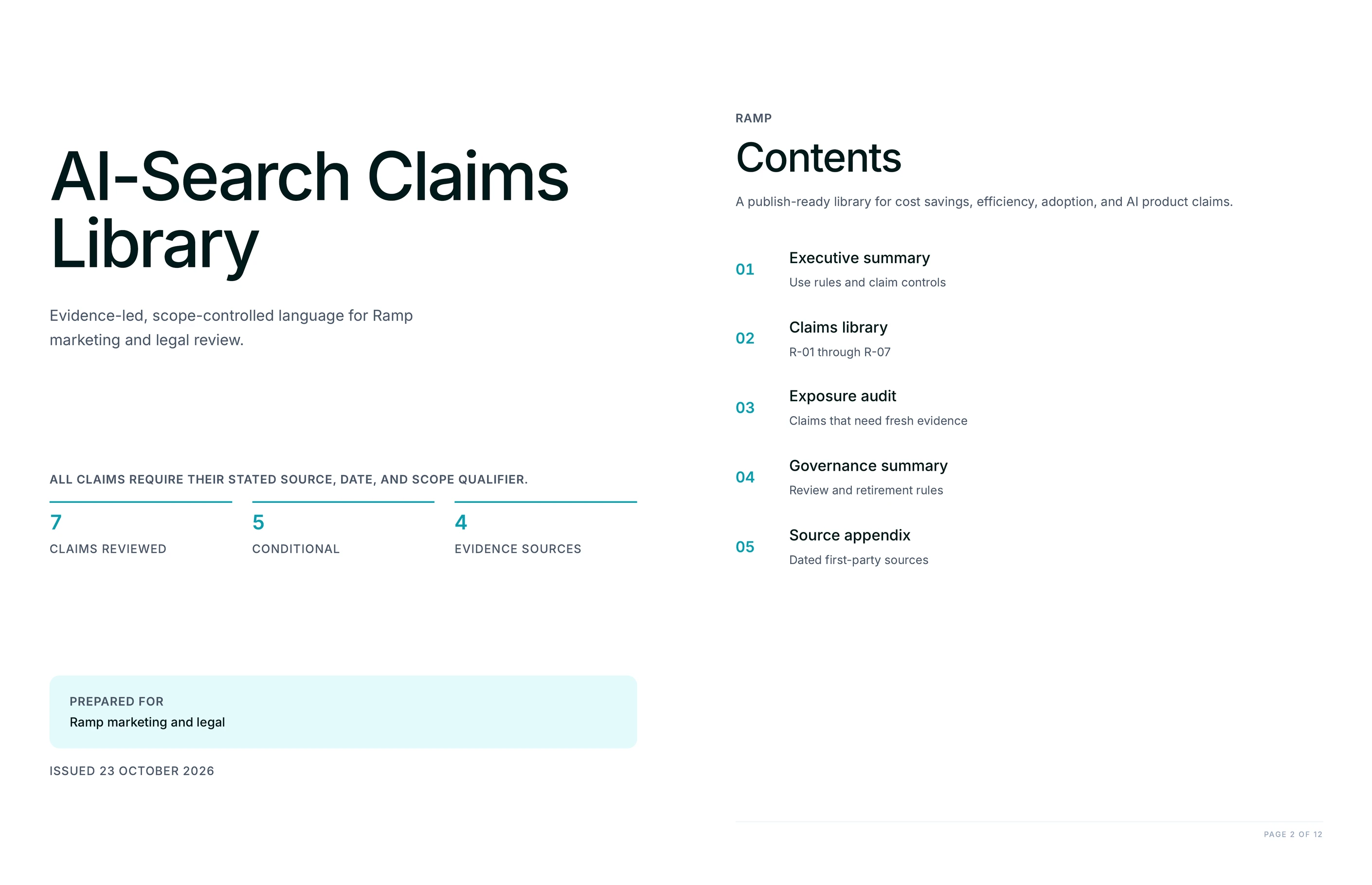
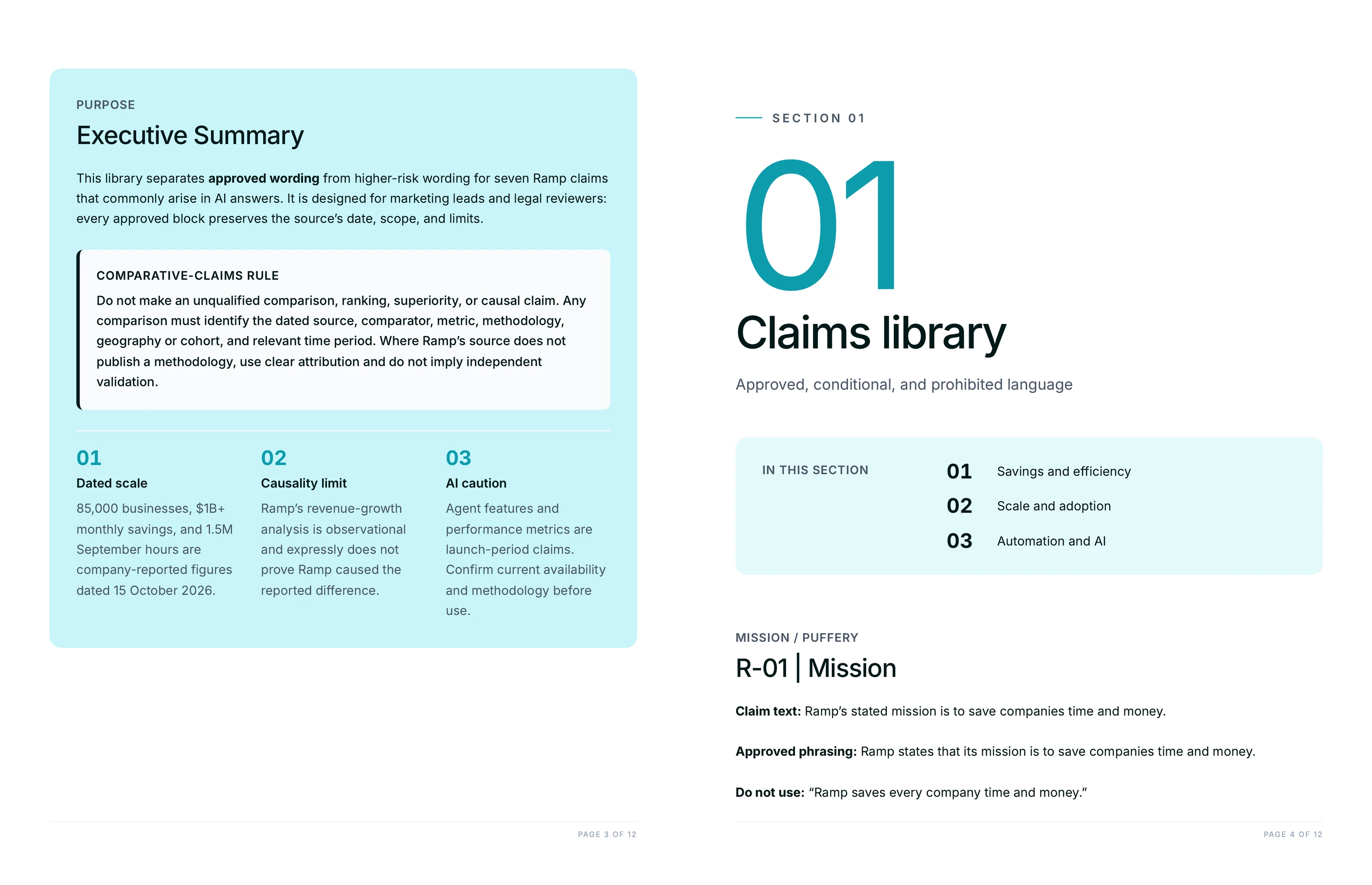
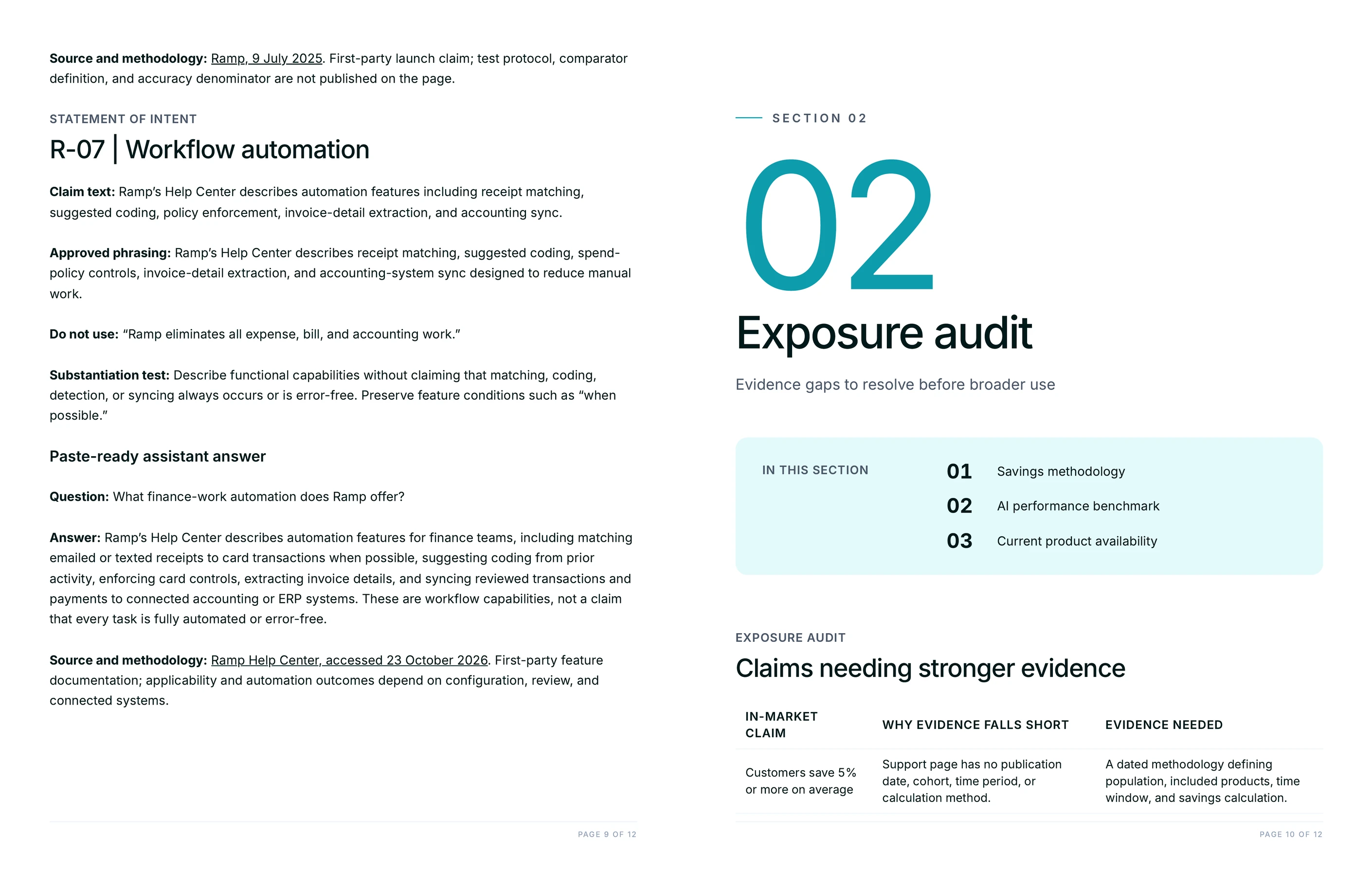
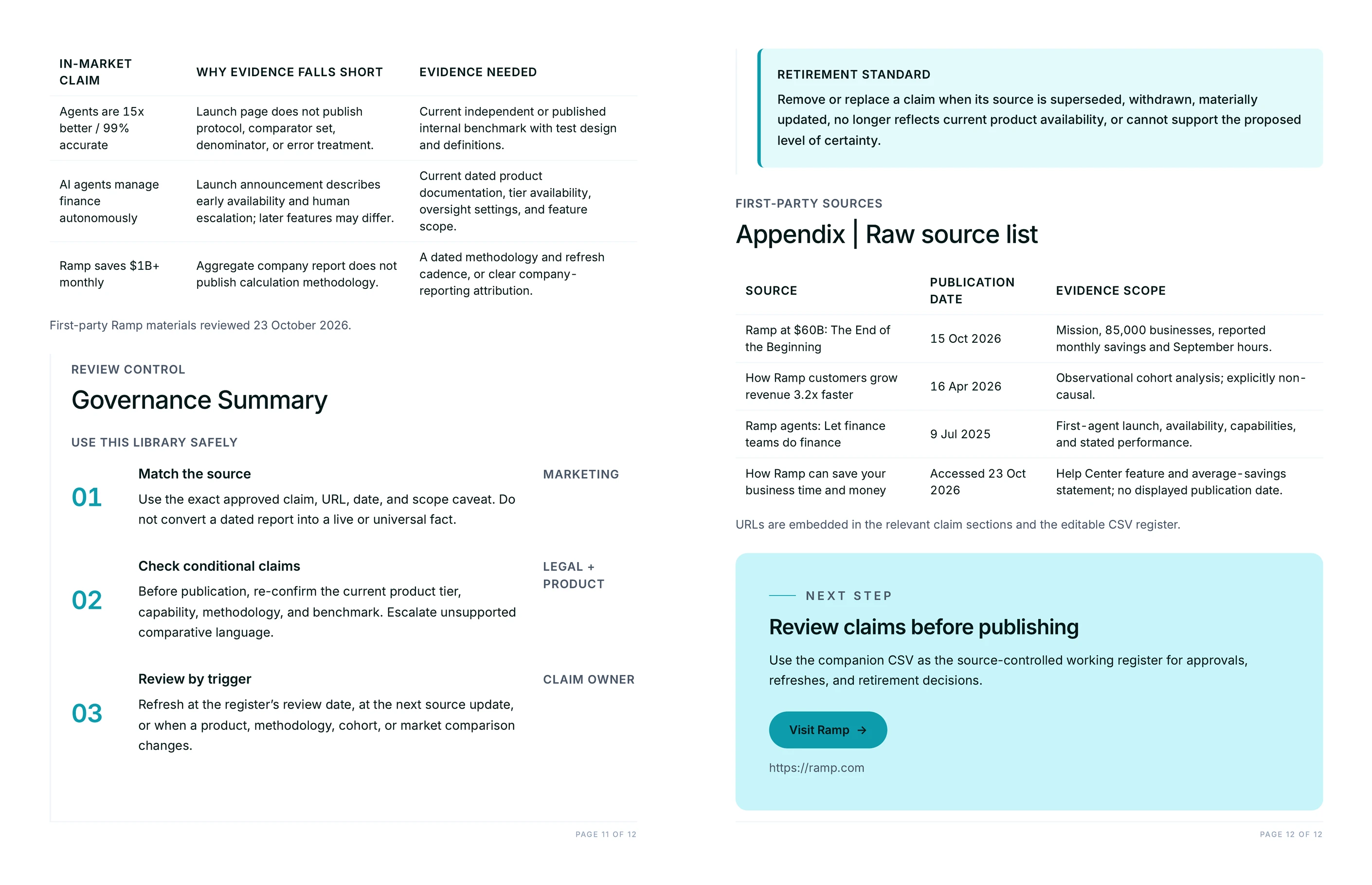
Two files. The branded PDF is the document that goes to a client or a compliance reviewer: the defensible claims with approved phrasing and the wording to avoid, the claim type and substantiation test for each one, the paste-ready answer blocks, the canonical destination map, the comparative claims rule, the exposure audit, and the review calendar with its owners. The editable CSV is the operational register, one row per claim with the source URL, publication date, evidence excerpt, scope limit, destination, owner, approver, approval date and next review.
The split matters in practice. The PDF is what gets read and approved once, and the CSV is what the team maintains for the next year as evidence changes and claims are retired or replaced.
How is this different from a brand messaging framework?
A messaging framework decides what the brand wants to say: the positioning, the pillars, the proof points per audience. A claims library decides what the brand is allowed to say, and in exactly which words. The two sit next to each other, and the register is what keeps the framework honest when a pillar depends on a number that was true two years ago.
The other difference is the audience. A framework is written for marketers. A claims register is written for marketers, legal reviewers and answer engines at the same time, which is why every row carries a source, a scope and an approver rather than a tone note.
Does this guarantee an AI assistant will quote the brand?
No, and any tool promising that is selling something. What the Flow does is remove the reasons a brand gets skipped: facts with no date, claims with no source on an owned page, and answers buried in a release that was never written to be quoted. Publishing a specific, dated, attributable answer on the page that owns the question is what makes a citation possible.
Visibility also has to be measured rather than assumed. Pair this with an audit of how answer engines currently describe the brand, re-run it after the answer blocks are live, and watch which claims start appearing with attribution.
Who should review the output before it is published?
Whoever signs off claims today. The register is built so that review is quick rather than optional: every row names an approver role and an approval date, and the document states plainly that no claim is published without a named human signing it off. Juma assembles the evidence, the phrasing and the limits; the decision to stand behind a claim stays with the people accountable for it.
That is the shape of the whole Flow. It augments the work a brand, legal and content team already do rather than replacing their judgement, and the parts that carry risk are the parts a person is asked to confirm. Strategy, taste and judgment stay human.