Set up your client project: target query list, page set, competitor brands, and brand voice
A Juma Project is a shared space where the team stores everything Juma needs to know about a client's AEO program. Create one project per client, add context as the program develops, and Juma uses what is relevant every time the team runs a flow. The more the team adds, the sharper every audit, rewrite, and schema generation gets.
What to add
Target Query List
The 15 to 20 specific questions buyers ask in the category, written in exact query format. "What is project management software?" not "project management." These are the queries that trigger featured snippets, PAA boxes, and AI Overview answers. With the list in the project, Juma reuses it every audit and tracks snippet-win trend over time.
Page Set
The 10 to 20 pages the team most wants to win AEO on, usually the FAQ pages, support docs, comparison pages, and "what is" content. Pair each URL with the query it should rank for. Juma runs the same audit set monthly and tracks dimension movement page by page.
Competitor Brand List
The two or three brands currently winning the snippets the team wants to displace, with each competitor's matching page URL. Juma uses this list for snippet-recapture audits and the cited-vs-recommended diagnostic so the gap analysis is always against the brands that actually matter.
Brand Voice Guide
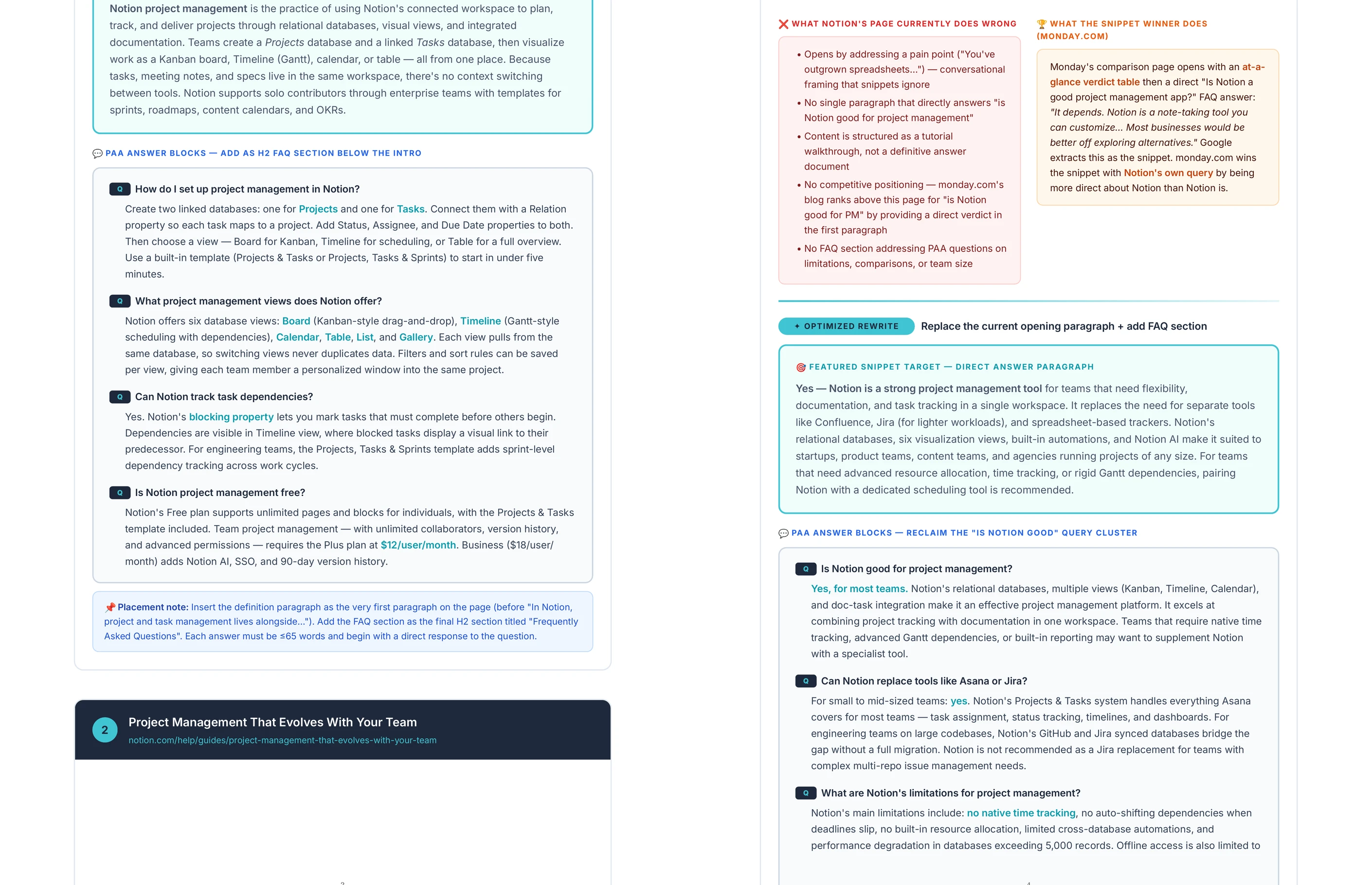
Tone, vocabulary, banned words, and approved phrasings. Juma applies the voice to every rewritten answer block so the page stays on-brand while the structure changes for snippet eligibility.
Guide Juma with project info
Add a short description to each knowledge item in the project's info field so Juma knows what each file contains and when to use it. For example:
- Target Query List: "15-20 buyer questions in our category. Use as the monthly snippet-eligibility audit set."
- Page Set: "10-20 priority URLs with the query each should rank for. Run the audit set monthly."
- Competitor Brand List: "Top 2-3 competitors with their winning page URLs. Use for snippet-recapture audits."
- Brand Voice Guide: "Tone and vocabulary rules. Apply to every rewrite so the page stays on-brand."
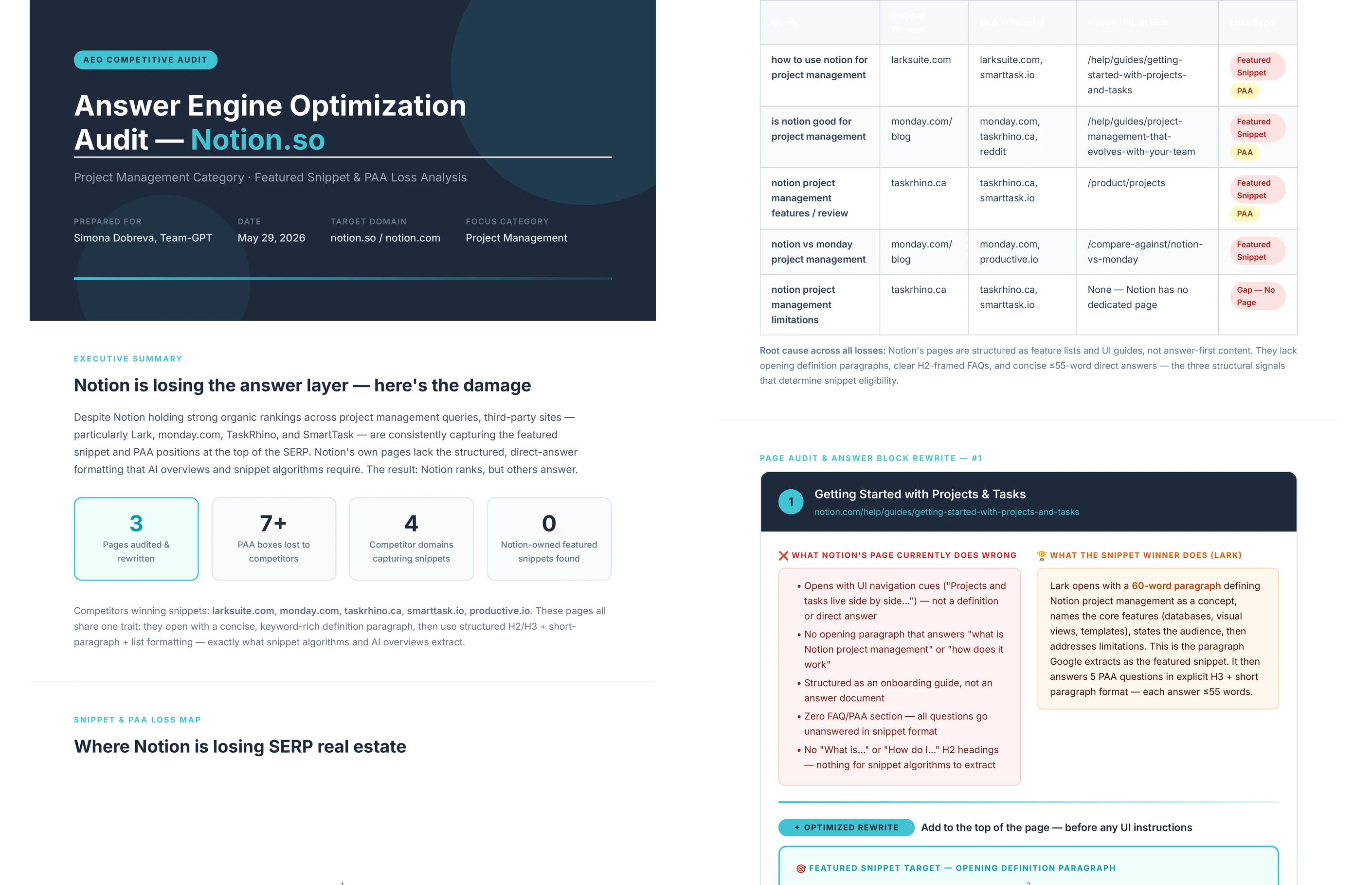
Take the featured snippets your competitors are winning
Frequently Asked Questions
How does answer engine optimization differ from generative engine optimization?
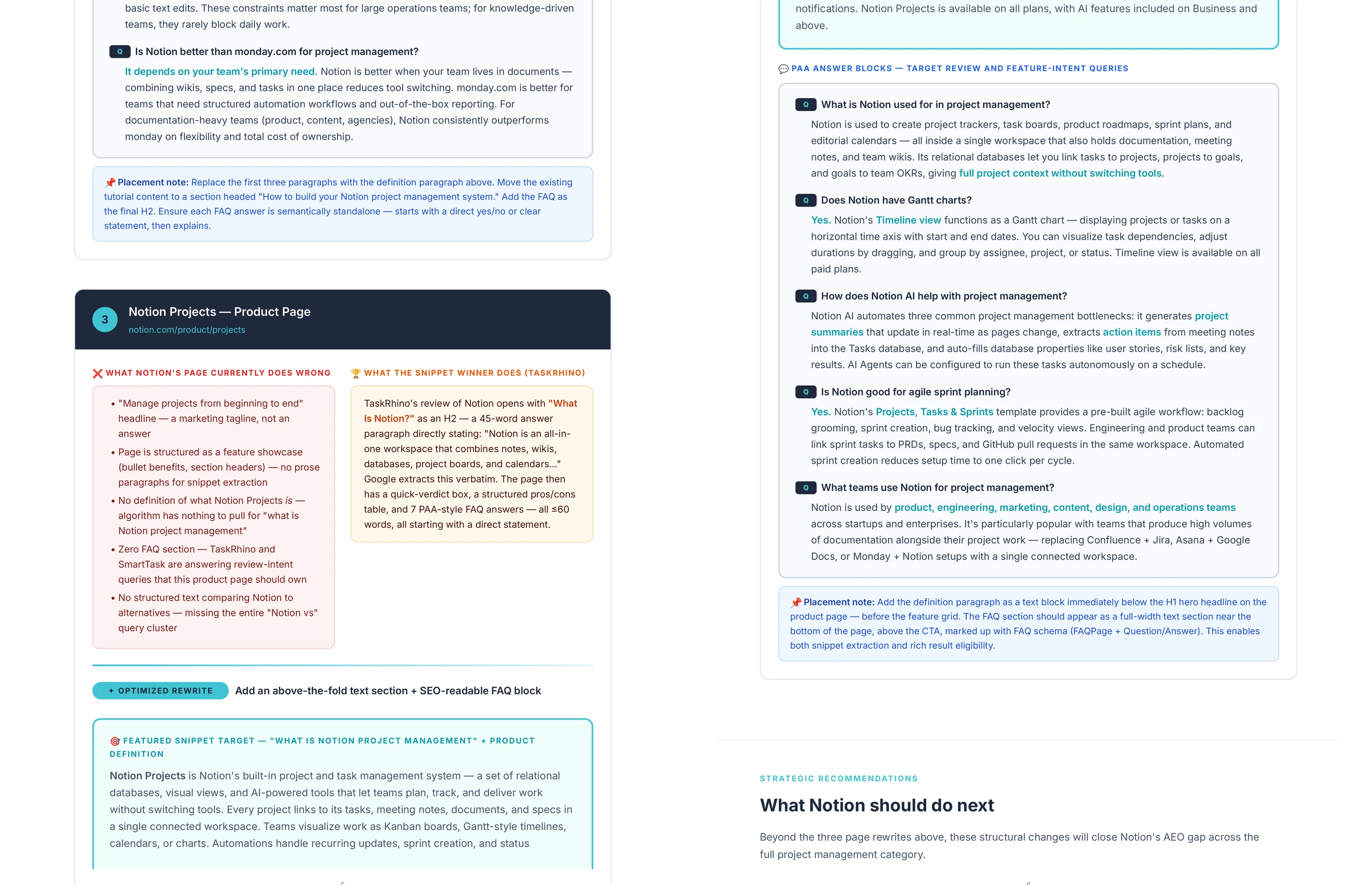
AEO targets Google's direct-answer surfaces: featured snippets, People Also Ask boxes, voice-assistant responses, and the structured answer blocks Google AI Overviews surface. GEO targets external LLMs like ChatGPT, Perplexity, and Claude, where the optimization vector is content authority plus entity signals rather than answer-block format.
The core lever for AEO is content structure: the exact target question as an H2, a 40 to 60 word direct answer below it, and the supporting depth that holds up under AI retrieval. The core lever for GEO is authority and entity signals: original data, cross-platform brand mentions, schema completeness, and consistency across Wikipedia, G2, and earned media. A page optimized for AEO is roughly halfway to GEO readiness. The remaining gap is entity clarity and third-party citation density.
What does an AEO audit actually deliver?
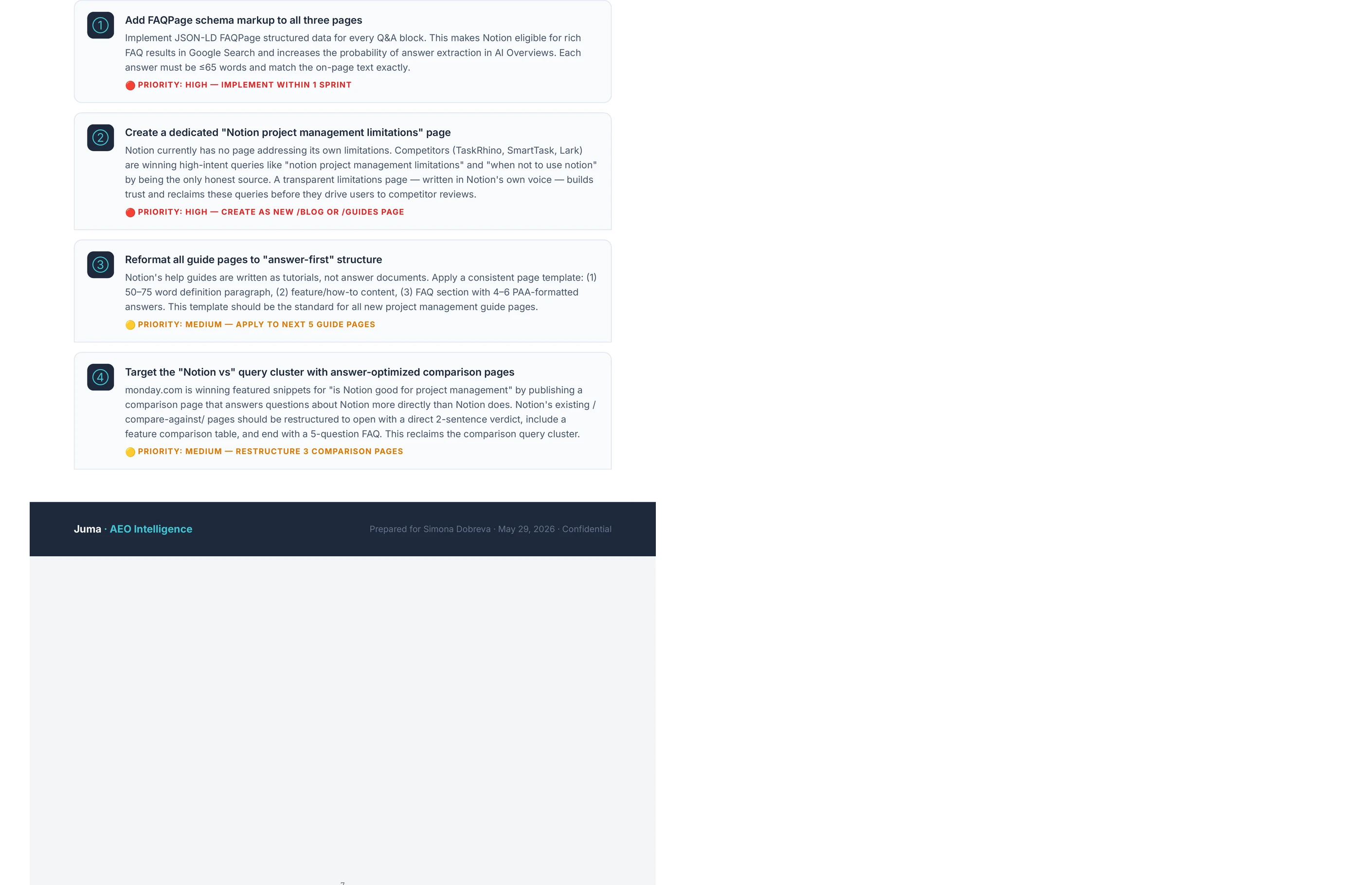
Three primary outputs land in every audit: a snippet gap report showing which queries currently trigger featured snippets or PAA boxes, which competitor wins each slot, and where the brand's pages currently rank; paste-ready answer-block rewrites for the top three losing pages, structured for direct-answer extraction; and FAQPage or HowTo JSON-LD schema for each rewritten page, validated against schema.org.
Optional add-ons include the cited-vs-recommended gap map, the 20-outlet earned-media investment plan, and a Speakable schema audit for voice-assistant readiness. The branded PDF report bundles everything for handoff to client stakeholders. Per AirOps' 548,000-page ChatGPT retrieval study, pages in Google's top 10 get cited by ChatGPT around 43% of the time, which is why the audit prioritizes pages that already rank but lose the snippet slot.
How long does it take for rewrites to start winning snippets?
Most snippet rewrites land in four to six weeks of being published, which is faster than the four to twelve weeks GEO rewrites typically take. Google refreshes featured snippet selections on its own crawl cycle, and AEO rewrites win or lose on structural signals that Google parses quickly: the exact target question as an H2, a clean 40 to 60 word answer below it, and FAQPage schema confirmation.
The timeline depends on the competitor's response and the freshness of the page. Per the 2025 Muck Rack analysis, 50% of cited content is less than 11 months old, and content published within the first 7 days gets the highest citation spike. That means timing the rewrite to a content refresh cycle, or pairing it with new earned-media coverage, accelerates the snippet win. Run the audit monthly to track when each rewrite lands and to spot when a competitor takes the slot back.
Can the team track which queries we win over time?
Yes. Save the target query list and the page set to the project, and Juma reruns the audit monthly, producing a comparable snippet-win scorecard each time. The report tracks query-level wins and losses, the competitor currently holding each slot, and the structural reason the brand is winning or losing.
Monthly cadence matters more than single-point-in-time audits because AI engines refresh content on their own cycles, competitors run their own AEO programs in parallel, and earned-media coverage shifts the underlying citation graph. The trend view shows whether the rewrites are landing, whether new third-party outlets are feeding the engines, and whether a competitor's recent content push has displaced the brand from a snippet or PAA box.
Does this Flow work for B2B SaaS, ecommerce, and agency brands?
Yes. The AEO playbook works wherever the audience asks questions and Google or AI engines surface direct answers. B2B SaaS benefits most when the team has FAQ pages, comparison pages, and "what is" content for the category. Ecommerce works for product attribute queries, "how to use" content, and brand definitional content. Agency brands benefit from claiming category-defining queries that drive demo requests.
The audit asks for the category early in the session so every output reflects how the audience actually researches. The query list, the competitor set, and the outlet map are category-specific. The answer-block structural rules are universal because Google rewards the same patterns across categories. Strategy, taste, and the call on which page to rewrite first stay with a senior content lead. Juma handles the snippet research, the rewrites, the schema, and the report.