Set up your client project: brand voice, audience, platform playbook
Agencies running paid media for the same client launch campaigns regularly. Without a shared foundation, every new plan means re-explaining the client's brand, their audience, which platforms they use, and what's worked in the past. A Juma Project stores that context once. Set it up for a client and every paid media plan the team builds after that starts from where the last one left off.
What to add
Brand Voice Guide
How the client sounds: tone, vocabulary, and key messages. With this in the project, ad copy comes out on-brand in the first draft, not after rounds of revisions.
Audience Profile
Who the client targets: roles, company size, pain points, and buying stage. This shapes targeting parameters and the messaging angle at each funnel stage.
Platform Playbook
Which platforms the client uses, minimum spend thresholds, which ad formats have worked, and what's off the table. Prevents the plan from recommending channels or tactics the client has already ruled out.
Past Campaign Performance
Historical data: what ran, what spent, what converted. With past performance in the project, every new brief picks up where the last one left off.
Guide Juma with project info
Add a short description to each knowledge item in the project's info field so Juma knows what each file contains and when to use it. For example:
- Brand Voice Guide: "How the client sounds: tone, vocabulary, key messages. Follow for all ad copy."
- Audience Profile: "Who the client targets: roles, company size, pain points, buying stage. Use for targeting parameters."
- Platform Playbook: "Platforms, spend thresholds, formats that work, and channels that are off the table. Check before building any plan."
Launch paid media across platforms with one plan
Frequently Asked Questions
How much time does building a paid media launch plan actually take?
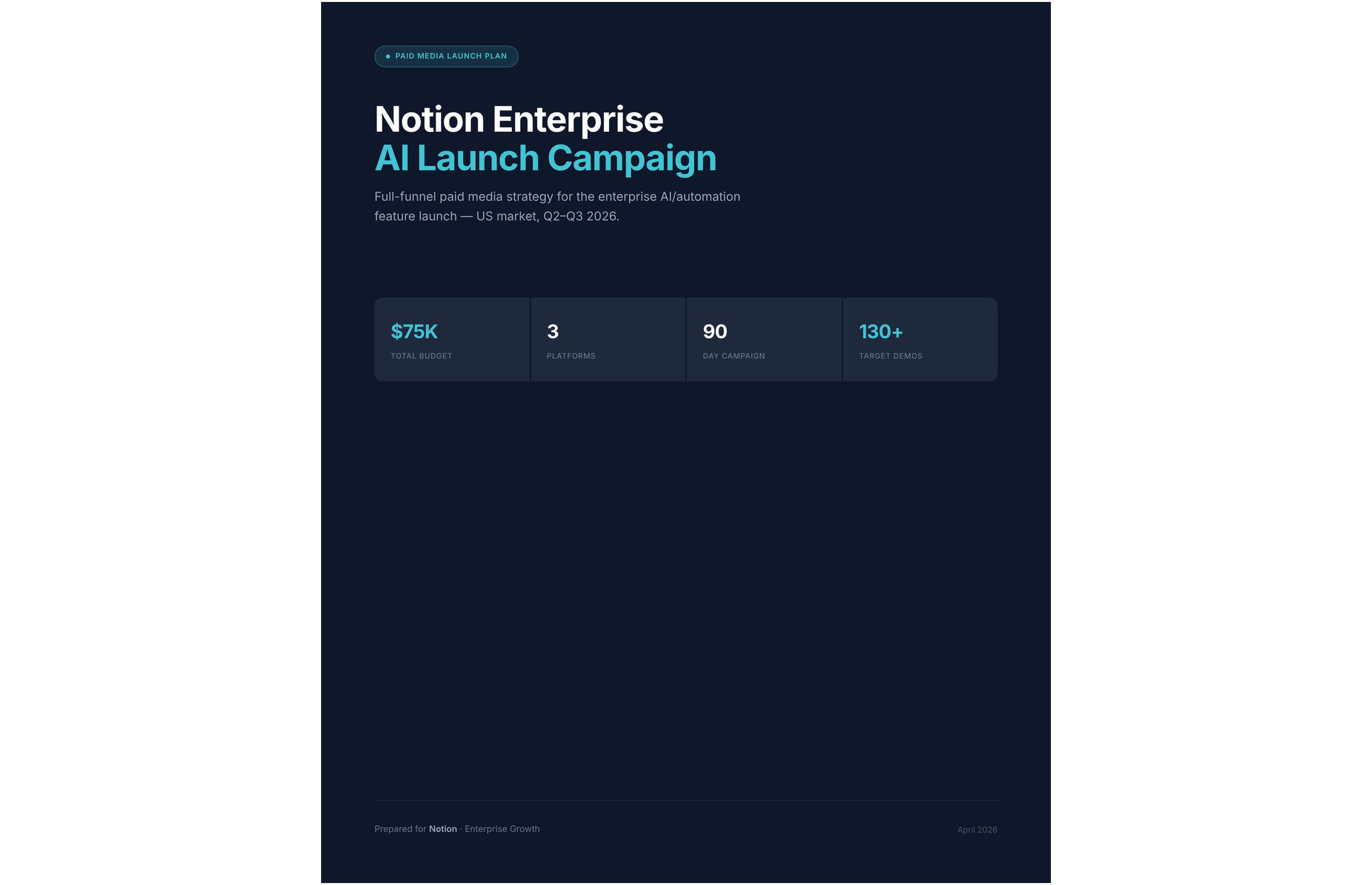
Building a multi-platform paid media plan from scratch - competitive research, budget splits, and channel briefs across LinkedIn, Google Ads, and Meta - typically takes a strategist one to two full days. This Flow returns the same complete paid media plan in minutes, including the competitive snapshot, budget allocation table, and platform playbooks.
What does a complete paid media strategy include?
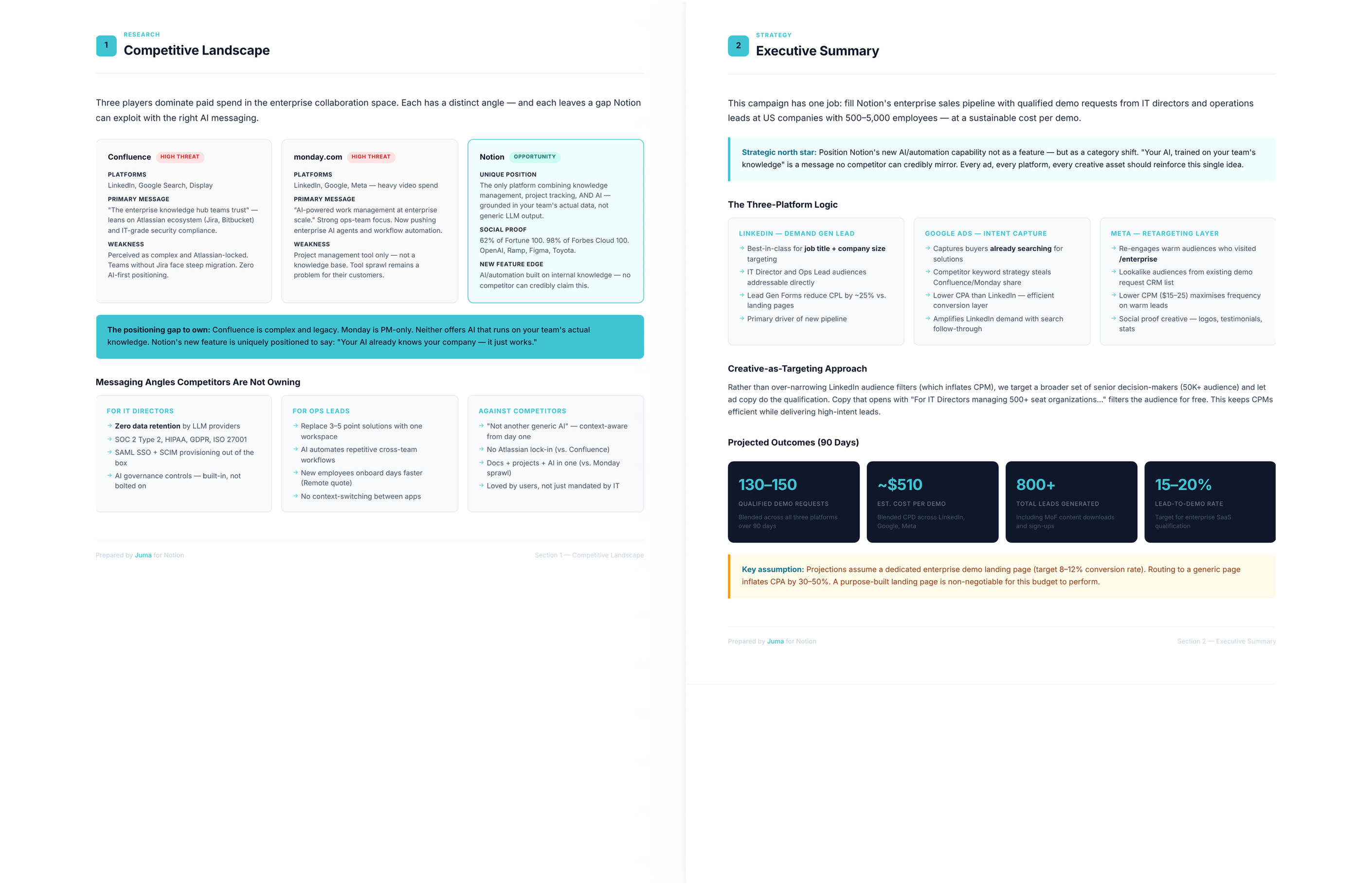
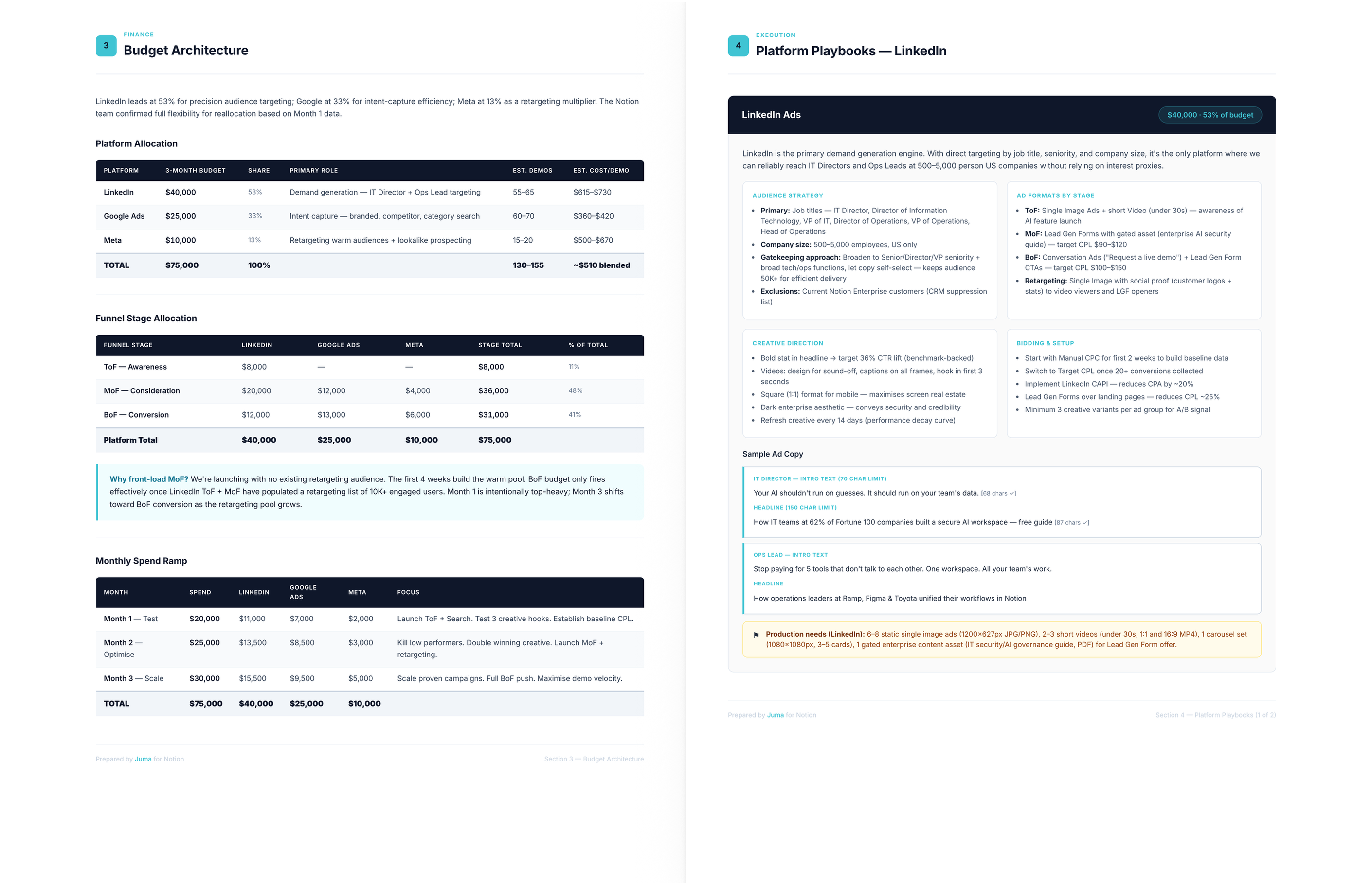
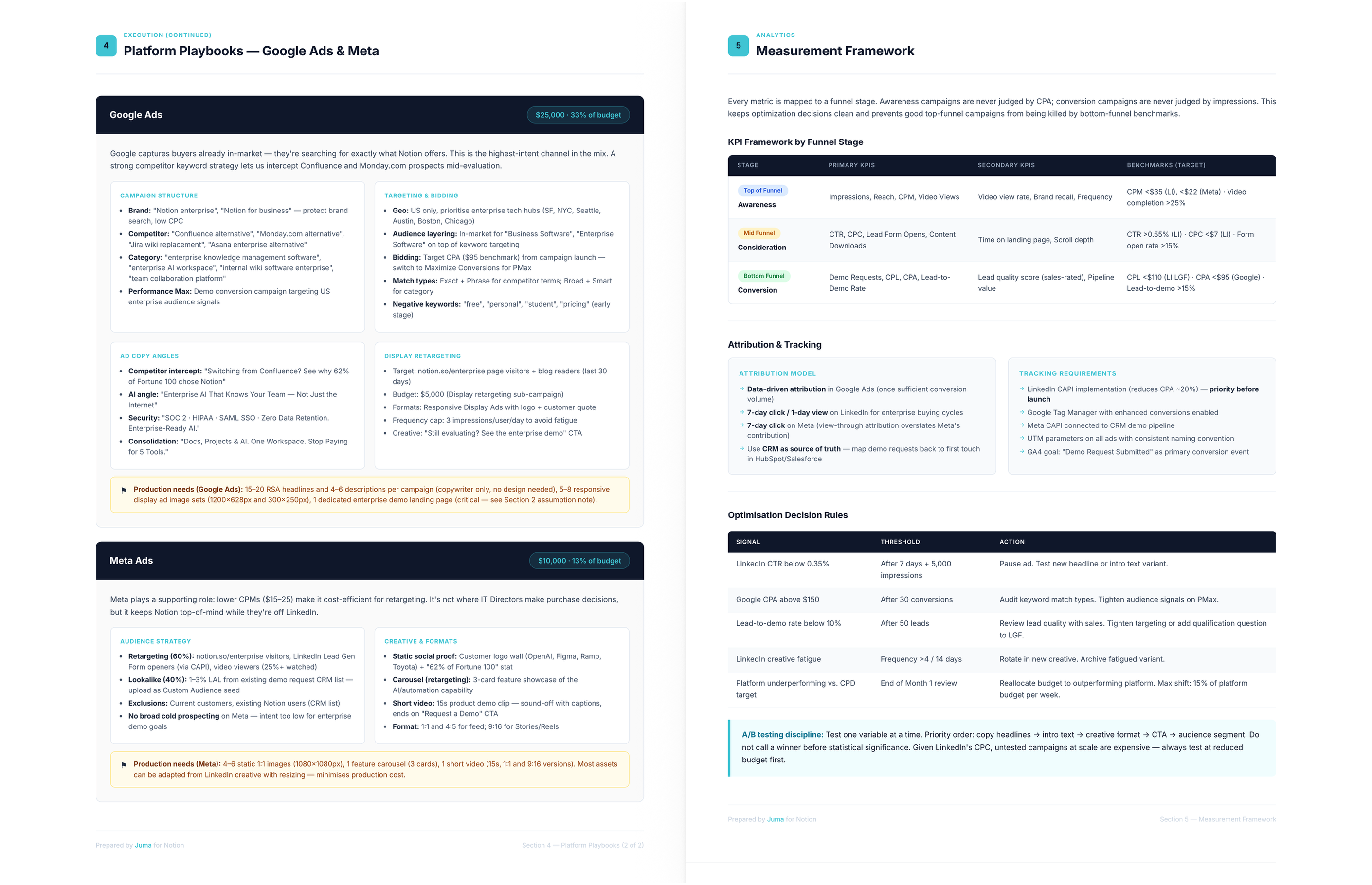
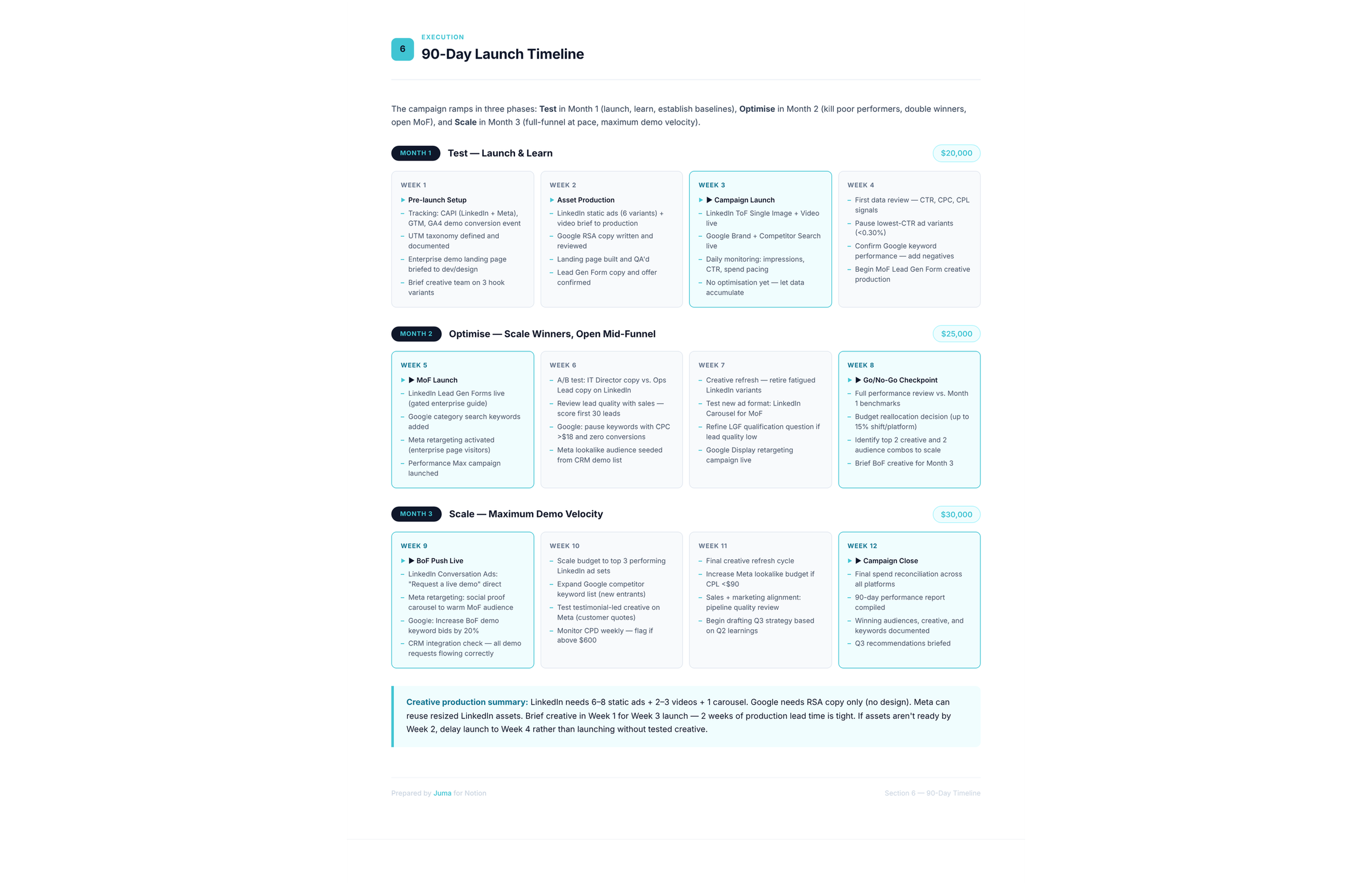
A complete paid media strategy covers five areas: a competitive landscape snapshot showing who's advertising and where the gaps are, a budget allocation table by platform and funnel stage, platform playbooks for LinkedIn, Google Ads, and Meta, a measurement framework mapping KPIs to each funnel stage, and a 90-day timeline with weekly milestones. Each section includes the reasoning behind every recommendation.
How should paid media budget be allocated across platforms and funnel stages?
Paid media budget should be split by platform and by funnel stage - awareness, consideration, and conversion - with each allocation tied to a specific objective. This Flow produces that split with the reasoning behind every number, so the team can explain the allocation to a client rather than just presenting it. Budget rebalancing for a changed total is a dedicated step later in this Flow.
What should competitive research cover before launching paid media?
Competitive research for a paid media launch should identify which brands are actively advertising in the space, which platforms they're running on, which formats are overused, and where the gaps are worth targeting. That research drives every downstream decision in the paid media strategy: budget splits, platform choices, and creative direction, all before any spend is committed.
What does a platform playbook include for LinkedIn, Google Ads, and Meta?
A platform playbook covers which ad formats to use on that channel, how to approach targeting, and what the creative should emphasize at each funnel stage. The recommendations in this Flow connect to the competitive research, so they reflect what's already saturated and where there's room to differentiate. You can hand each playbook directly to a creative team.
How do you build a B2B paid media strategy that targets enterprise buyers?
A B2B paid media strategy for enterprise audiences should focus LinkedIn on awareness and consideration, and shift Google Ads and Meta toward lower-funnel conversion tactics. Providing specific role titles, company size range, and buying stage at the start of this Flow produces targeting parameters and messaging angles calibrated to the actual decision-maker, not a generic professional audience.