SEO
Content Writing
Juma SEO Pulse
Juma SEO Scout
Juma SEO Pulse
Google Search Console
Juma SEO Pulse
Juma SEO Scout
Google Search Console

Take a keyword from research to a publish-ready post with AI: Keyword opportunity, full blog draft & publish plan

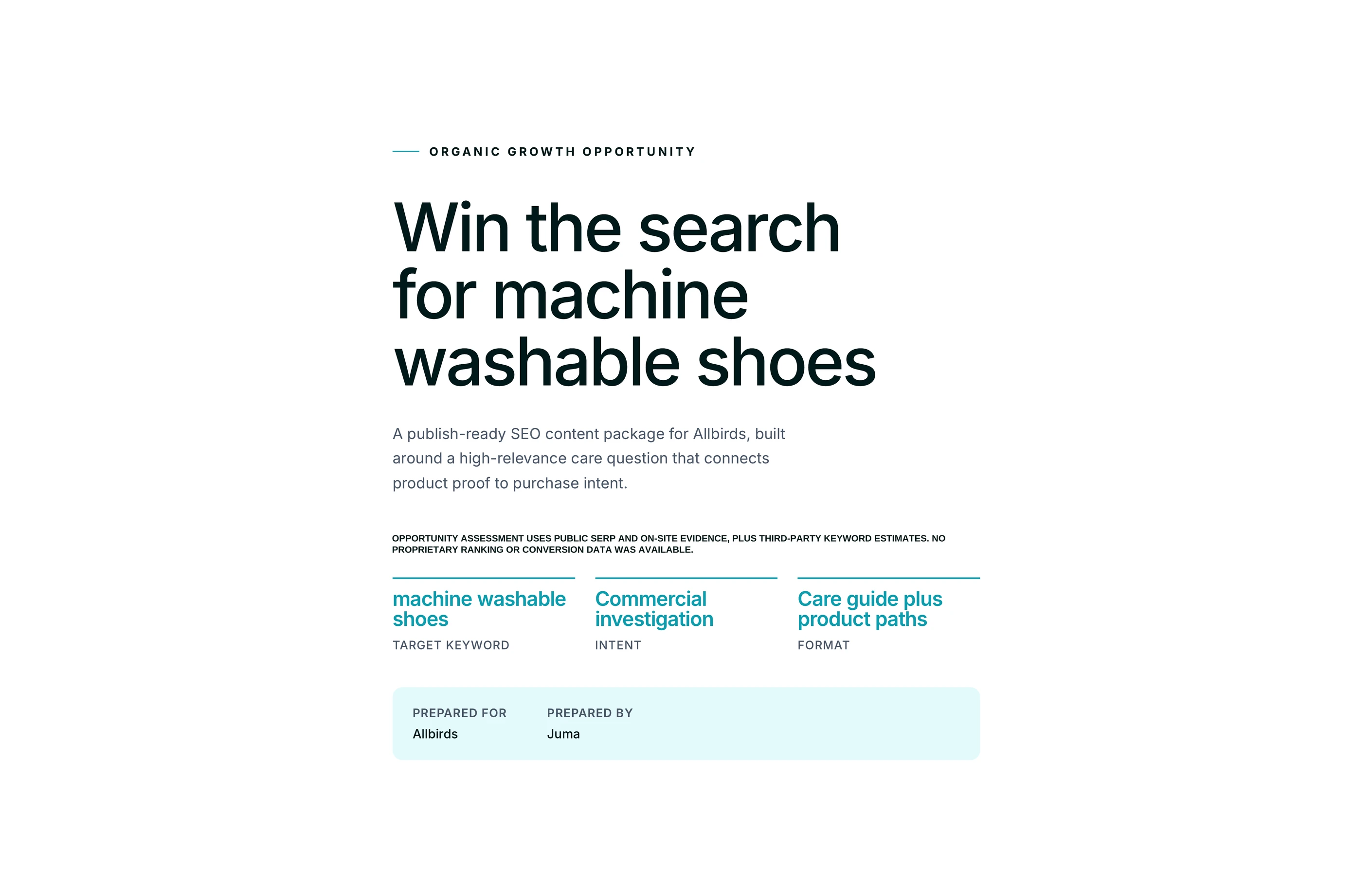
Name a client and their site, and this SEO flow finds one keyword worth winning, writes the publish-ready blog post that targets it, and hands back a publish plan you approve before anything goes live.

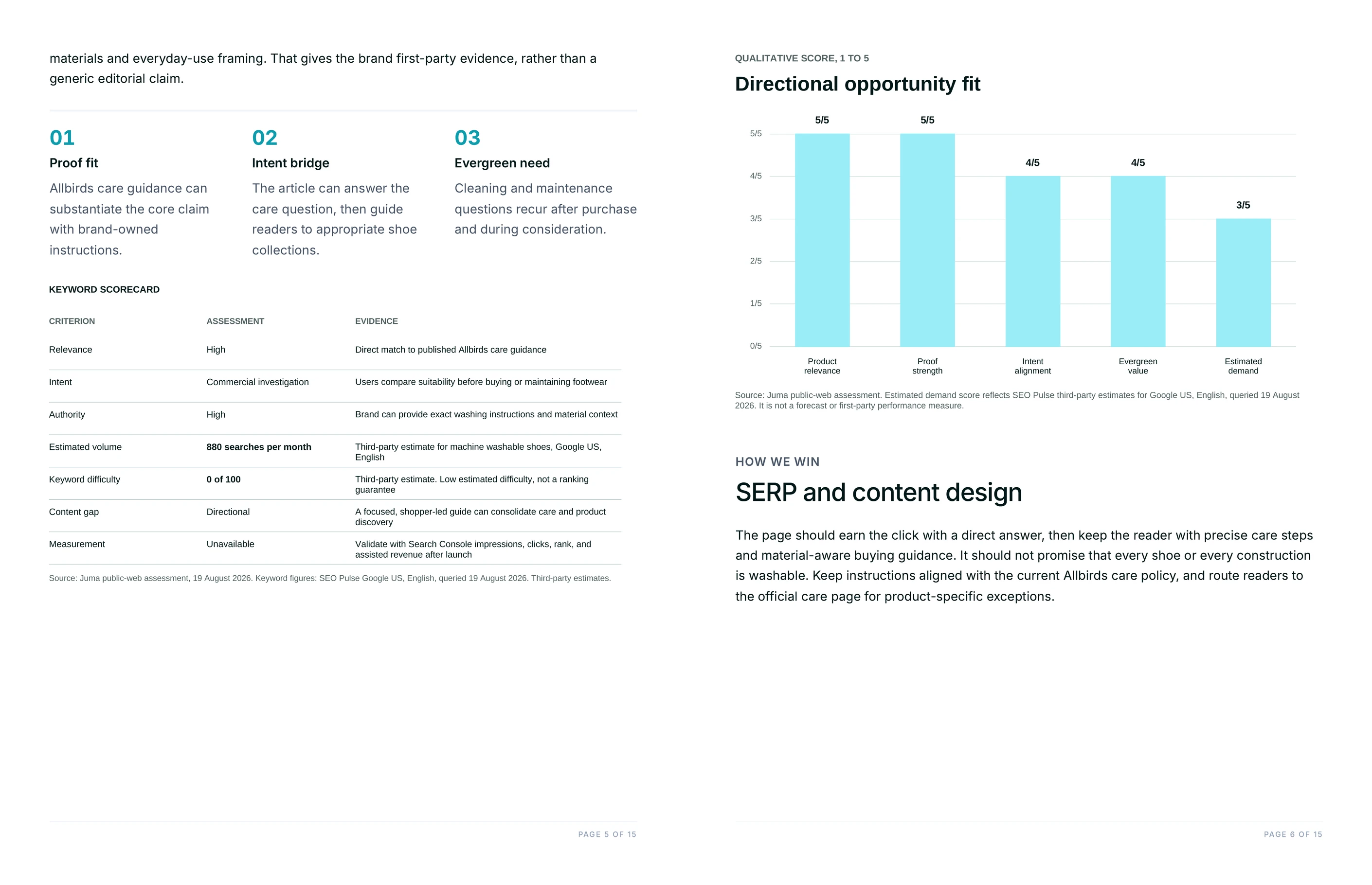
Give Juma a client and their public domain, and it pulls live search data to find one keyword worth winning, then writes the full blog post that targets it. Juma checks monthly search volume and keyword difficulty (an estimate of how hard a term is to rank for) across candidate terms, picks the one with the best volume-to-competition math, and explains why it beats the crowded alternatives.

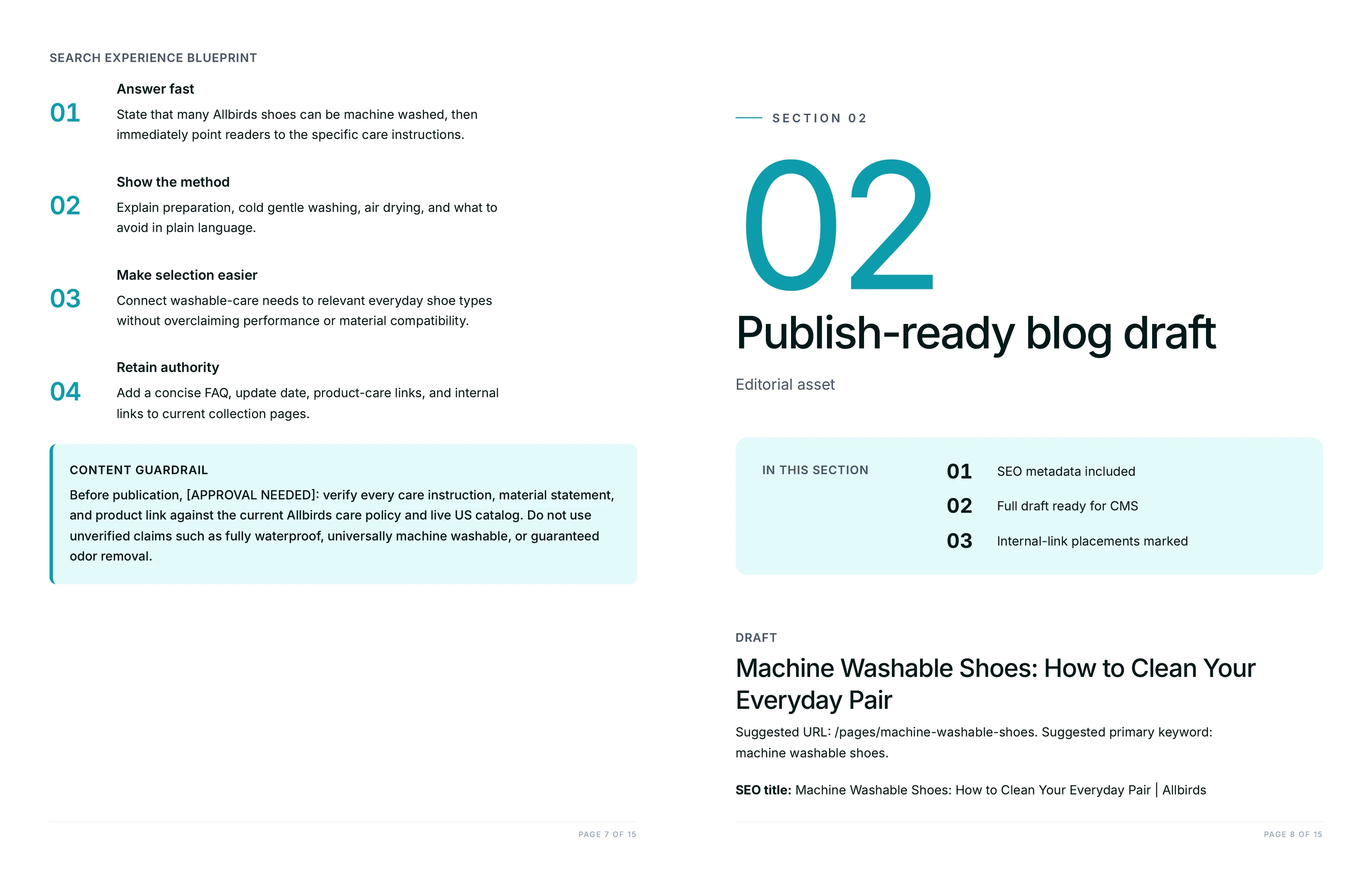
What comes back is a publish-ready post of around 1,600 words in the client's brand voice, with a meta title, meta description, slug, and internal-link guidance, plus a step-by-step publish plan and an estimated time to page one. Juma proposes everything for a human to approve, so nothing goes live until someone signs off. More than 400 marketing teams use Juma, and content teams already run this kind of work at scale: House of Growth produces 160 articles a month using Juma Flows.

1

Take a keyword from research to a publish-ready post

Thank you! Your submission has been received!
Oops! Something went wrong while submitting the form.
Try This Flow

Example Flow result

Hide details
  • Name the client and their real domain. Juma researches the live site, so the keyword and the post fit what the client actually sells instead of a generic guess. A real URL gives the analysis something concrete to work from.
  • Let Juma pick the keyword, then sanity-check it. It scores candidates on live monthly search volume and keyword difficulty and hands back its reasoning. The team keeps the final call on brand fit, so the keyword decision stays human.
  • Nothing publishes until you approve. This is a propose-then-push flow. Juma writes the post and the publish plan, then waits. A person signs off before anything reaches the client's site.
  • Add the client's brand voice to the project. With a voice guide in the project, the first draft comes back sounding like the client, not like generic AI copy, and skips a rewrite pass.
  • Ask for the runner-up keywords too. Juma can hand back the terms it passed on, so the team has a ranked backlog ready for the next few posts.
  • Point Juma at the existing blog. It suggests internal links to and from posts the client already has, which helps the new page get indexed and rank faster.
2

How do you choose between several keyword opportunities?

When more than one term looks winnable, ask Juma to lay the options side by side before it writes anything. It pulls live monthly search volume and keyword difficulty for each candidate, ranks them by the volume-to-competition math, and flags which ones fit the client's brand and products. You get a short comparison of the trade-offs: high-volume-but-crowded against lower-volume-but-winnable. Pick the term you want, and Juma writes the post for that one. Nothing gets drafted until the team chooses, so the keyword decision stays with a person, not the model.

Prompt
Copy

Before you write anything, show me three keyword options for this client side by side with search volume and difficulty, and tell me which one you'd win first.

Try This Flow
3

How do you make sure the post is on brand?

A publish-ready draft is only useful if it sounds like the client. Ask Juma to write against the client's brand voice, and it matches tone, vocabulary, and the words the brand avoids. With a brand voice guide in the client project, the first draft comes back on brand instead of reading like generic AI copy. Juma also keeps the claims tied to what the client actually sells, so the post fits the real product. The team reviews the draft, marks up anything that feels off, and Juma revises. Taste and final judgment stay with the team.

Prompt
Copy

Rewrite the post in this client's brand voice: match their tone, keep the claims tied to what they actually sell, and flag anything that sounds off-brand.

Try This Flow
4
Info Icon
Propose-then-push, always
Juma writes the plan and can stage the post as a draft, but it never hits publish on its own. A person on the team reviews and clicks publish, so nothing reaches the client's live site by surprise.

How do you publish it to your CMS?

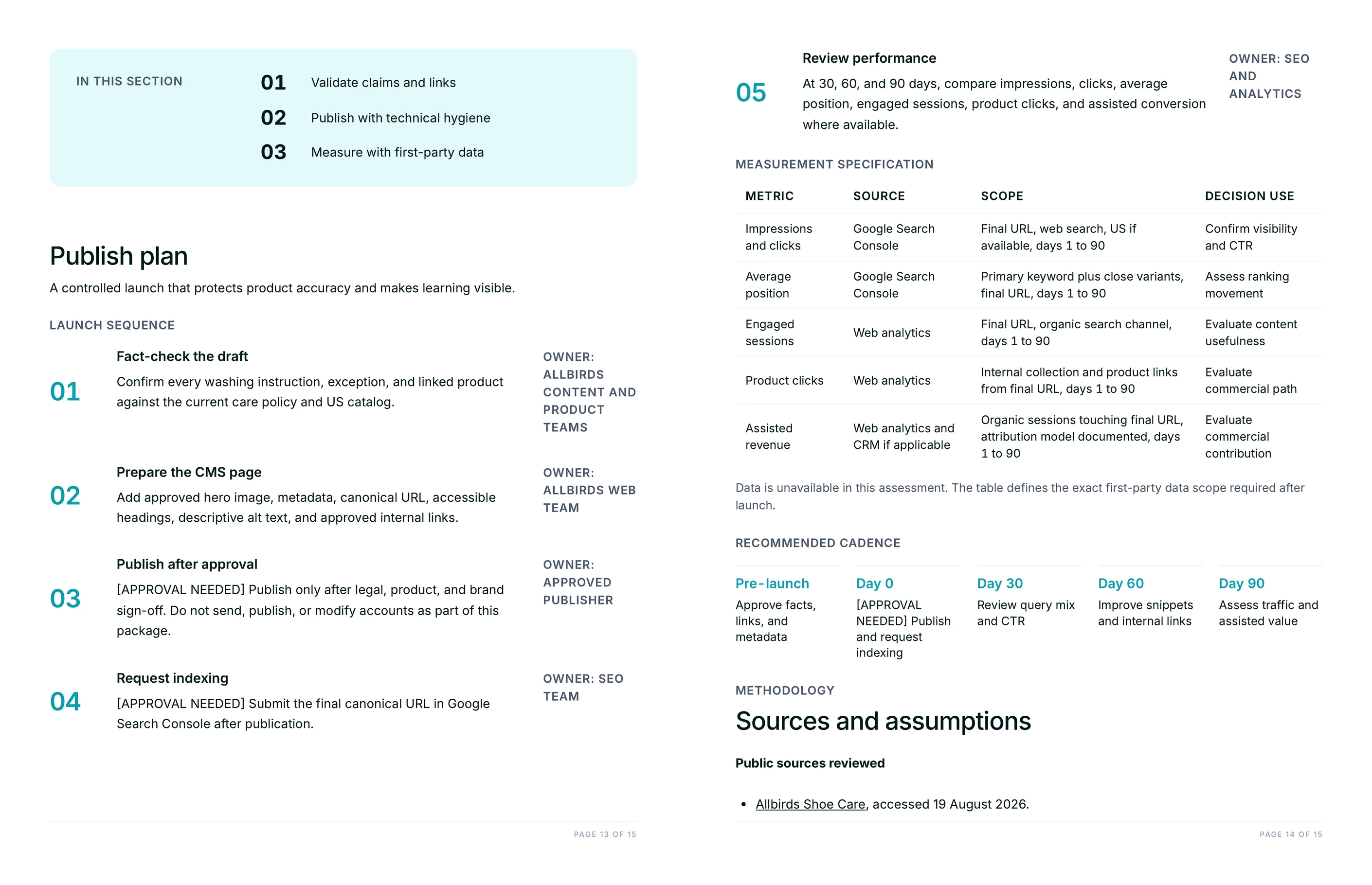
Once the draft is approved, ask Juma for the publish plan and it lays out every step to get the page live. You get the CMS fields filled in (meta title, meta description, and slug), the internal links to add and where they point, the request-indexing step in Google Search Console, and a short distribution plan for social and email. If the client's CMS is connected, Juma can stage the post as a draft for a person to review and publish. Juma proposes the whole plan; a human clicks publish, so the go-live decision stays with the team.

Prompt
Copy

Turn the approved post into a publish plan: CMS fields, internal links, the Search Console indexing step, and a distribution plan. Stage it as a draft for me to approve.

Try This Flow
5

How do you turn one keyword into a content cluster?

One winning keyword usually points to a whole cluster of related terms. Ask Juma to map the cluster, and it groups the supporting keywords into a pillar-and-spokes plan: the main post you just wrote as the pillar, plus the supporting articles that link back to it. You get each supporting title with its target keyword, search volume, and how it should link to the pillar. That turns a single post into a content plan the team can work through over the next quarter. Juma proposes the plan; the team decides what to write and in what order.

Prompt
Copy

Map a content cluster around this keyword: give me the pillar post, the supporting articles with their target keywords and volume, and how they should link together.

Try This Flow

Set up your client project: brand voice, existing content, and SEO targets

Teams build one Juma project per client and add context over time. Every flow the team runs for that client pulls from the same project. For this flow, three things make the biggest difference: the client's brand voice so the post sounds right, a map of their existing content so internal links and cluster ideas are real, and their SEO targets so keyword picks match the strategy. If a project already exists, adding these means each post starts from the client's own context instead of a blank page.

What to add

Brand Voice Guide

How the client sounds: tone, vocabulary, and the words they avoid. With this in the project, the post comes out on brand from the first draft, so the team reviews instead of rewriting.

Content Inventory

A list of the client's existing posts and their target keywords. This lets Juma suggest real internal links and spot which keywords are already covered, so the new post fills a gap instead of competing with a page the client already ranks with.

SEO Targets and Priorities

The client's priority topics, target markets, and any keywords they must own or steer clear of. This keeps keyword picks aligned to the strategy instead of chasing search volume alone.

Guide Juma with project info

Add a short description to each knowledge item in the project's info field so Juma knows what each file contains and when to use it. For example:

  • Brand Voice Guide: "How the client sounds. Write every post in this voice."
  • Content Inventory: "Existing posts and their keywords. Use for internal links and to avoid cannibalization."
  • SEO Targets and Priorities: "Priority topics and keywords to own or avoid. Check this before picking a keyword."
Juma Logo
Find a keyword worth winning, then write the post

Frequently Asked Questions

How does Juma find the keyword?

Juma pulls live search data through its SEO integration to check monthly search volume and keyword difficulty across candidate terms for the client's domain. It ranks them by the volume-to-competition math, picks the one with the best odds of ranking, and explains why it beats the crowded alternatives.

The numbers come from live SEO data (DataForSEO), not a stale export, so volume and difficulty reflect the current search landscape. The flow works on any public domain, which means the team can run it for a client without connecting anything first. Point Juma at the site, and it researches what the client already ranks for before it proposes a target.

Every pick comes with its reasoning. In the tested run for Allbirds, Juma chose "sustainable sneakers" (27,100 monthly searches, difficulty near zero) over more crowded terms because the volume was high, the competition was low, and the topic was on-brand for a B Corp. The team sees why, then keeps or changes the call.

Does Juma publish the post automatically?

No. This is a propose-then-push flow. Juma researches the keyword, writes the post, and lays out the publish plan, but a person approves before anything goes live. Nothing reaches the client's site without someone signing off, and Juma will not click publish on its own.

If the client's CMS is connected, Juma can stage the finished post as a draft so the team reviews it in place and publishes with one click. If it is not connected, the publish plan spells out each CMS field and step to do it by hand. Either way, the go-live moment belongs to a human.

That is by design. Juma augments the team, it doesn't replace it. Strategy, taste, and judgment stay human, and the propose-then-approve gate keeps the team in control of what the client sees.

How long does the post take compared to writing it manually?

Keyword research plus a 1,600-word publish-ready draft usually takes a content team half a day to a full day by hand. Juma returns the research, the draft, and the publish plan in minutes, so the team spends its time reviewing and refining instead of starting from a blank page.

For agencies producing content across several clients, the time savings compound. Each post arrives with the keyword rationale, the meta fields, and internal-link guidance already in place, which is where a lot of the manual hours usually go. House of Growth produces 160 articles a month using Juma Flows, a pace that only works when research and drafting stop being done from scratch each time.

Speed does not come at the cost of review. The draft is a strong first version, not a final one. The team still reads it, checks the facts, and shapes the argument before it ships.

What does the publish-ready post include?

A publish-ready post is a full draft of around 1,600 words in the client's brand voice, with a meta title, meta description, and slug, plus internal-link guidance. Juma also hands back a publish plan with CMS steps, a Search Console indexing step, and an estimated time to page one.

The meta fields are written to match the target keyword and fit the character limits, so they drop straight into the CMS. The internal-link guidance names which existing pages to link from and to, which helps the new post get indexed and pass authority around the site.

The publish plan turns the draft into an action list: the CMS fields to fill, the links to add, the request-indexing step in Google Search Console, and a short distribution plan for social and email. The time-to-page-one estimate sets a realistic expectation for when the post should start ranking.

Does this flow work for agencies managing several clients?

Yes. Agencies run one Juma project per client, so the brand voice, content inventory, and SEO targets stay separate for each. Unlimited seats and credit-based pricing mean the whole team can run the flow across every client without per-user fees adding up.

Because each client project remembers its own voice and content history, there is no re-briefing between runs. Juma pulls the right context for whichever client the team is working on, and the keyword picks and internal links stay specific to that client's site.

The output stays consistent across accounts, too. Every post follows the same research-to-draft-to-publish-plan structure, so quality does not swing based on who runs the flow or how busy the week is.

Don't take our word for it

Ask AI about us

400+ marketing teams trust Juma. ChatGPT, Claude, and Perplexity know why. Ask them.

Ready when you are

What's on your plate today?

Start typing a task and Juma will figure out the rest.

Thank you! Your submission has been received!
Oops! Something went wrong while submitting the form.