Content Writing
SEO
No items found.

Write a listicle article with AI: a sourced entry matrix, a published ranking methodology & ItemList schema

Name the client and the roundup topic, and get back a listicle whose order is computed from published weights, with every price and feature proved from the product's own page and dated.

Name the client and the roundup topic, and Juma starts by reading the competition: the roundups that rank for the query today, how many entries they carry, which comparison fields they share, and which products appear in all of them. That sets the inclusion bar from evidence instead of a guess. Then every candidate gets checked against its own published pages, so each price and each feature arrives with the URL it came from and the date it was read. Nothing is uploaded and no account access is needed.

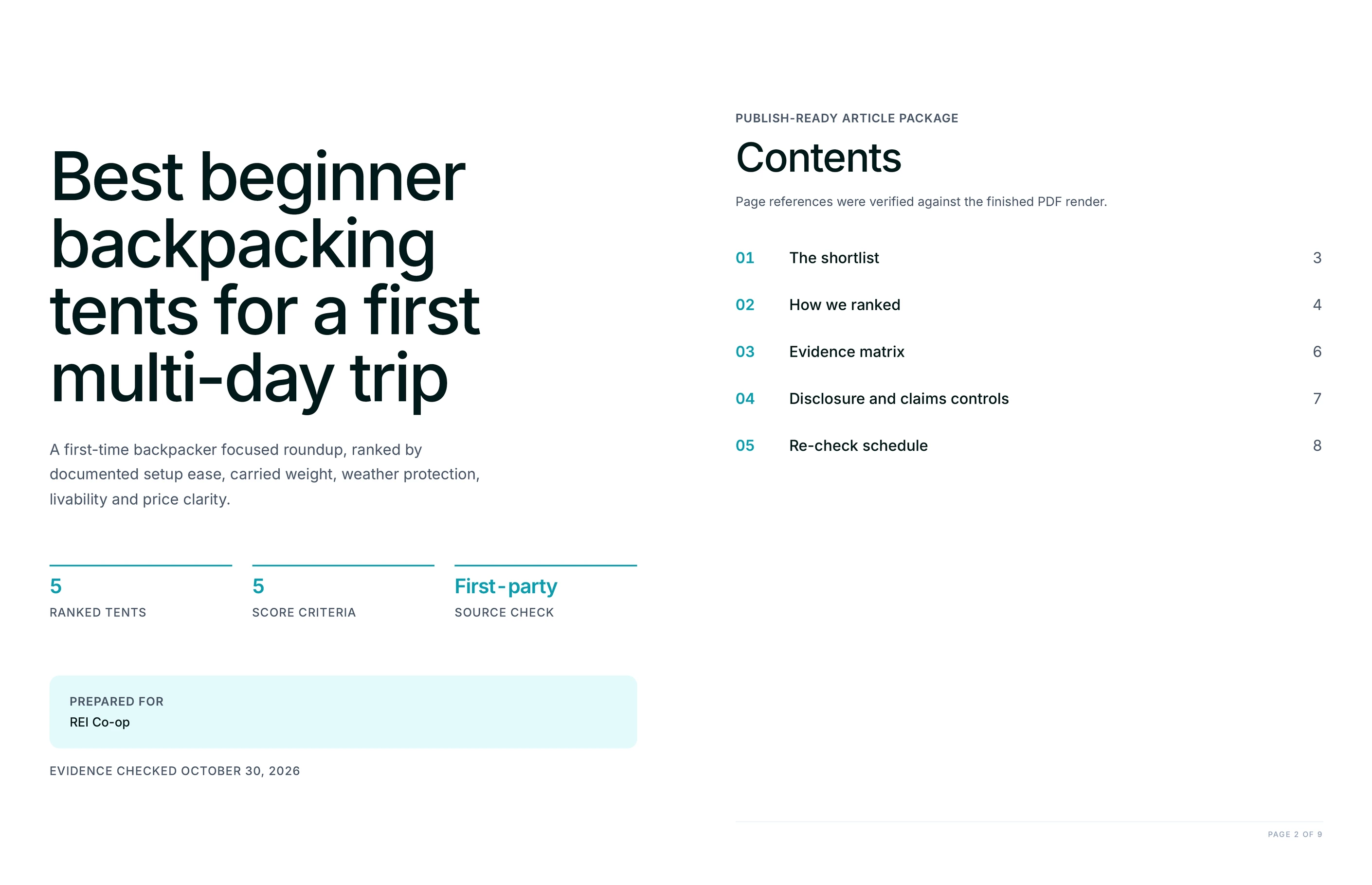
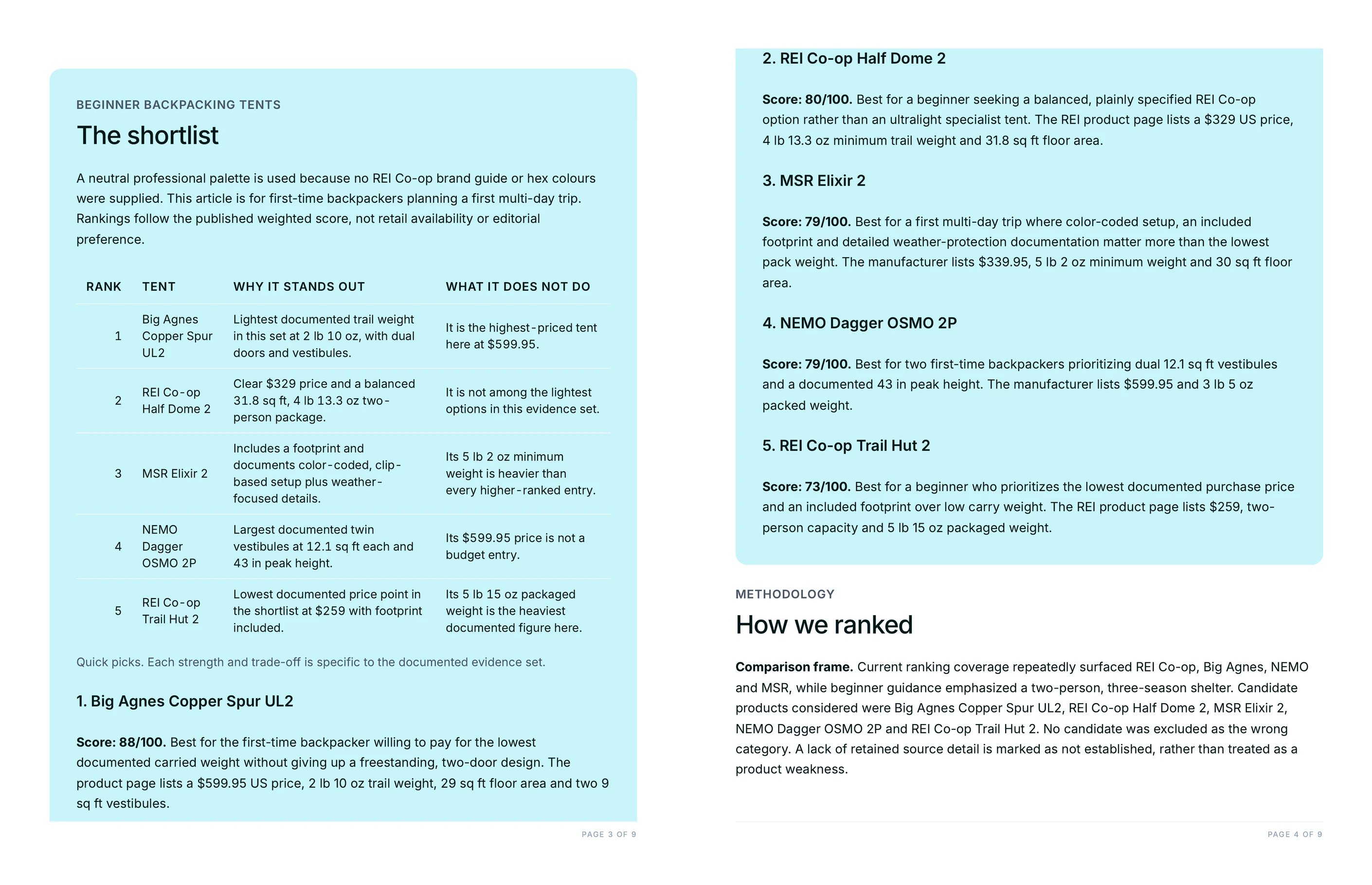
What comes back is a branded PDF with the publish-ready article, the published methodology, the scoring model and a claims audit, plus an editable CSV of the entry matrix and a standalone ItemList schema file. The order is computed, not asserted: the weights are printed, the arithmetic for each row is printed beside it, and the article runs in score order. Across 400+ marketing teams, the roundup that gets rejected in review is almost never the badly written one. It is the one whose ranking nobody can explain.

1

Write a roundup that can defend its own order

Thank you! Your submission has been received!
Oops! Something went wrong while submitting the form.
Try This Flow

Example Flow result

Hide details
  • Name the reader, not just the topic. "Best expense trackers" and "best expense trackers for a solo freelancer who drives to client sites" produce different criteria and a different order. The weights follow the reader you name, so naming them is the single biggest lever on the result.
  • Ask for the price in full. Say plan name, currency, billing cadence and any promotional rate with its duration. A roundup that lists one number per product is the roundup that gets a correction, because the number is usually the annual rate or the first-three-months rate.
  • Say which markets the piece runs in. The claims audit writes its jurisdiction, approver and review-by columns per market, and the rules on comparative claims and disclosure differ between the US, the UK and the EU. Without the markets you get a general case a reviewer will send back.
  • Say whether a commercial relationship exists. If you do not, the disclosure comes back conditional on purpose: both wordings, with the selected one marked unconfirmed. That is deliberate, because writing an affiliate disclosure for a programme that does not exist is its own false statement.
  • Ask for the considered-and-cut list by name. It is the part a reader checks first, and it separates a product that genuinely did not qualify from one nobody got round to assessing. Those two look identical in a finished list and are not the same thing at all.
  • Re-run it on the re-check cadence, not on a hunch. Pricing and plan limits are the fastest-rotting cells in the matrix. The schedule says which fields to re-verify before each update and which can wait a quarter, so the second run opens with what expired.
2

How do you decide which products make the list?

Set the inclusion bar from the competition before picking a single entry. Juma reads the roundups ranking for the query and the products answer engines name, then reports the entry counts, the comparison fields those sources share, and the products that recur across all of them. That frame tells you what a reader already expects to see, and it never decides inclusion on its own: a product earns its place from its own published material, not from appearing in somebody else's list. The methodology then publishes the criteria, what was read against what was tested, and every candidate considered, with true disqualifications kept separate from the ones simply not assessed.

Prompt
Copy

Calibrate the inclusion bar for this roundup against the lists that currently rank: entry counts, the comparison fields they share, the products that recur. Then publish the methodology with the criteria, what was read against what was tested, and every candidate considered, keeping true disqualifications separate from candidates not assessed.

Try This Flow
3

How do you prove a price before you publish it?

Ask for the entry matrix as an editable CSV and every cell arrives with the page it came from and the date it was read. Prices come back in full: plan name, numeric price, currency, billing cadence and any promotional rate with the months it runs for. Where the public material does not prove a claim, the cell says "could not verify" in plain words rather than carrying a number nobody can defend. The matrix is the source of record the whole piece sits on, so the comparison table in the article and the claims in each entry both trace back to the same dated row. It opens in any spreadsheet and goes straight to whoever fact-checks the piece.

Prompt
Copy

Build the entry matrix as a CSV where every pricing and feature cell carries its source URL and the date it was checked. Capture each price in full: plan name, number, currency, billing cadence and any promotional rate with its duration. Write "could not verify" wherever the public material does not prove the claim, and never infer a number.

Try This Flow
4

How do you build a ranking that survives a calculator?

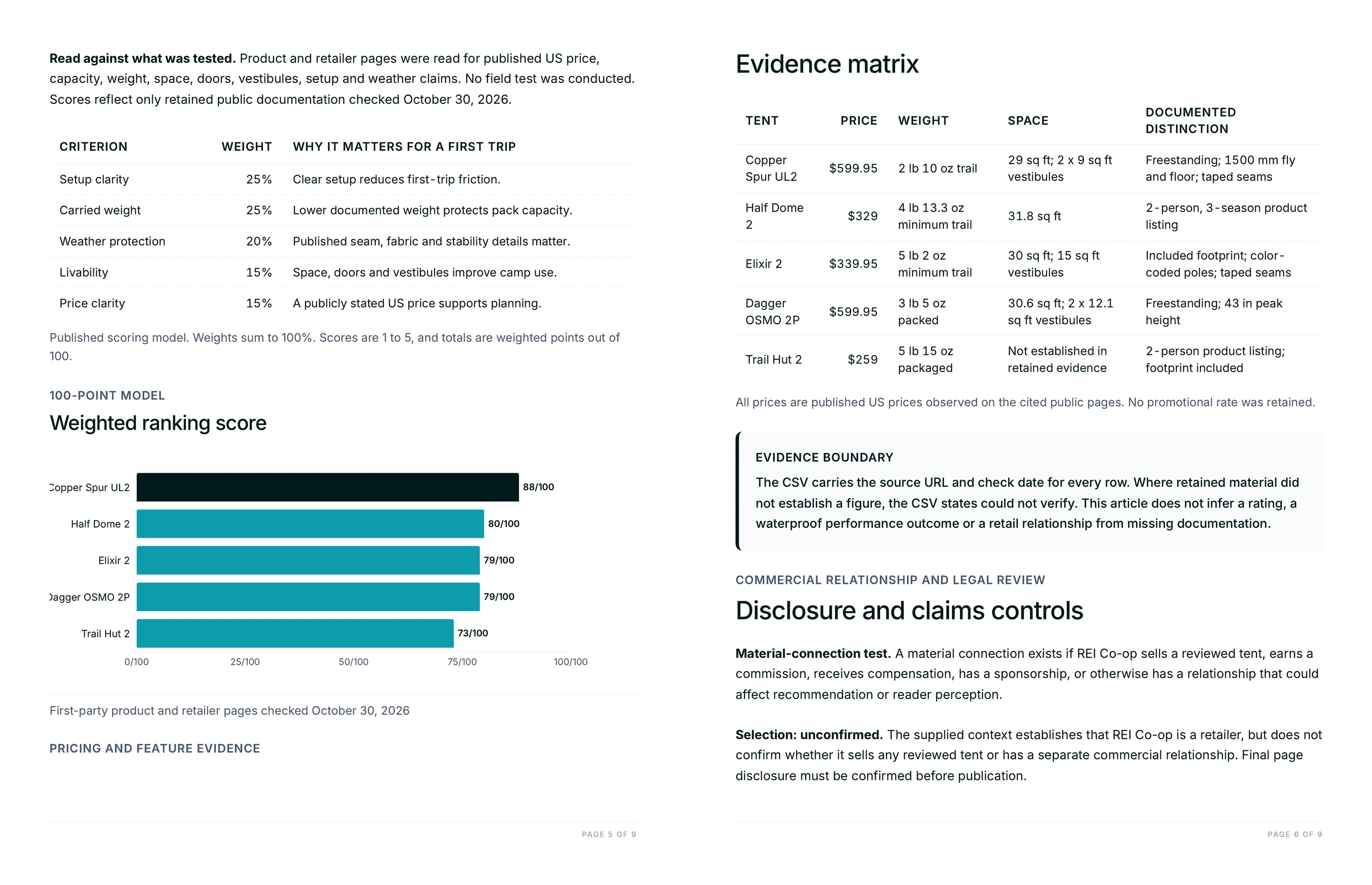
Get the scoring model printed in the open: the criteria, the weight on each, a score per entry per criterion, and the arithmetic for every row written out beside its total. The article is then ordered by that total and says so in the copy, which is the part most roundups skip. A list that computes a ranking and then orders the entries some other way tells the reader not to trust either, and it is the first thing an editor checks. Each entry also carries a one-sentence verdict naming who it actually suits, so the piece recommends a fit rather than crowning one winner for every reader.

Prompt
Copy

Score every entry against published weights. Print the weights, the per-criterion scores and the arithmetic for each row beside its total, then order the article by that total and say in the copy that the order follows the score. Give each entry a one-sentence verdict naming who it suits.

Try This Flow
5

What has to be disclosed and substantiated before a roundup goes live?

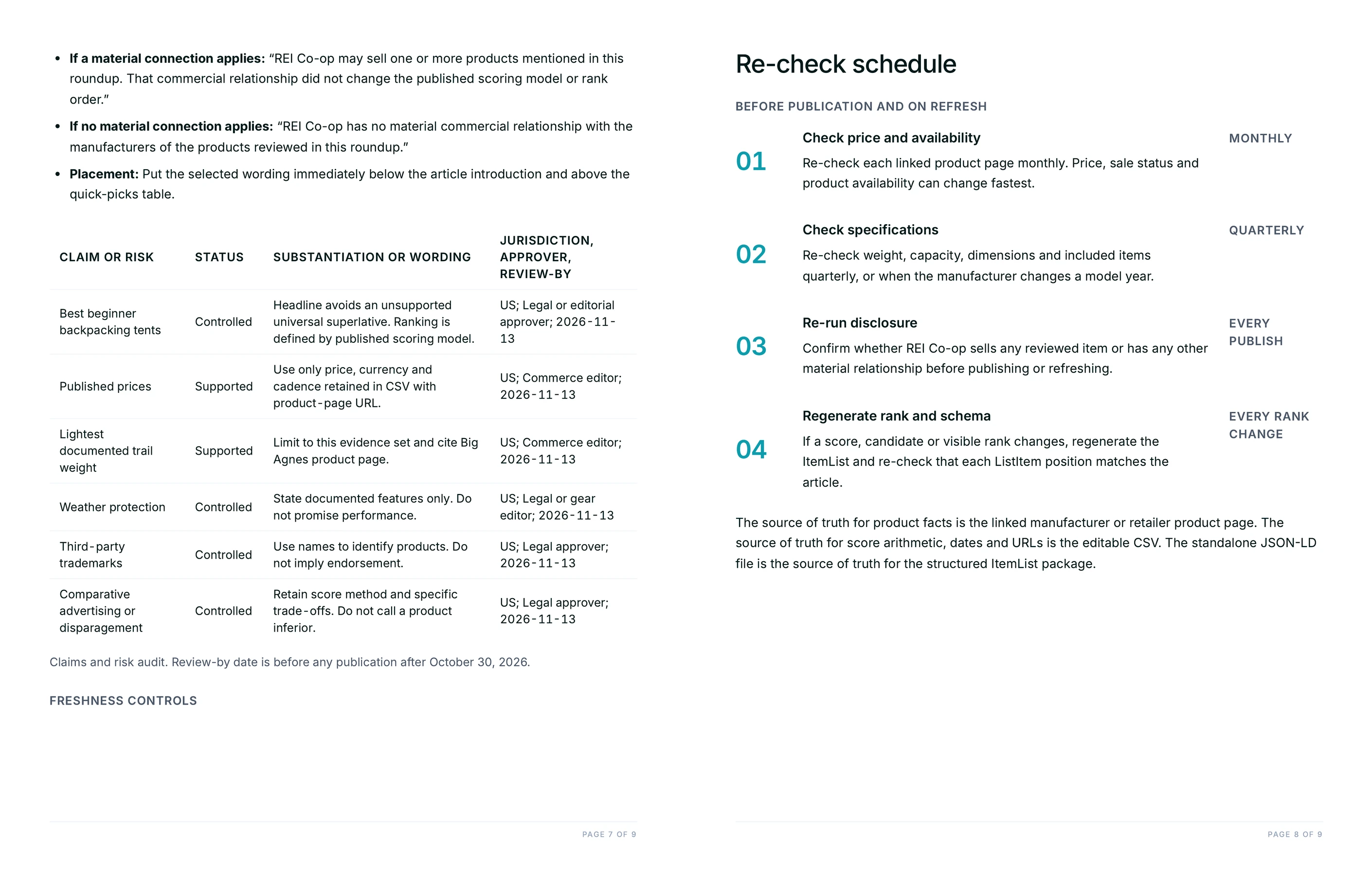
Run the claims audit and every superlative, price statement and comparative claim comes back as a row carrying its status, the substantiation that discharges it or the wording change that removes it, the jurisdiction, an approver role and a review-by date. Rows for third-party trademark use and for comparative-advertising and disparagement risk are included by default, because a ranked list of named competitors carries both and most audits cover neither. The disclosure arrives conditional until the commercial relationship is confirmed: the test for a material connection, the exact wording for the affiliate case and for the no-affiliate case, which one is selected, and where on the page it belongs.

Prompt
Copy

Audit every claim in this roundup: one row per superlative, price statement and comparative claim with its status, the substantiation that discharges it or the wording that removes it, the jurisdiction, an approver role and a review-by date. Add rows for third-party trademark use and disparagement risk, and give me the disclosure in both the affiliate and no-affiliate wordings with the selected one marked.

Try This Flow
6

How do you get a roundup cited in AI answers?

Answer engines lift ranked lists more readily than prose, and they lift the ones whose structure agrees with itself. Ask for the schema and you get ItemList plus a node per product, with itemListOrder set to the real order and every list item referencing its product node by id, so position three and the third entry on the page are the same thing to a machine. It ships as its own copyable file rather than as a code block somebody has to retype out of a PDF. The comparison table and the one-line verdicts do the rest of the work: both are written to be extracted whole, which is what an engine quotes when it answers "best for" questions.

Prompt
Copy

Produce ItemList plus a node per product as structured data that matches the visible content exactly: itemListOrder set to the real order, and every list item referencing its product node by id. Ship it as its own copyable file, and write the comparison table and the per-entry verdicts so an answer engine can extract either one whole.

Try This Flow

Set up your client project: candidate lists, claim rules and scoring weights

Juma projects work per client rather than per task. The team builds one project for each client, adds context to it over time, and every Flow run inside it starts from that shared ground. For roundups the context that changes the output most is the part the open web cannot tell you: which products the client will and will not name, what the client is allowed to claim about them, and how this publication decides an order. If the project already exists, these are additions to it rather than a fresh setup.

What to add

Category Candidate List

The products the client wants covered, the ones they will not name, and any they have covered before. With this in the project the considered-and-cut list reflects a real editorial position rather than whatever the search results surfaced that morning.

Claims and Disclosure Rules

The markets the client publishes in, the disclosure wording their counsel has already approved, and who signs off on comparative copy. This turns the audit from a general risk template into the specific review the legal reviewer asked for.

Editorial Standards and Scoring Weights

How this publication ranks: the criteria that matter, the weight on each, and what disqualifies an entry. Keeping the weights in the project is what makes two roundups published three months apart comparable to each other.

Brand Voice Guide

How the client sounds, the words they use and the ones they avoid. Roundup copy drifts toward vendor language faster than any other format, so the voice guide is what keeps each entry sounding like the publication rather than the product page.

Guide Juma with project info

Each file in a project can carry a short description in the project info field. Those descriptions tell Juma what a file holds and when it matters, so the right context gets picked up for the task at hand rather than everything at once.

  • Category Candidate List: "Products we cover, products we will not name, and what we have already published. Use to set the candidate set and the cut list."
  • Claims and Disclosure Rules: "Our markets, approved disclosure wording and who signs off. Use for every row of the claims audit."
  • Editorial Standards and Scoring Weights: "How we rank and what disqualifies an entry. Use as the published weights for the scoring model."
  • Brand Voice Guide: "How we sound and what we avoid. Apply to every entry so the copy does not drift into vendor language."
Juma Logo
Publish a roundup that earns its order

Frequently Asked Questions

What stops this from being another generic best-tools post?

Three things a generic roundup does not have: a published methodology naming what was read and what was cut, an entry matrix where every price and feature carries its source URL and check date, and a ranking whose arithmetic is printed next to each total so a reader can redo the sum.

The generic version is recognisable by what it hedges. It lists one price per product with an asterisk, repeats the same two features in every row, and orders the list without saying why. Each of those is a place where the research stopped early and the prose covered for it.

The matrix is what makes that impossible to hide. A cell either carries a dated source or it says "could not verify", and a reviewer can see at a glance which parts of the piece are evidence and which are still open.

What happens when a price cannot be verified?

The cell says so. It records which page was read, the date it was read, and that the public material did not state a number, rather than filling the gap with a figure from a review site or an older version of the pricing page. An unverified cell is visible in both the article and the matrix.

That matters more than it sounds for a ranking. If price transparency carries weight in the model, a product whose pricing is genuinely not published should score differently from one whose page nobody opened, and those two cases are only distinguishable if the gap is recorded honestly.

The re-check schedule then puts those cells first. Pricing is the fastest-rotting field in any roundup, so it is flagged for re-verification before every update rather than on a quarterly cycle.

Can it rank our own product alongside competitors?

Yes, and the audit treats that as a material connection to be disclosed rather than a detail to leave out. It produces the wording for the case where the publisher owns an entry, flags every claim about that entry as needing the same substantiation as the others, and notes where the disclosure belongs on the page.

The scoring model does the harder part of the work. Because the weights and the per-criterion scores are published, a reader can see exactly which criteria carried the publisher's own product, which is a far stronger answer to the obvious accusation than a sentence promising impartiality.

Does the schema actually match what readers see?

That is the specific thing it is built to get right. The list order in the structured data is the order on the page, itemListOrder states which direction it runs, and every list item references its product node by id so position and entry cannot drift apart when the order changes.

Mismatched structured data is the common failure in roundups, usually because the schema was written once and the running order was edited afterwards. The re-check schedule treats rank and schema as one field for that reason: change the order, regenerate the markup, check it before deploy.

How long does this take compared with writing a roundup by hand?

Researching eight products across their pricing and feature pages, building a defensible comparison matrix and writing the piece is usually three to five days of a writer's time, most of it spent on tabs rather than on sentences. Running this Flow returns the evidence base, the scoring model, the draft and the audit in one working session.

What the session does not decide is which criteria deserve the weight, whether a product belongs in the category at all, and which claims are worth defending in public. Those are editorial calls. Strategy, taste and judgment stay human, and no claim reaches publication without a named person signing it off.

The fact-check gets shorter too. A reviewer who can click the source on any cell spends their time on the judgment calls instead of rebuilding the research from scratch to find out whether a number is right.
Don't take our word for it

Ask AI about us

400+ marketing teams trust Juma. ChatGPT, Claude, and Perplexity know why. Ask them.

Ready when you are

What's on your plate today?

Start typing a task and Juma will figure out the rest.

Thank you! Your submission has been received!
Oops! Something went wrong while submitting the form.