Set up your client project: messaging, audiences, and coverage history
One Project per client. Juma remembers the brand's messages, audiences and past coverage without re-briefing, and every flow run in that project starts from the same foundation. For a coverage audit this changes the two criteria that are otherwise guesswork: message pull-through is scored against the messages the team actually briefed, and audience fit is scored against the segments the client actually sells to.
What to add
Messaging framework
The key messages, proof points and positioning the team briefs into every story. With this in the project, message pull-through stops being an impression and becomes a check against the real list.
Audience and segment definitions
Who the brand sells to, in the client's own words. Audience fit is the criterion most often scored on assumption, and this is what grounds it.
Previous coverage audits and trackers
Last quarter's scored tracker. With it in the project, the new audit opens with the trend rather than starting the method argument again.
Spokespeople and available proof
Who can speak, on what, and which data the team can hand a reporter. The pitch plan then asks for things the client can actually supply.
Guide Juma with project info
Each knowledge item takes a one-line description telling Juma how to use it. Keep them plain and specific.
- Messaging framework: "Score key message pull-through against this list, not against the brand's general positioning."
- Audience and segment definitions: "Use these segments to score audience fit for every placement."
- Previous coverage audits: "Compare this quarter's scores against these and open with the trend."
- Spokespeople and available proof: "Only recommend pitches we can support with these people and this evidence."
Find out which coverage actually worked
Frequently Asked Questions
How does AI score PR coverage quality?
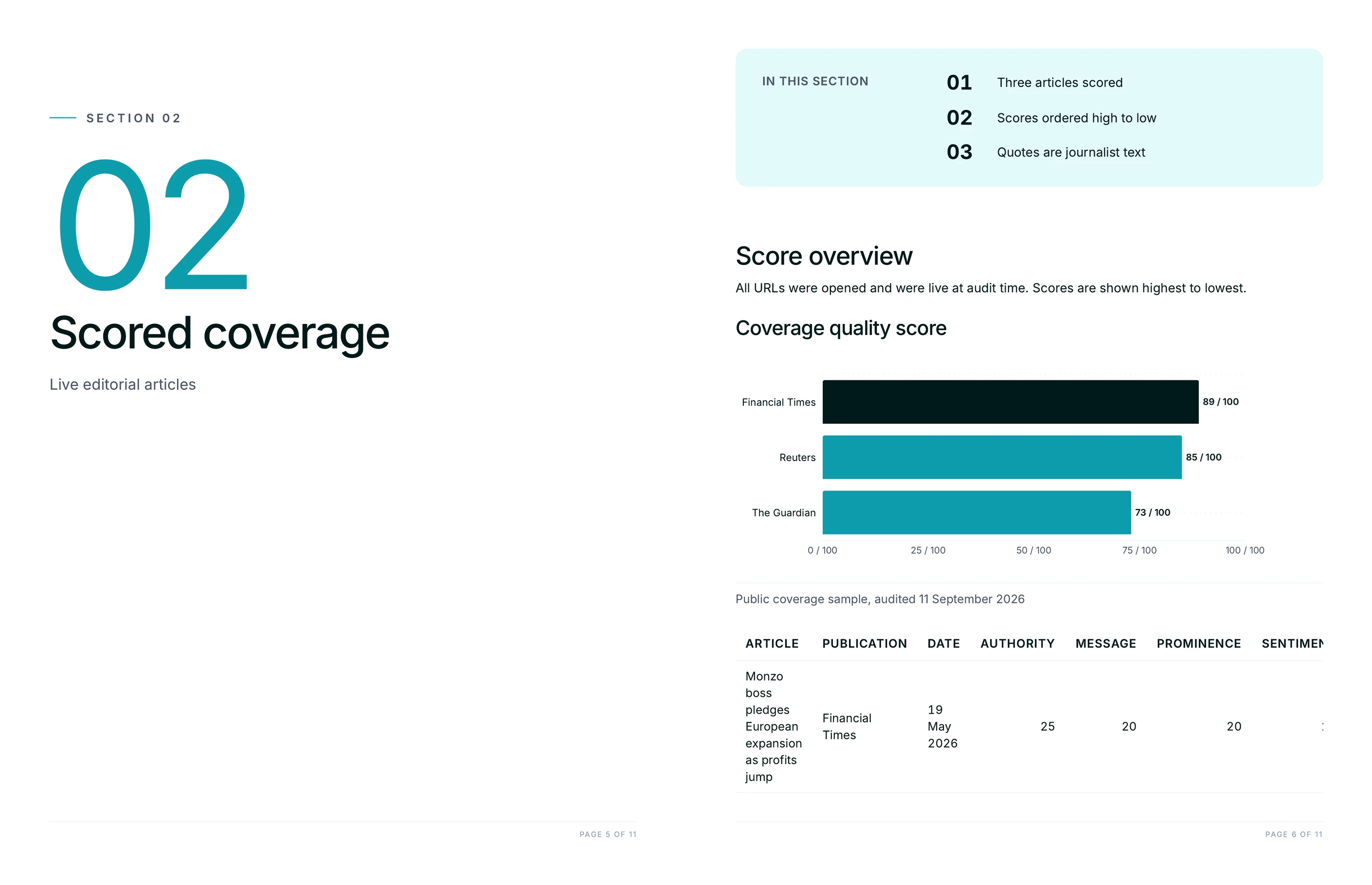
Juma searches the open web for articles about the brand, opens each one, and scores it against a fixed rubric the team sets in the prompt: outlet authority and reach, key message pull-through, prominence, sentiment and framing, and audience fit. Each article gets its points per criterion and a total out of 100.
The part that makes the score usable is the evidence. For message pull-through, Juma quotes one verbatim sentence from the journalist's own text, so the score points at something specific in the article rather than asserting a judgment. Anything that cannot be observed from a public page stays out of the points entirely.
Why do the same articles get different scores on different runs?
Because an unpinned rubric gets reinvented every time. While building this flow we ran the same audit three ways without fixing the weights, and one TechCrunch feature came back at 95, 67 and 91 out of 100. The article was identical each time. The criteria and their maximum points were not.
Naming the criteria and their point values in the prompt fixes this, and it is why the saved flow carries the rubric in its own instructions. Scores then sit on one scale across articles, across quarters, and across the people running the audit.
What counts as earned coverage, and what gets excluded?
Scored coverage is editorial: reported articles written by a journalist about the brand. That covers product and feature stories, corporate and executive coverage, campaign and marketing coverage, reported business stories, reviews and features. The test is whether a journalist wrote it about the brand, not whether the brand's name appears in it.
Investor and stock commentary, course and app aggregator recaps, press release reprints, company investor-relations announcements and syndicated reposts of a wire story already scored once are excluded. They appear in their own table with the reason, so nothing disappears silently and the client can see the call that was made.
Does this replace a media monitoring platform?
No, and it is not trying to. A monitoring platform watches continuously and catches far more than a search of publicly findable coverage will. This flow does the part the platform leaves to a human: judging whether a placement was any good and what to do next.
The audit states its own limits on the page. It is a sample rather than a full clip set, the scores are output measures rather than business outcomes, and it never estimates advertising value equivalency. Teams running a monitoring tool usually paste its export in and use this for the scoring and the plan. Human review on every output.
What do we get back, and can we keep scoring with it?
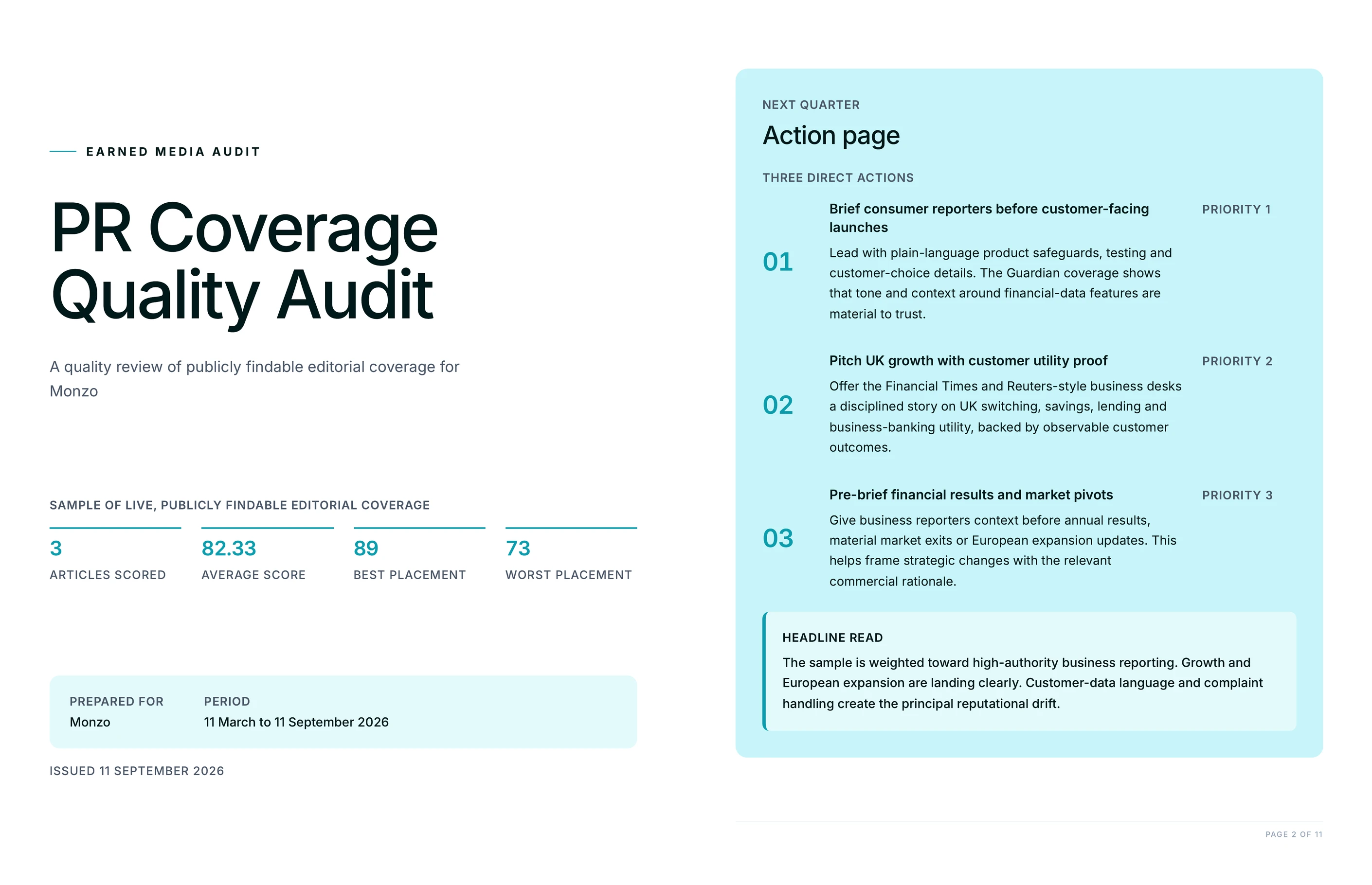
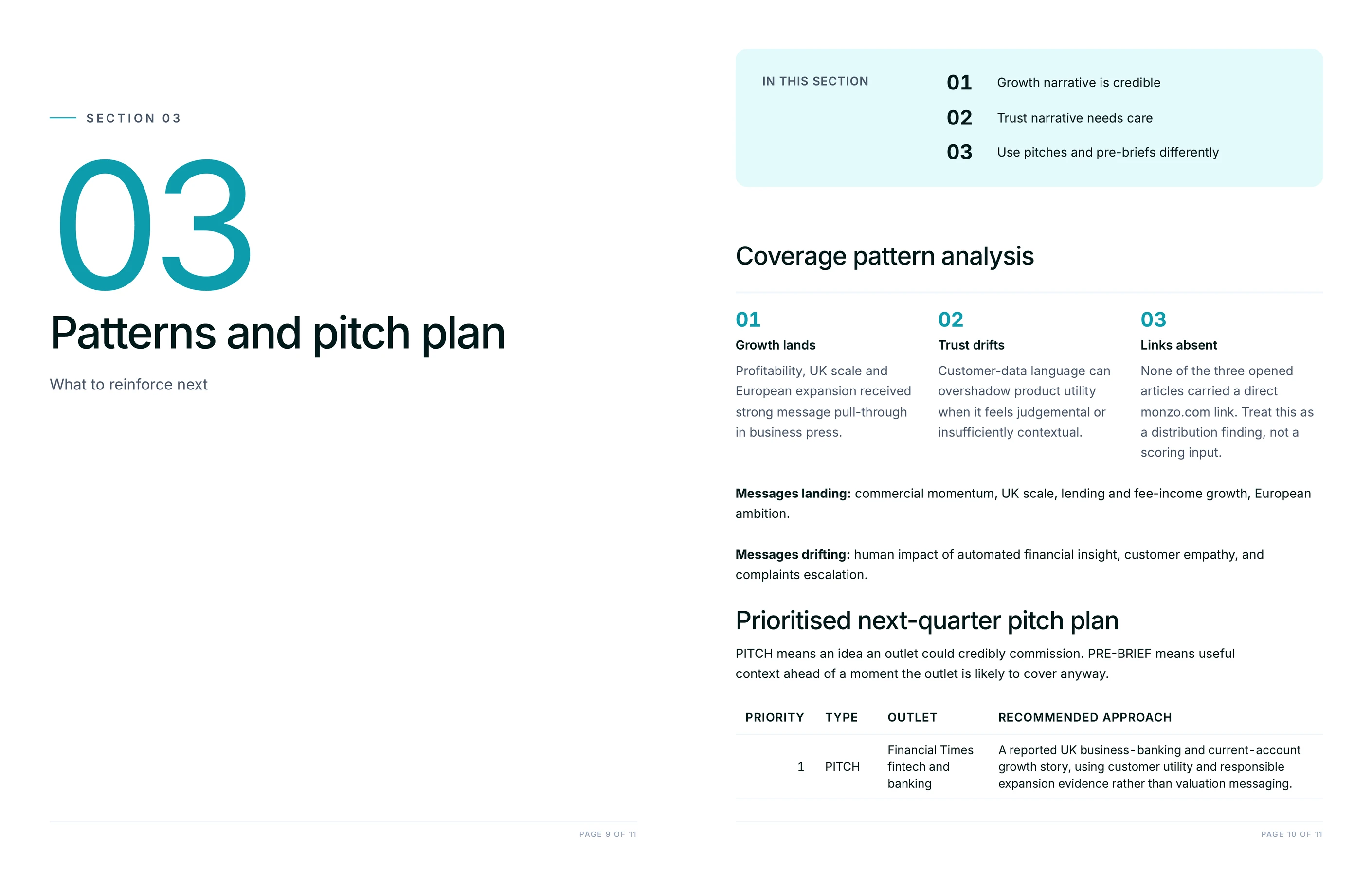
Two files. A branded PR Coverage Quality Audit PDF that opens with three instructions for the quarter, then the scored breakdown, the exclusions, what the pattern says about which messages land and which drift, and a prioritised plan separating pitches from pre-briefs. And an editable CSV tracker with one row per article and one column per criterion.
The tracker is the part that keeps working. Score each new placement into the same columns and the quarterly review becomes a trend line instead of a fresh debate about method.







.webp)