Set up your client project: voice, approved claims, and the scheduler's own fields
Threads repeat weekly, and the same three questions get re-answered each time: how does this client sound on X, which claims are cleared, and what shape does the scheduler need. Keeping one project per client means those answers stay put, and every later flow in that project starts from them instead of from a blank chat.
What to add
Brand voice guide, with the X handle
How the client sounds in that feed specifically: sentence length, how direct the close is, whether they use emoji, what they never say. Social voice usually runs tighter than website voice, and naming the difference keeps the threads from reading like homepage copy.
Approved claims and product facts
The figures the client has cleared, with the pages they come from, plus anything under embargo. With this in the project, the research starts from what the team agreed rather than only from what happens to be public.
Scheduler field spec and posting calendar
The column names the scheduling tool imports, the timezone the account posts in, and the slots already committed. The CSV then arrives in the client's own field shape, which removes the remapping step before every batch.
Guide Juma with project info
Each knowledge item takes a one-line description telling Juma what it is for. Short and specific works better than thorough.
- Brand voice guide, with the X handle: "How this client sounds on X: sentence length, close style, emoji use, and the words they avoid."
- Approved claims and product facts: "Cleared figures with their sources, plus anything embargoed. Do not go beyond these."
- Scheduler field spec and posting calendar: "The exact CSV columns, the account's posting timezone, and the slots already taken."
Write the threads and the file that schedules them
Frequently Asked Questions
What does this flow deliver?
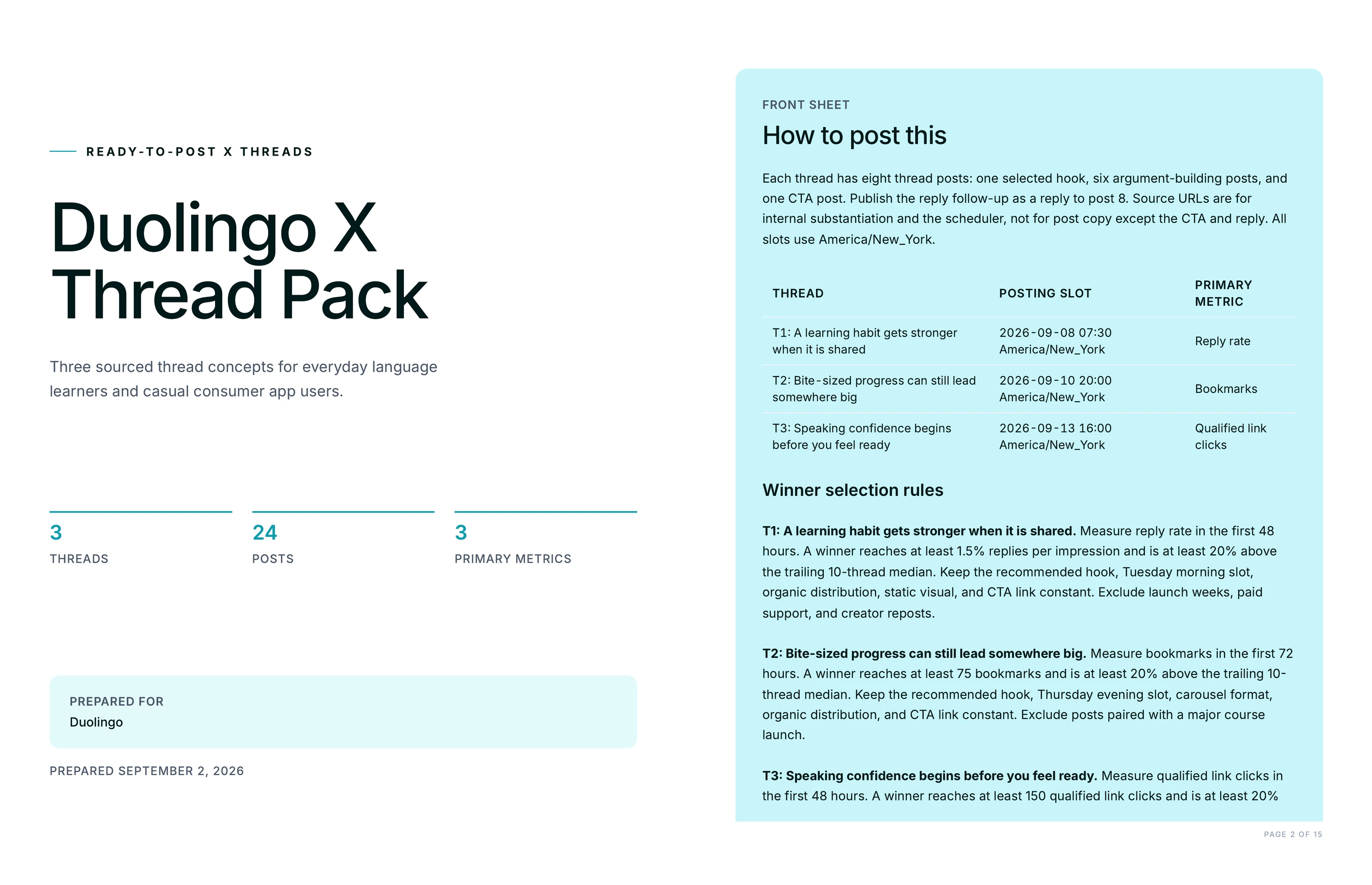
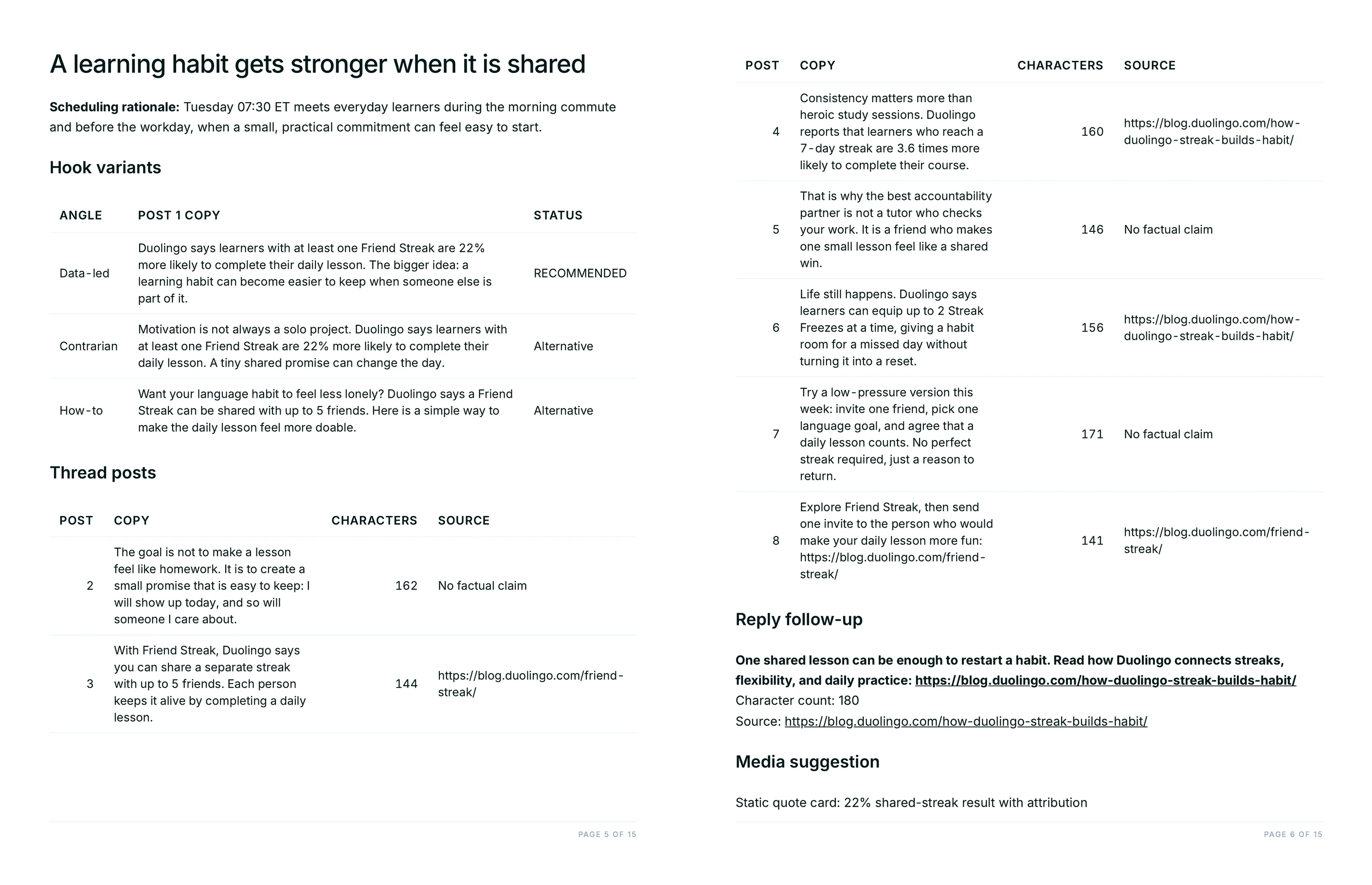
It delivers three complete X threads as two files: a branded PDF thread pack and a CSV with one row per post. The CSV carries the post text, its real character count, the hook variant and angle, the source URL, the scheduled datetime and timezone, the post it replies to, and the metric that thread is judged on.
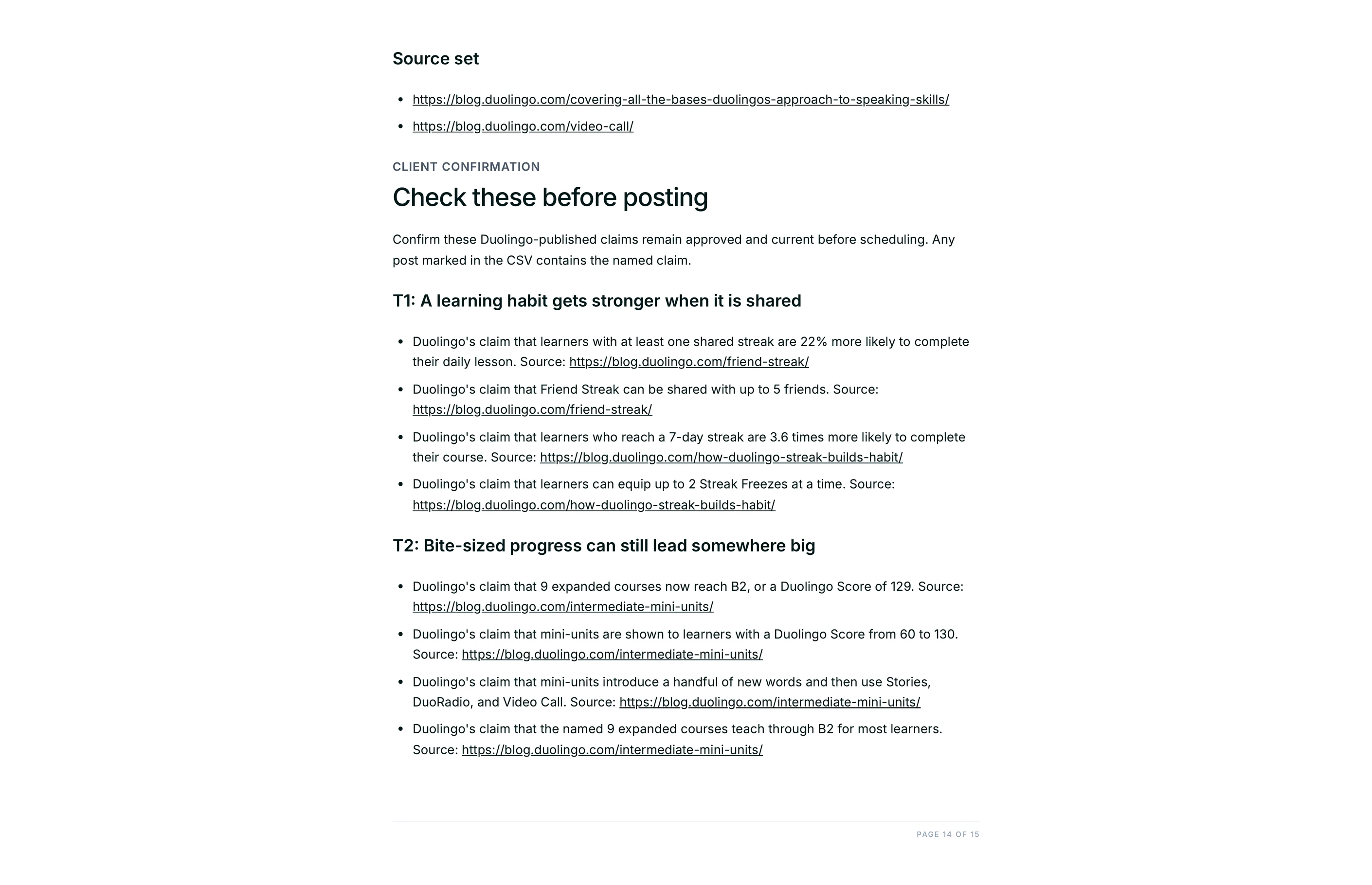
The PDF is the version for the client conversation. It holds the research the threads were built from, the hook variants side by side, the posting guidance, and the list of claims to confirm before anything goes live. The CSV is the working file the team schedules from.
Are the character counts reliable?
Yes. Each count is measured on the post as written, and no post is left over the 280 character limit that applies to standard accounts. This matters more than it sounds: a stated count that was never checked is the most common way a thread pack fails, because it fails at the compose box rather than in review.
The counts are measured on link-free copy, since the source URLs sit in their own column rather than in the post text. It is still worth pasting the longest post in once before scheduling a batch.
Why are the source links kept out of the posts?
Because a URL repeated down every post of a thread costs reach and reads as automated posting, and it eats thirty to forty characters of copy each time. The links belong where a fact-checker can use them, which is a column in the CSV, not the body of post three.
The closing call to action and the reply follow-up do carry a link, since that is where a reader is actually ready to click. Every other factual statement in the thread stays traceable through the source column.
Will it invent statistics about the client?
No. Every factual claim is traced to a page the company or a named third party published, and anything that cannot be sourced is cut rather than softened. Where a figure is the company's own claim about itself, the attribution travels with it into every restatement, including the hook variants.
Claims the team should confirm with the client are flagged per row and named on the front sheet. Human review on every output: someone still reads the thread before it is scheduled.
Does this replace our social team?
No. It removes the assembly work: the research pass, the nine hook drafts, the character counting, and the CSV formatting that usually eats a morning. What it hands back is a complete first version to react to.
Juma augments the team, it doesn't replace it. Teams using Juma report around 60% faster workflows and 50+ hours saved monthly, and the judgment about which angle suits this client and this week stays with the marketers who know them.






.webp)